
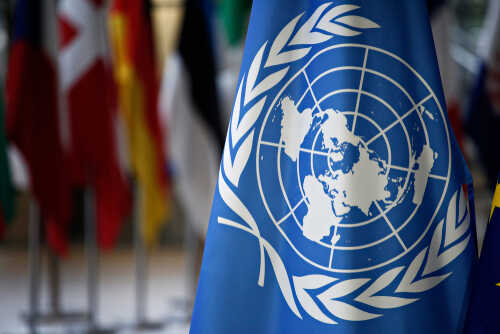
Poland’s sovereignty faces a critical test as Russian drones breach its borders, prompting an emergency UN Security Council meeting and sparking fears of NATO escalation.
Story Snapshot
- Russian drone incursion into Poland forces immediate UN Security Council action.
- Poland demands international accountability as NATO airspace is violated.
- Global leaders debate the implications for Article 5 and European security.
- Conservatives warn of rising threats to national borders and Western values.
Russian Drone Incursion Raises Alarms Over European Security
On September 11, 2025, reports confirmed that Russian military drones crossed into Polish airspace, marking a direct violation of NATO territory and igniting urgent calls for an emergency UN Security Council session. Polish Defense Minister Władysław Kosiniak-Kamysz called the incident ‘a violation of Polish airspace and NATO territory’ and demanded accountability from Moscow. Analysts such as Anna Maria Dyner of the Polish Institute of International Affairs (PISM) said the breach heightened concerns about European border security and Russia’s willingness to test NATO responses.
Polish lawmakers immediately requested international support, urging the UN to hold Russia accountable for breaching established norms and violating Poland’s territorial integrity. The Polish government cited NATO’s Article 5 obligations, emphasizing that unchecked aggression threatens not just Poland but the stability of the entire alliance. In response, several European allies voiced solidarity with Warsaw, while some warned against escalation absent clear evidence of intent to attack. These developments highlight persistent frustrations over perceived globalist reluctance to confront adversaries directly.
UN Security Council Convenes Amid Rising Tensions
The emergency UN Security Council meeting convened in New York, with delegates from NATO member states and Russia present for urgent deliberations. Poland’s ambassador condemned Russia’s disregard for international law and urged the Council to authorize concrete measures that would deter future violations. Russia, for its part, denied hostile intent, claiming the drone movement was accidental and unrelated to military operations. The debate exposed deep divisions within the Security Council over enforcement, deterrence, and the credibility of Western-led institutions in upholding basic principles of sovereignty.
U.S. Ambassador to the UN Richard Grenell echoed Poland’s concerns, stating that ‘any breach of NATO airspace must be taken seriously,’ while reaffirming Washington’s commitment to collective defense under Article 5. Conservative lawmakers cited the incident as yet another example of foreign powers testing the resolve of Western democracies and exploiting perceived weaknesses in international protocols. Calls for increased military readiness and border fortification gained traction, reflecting widespread frustration with past policies seen as too accommodating to disruptive actors.
Conservative Perspective: Defending Borders and National Values
Conservative analysts, such as Nile Gardiner of the Heritage Foundation, argued that the drone incursion reflects broader threats to national sovereignty and the stability of NATO borders. Many see the incident as the inevitable result of years of globalist policies and bureaucratic inaction that failed to deter adversaries. The swift response by Poland and its allies is viewed as a necessary assertion of national self-defense and a reaffirmation of the importance of secure borders. Critics argue that any UN resolution must prioritize clear accountability and tangible deterrents, rather than empty diplomatic gestures that embolden aggressors.
Emergency UN security council meeting convened after Russian drone incursion into Poland. pic.twitter.com/uiYwCbmDUj
— Goose (@GooseSpeaks) September 13, 2025
As the Security Council prepares its final statement, conservative leaders urge vigilance against government overreach and foreign interference, warning that American and allied security cannot be left to chance. The episode serves as a stark reminder of the stakes involved in defending constitutional values, maintaining strong alliances, and resisting any erosion of national sovereignty in the face of modern threats.
Sources:
RESAS Stakeholder Analysis Final Report (2024)
Stakeholder Analysis – EU External Wiki
Stakeholder Analysis Guide – Simply Stakeholders
Stakeholder Mapping and Analysis in Health Policy