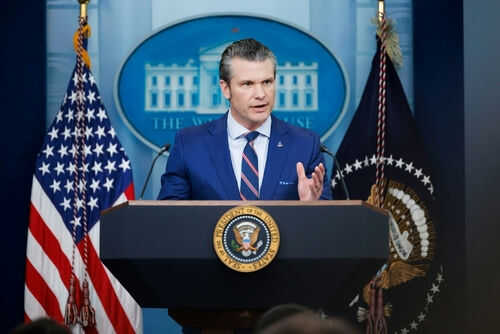
Defense Secretary Pete Hegseth ignited a firestorm by reciting a prayer during a Pentagon worship service that mirrors a fictional Bible verse from the 1994 film Pulp Fiction rather than authentic scripture, raising questions about Hollywood’s creep into sacred military traditions.
Story Snapshot
- Hegseth delivered “CSAR 25:17” prayer at Pentagon worship service on April 15, 2026, during active rescue mission in Iran
- Prayer text nearly identical to Samuel L. Jackson’s dramatized Ezekiel 25:17 monologue from Pulp Fiction, not actual biblical verse
- Defense Secretary framed recitation as established A-10 “Sandy” crew tradition from mission planner, not Hollywood reference
- Video went viral April 16 with critics labeling it “fake Bible quote,” sparking debate over leadership judgment amid U.S.-Iran tensions
Pentagon Prayer Sparks Viral Controversy
Defense Secretary Pete Hegseth recited a prayer titled “CSAR 25:17” at a Pentagon worship service on April 15, 2026, as U.S. Air Force personnel conducted a Combat Search and Rescue operation for crew members shot down over Iran. Hegseth attributed the prayer to “Sandy 1,” an A-10 crew call sign, claiming it originated from a lead mission planner involved in the ongoing rescue. The prayer’s wording closely matches the Ezekiel 25:17 monologue Samuel L. Jackson’s character delivers in Pulp Fiction before executing victims, not the actual biblical text. Video footage spread rapidly online the following day, drawing criticism that a Cabinet official quoted Hollywood dialogue as scripture during a solemn military religious gathering.
Hollywood Script Versus Biblical Text
The recited passage includes lines such as “The path of the righteous man is beset on all sides by the iniquities of the selfish and the tyranny of evil men” and “Blessed is he who, in the name of charity and good will, shepherds the weak through the valley of darkness,” mirroring Pulp Fiction’s 1994 screenplay nearly verbatim. The actual Ezekiel 25:17 in the New International Version reads: “I will carry out great vengeance on them and punish them in my wrath. Then they will know that I am the Lord, when I take vengeance on them.” This stark difference highlights how the prayer draws from cinematic dramatization rather than inspired text. Hegseth framed “CSAR 25:17” as a military ritual predating the event, yet its pop culture origins raise concerns about blending entertainment with faith-based traditions meant to sustain troops facing life-threatening missions.
Military Tradition or Cultural Appropriation
Hegseth defended the recitation by linking it to A-10 “Sandy” crews who allegedly use the prayer before CSAR operations, positioning it as grassroots warrior culture honoring sacrifice for downed aviators. No public records or military historians cited in available coverage verify “CSAR 25:17” as a longstanding tradition independent of Pulp Fiction’s cultural footprint since 1994. The uncertainty over whether pilots adopted the prayer post-film or adapted pre-existing Ezekiel themes muddies the narrative. For many Americans weary of elites imposing artificial values, this incident exemplifies how unvetted practices infiltrate institutions—whether Hegseth knowingly endorsed Hollywood scripture or unknowingly repeated a mission planner’s pop culture reference, the result undermines the authenticity conservatives expect from leaders stewarding military faith.
Broader Implications for Leadership and Trust
The fallout extends beyond one prayer, touching a nerve among citizens frustrated by government officials who seem disconnected from foundational principles. Hegseth’s role as Defense Secretary during heightened Iran tensions demands credibility; reciting a Quentin Tarantino monologue at a worship service—intentionally or not—fuels perceptions of carelessness or ignorance at the Pentagon’s highest levels. Short-term, the incident distracts from the heroism of rescue crews risking their lives. Long-term, it risks eroding trust in leadership’s judgment when lives hang in the balance. Both left-leaning critics decrying religious overreach and right-leaning supporters valuing scriptural integrity find common ground questioning whether those in power prioritize reelection optics over substance. This episode serves as a reminder: when Hollywood dialogue replaces holy writ in government halls, Americans rightfully ask who is minding the store.
As viral clips continue circulating, Hegseth has issued no formal clarification on the prayer’s origins or his awareness of its Pulp Fiction parallels. The CSAR mission context remains active, with U.S. personnel operating in harm’s way over Iran, underscoring the stakes when leadership missteps overshadow operational valor. Whether viewed as harmless cultural cross-pollination or a troubling lapse, the incident adds fuel to bipartisan frustration with a government that too often appears more concerned with performative gestures than with honoring the principles and sacrifices that sustain the nation.