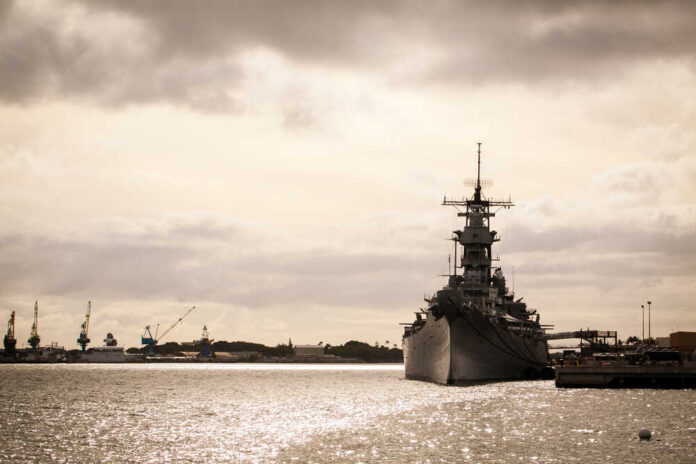
Iran’s Revolutionary Guards fired on merchant vessels in the Strait of Hormuz, re-closing this vital global oil artery just days into a fragile ceasefire, as President Trump readies U.S. Navy seizures and strikes to restore freedom of navigation.
Story Snapshot
- Iran re-closed the Strait of Hormuz on April 18, 2026, firing live rounds at two merchant ships, blocking 20% of world oil flow amid U.S. port blockade.
- President Trump warns of resumed war without a deal, ordering preparations for seizing Iranian vessels and targeting infrastructure.
- Failed Islamabad Talks on April 12 escalated tensions; diplomacy stalled as both sides accuse ceasefire violations.
- Global energy prices spike, hitting American families and exposing federal vulnerabilities to foreign aggression on critical trade routes.
Timeline of Escalation
U.S. and Israeli forces launched Operation Epic Fury airstrikes on February 28, 2026, killing Iran’s Supreme Leader Ali Khamenei. Iran retaliated with missiles on Israel and U.S. bases, then blocked Hormuz shipping in early March. President Trump responded with Navy tanker escorts and ultimatums from March 22-30, demanding reopening or face infrastructure strikes. Iran threatened mines, setting the stage for prolonged standoff.
Iran’s Provocative Re-Closure
On April 12, Islamabad Talks collapsed, prompting Trump to declare a U.S. naval blockade on Iranian ports, sparing the full strait. Iran briefly reopened commercial passage on April 17 during a Lebanon truce, but reversed course on April 18, citing U.S. refusal to lift the blockade. IRGC swarm boats enforced closure, turning ships back and firing on two vessels carrying millions of barrels of oil.
U.S. Counter-Pressure and Trump Warnings
By April 19, Iran claimed “tight control” via IRGC, threatening drones while mocking U.S. mine-sweeping as a ceasefire breach. President Trump prepared ship seizures, stating fighting resumes without a deal. U.S. Navy and CENTCOM maintain superiority with quick-strike options, contrasting Iran’s asymmetric tactics like mines and swarms. Mediators in Pakistan express pessimism over resuming talks.
Stakeholders include Trump issuing ultimatums, IRGC commanders enforcing dominance, and allies like Israel monitoring strikes. U.S. pursues navigation freedom and nuclear curbs; Iran seeks sovereignty leverage to rebuild post-war.
Iran Pushes Too Far in Hormuz, and the U.S. Pushes Back https://t.co/htE8mxlRkJ
— Darrell (@Damn_Lucky) April 20, 2026
Impacts on America and Global Energy
The strait handles 20% of global oil, fueling immediate price spikes and shipping reroutes. American gas prices rise, straining families amid frustrations with elite mismanagement and energy dependence on hostile regimes. Gulf allies like UAE and Qatar face hits; insurers hike tanker premiums. Long-term, sustained blockade risks war resumption and energy crisis, diverting U.S. munitions from Europe.
Both conservatives weary of globalism and liberals decrying inequality see federal failures here—corrupt elites prioritize power over securing trade routes foundational to American prosperity through hard work. Iran’s overreach tests limited government resolve against deep state hesitations.
Sources:
Fox News Video on Iran tensions