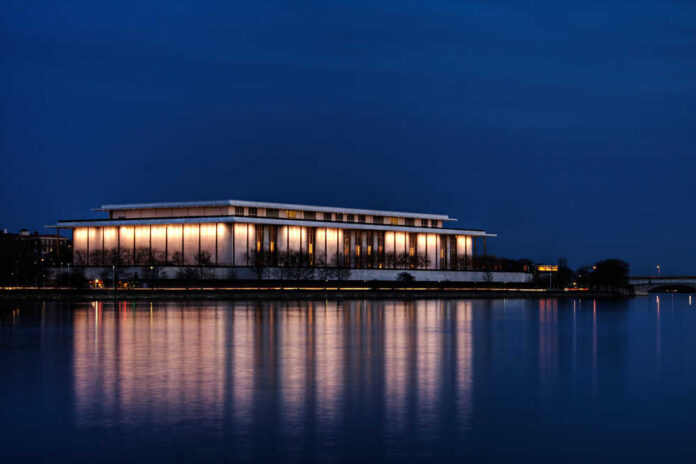
Washington’s cultural crown jewel is about to go dark for two years—caught between urgent repairs, a presidential rebrand, and a lawsuit that could freeze the entire plan.
Quick Take
- The Kennedy Center board voted to shut down operations for two years after July 4 celebrations, while naming Matt Floca as its new leader.
- President Trump and allies argue the building is dangerously deteriorated, pointing to water damage and aging infrastructure as the reason for a major overhaul.
- The D.C. Preservation League filed suit, arguing federal historic and environmental review requirements must be followed before major work proceeds.
- The clash is widening a familiar national divide: taxpayers and patrons want accountability and safe facilities, while critics warn politics is driving cultural institutions.
Board Vote Sets a Two-Year Shutdown After July 4
The Kennedy Center’s governing board voted to shut down operations for two years after planned July 4 celebrations, a move that will halt performances and reshape staffing and programming during the closure. Reports describe the vote as unanimous, while also noting Rep. Joyce Beatty abstained. The same action installed Matt Floca as chief executive, replacing Richard Grenell, who previously oversaw broad operational changes and warned of staffing reductions.
The political context is impossible to separate from the facilities debate. The board’s earlier decision to rename the venue as the “Trump-Kennedy Center” triggered public backlash and contributed to performance cancellations, according to reporting on the evolving controversy. For many conservatives, the bigger issue is whether a federally connected institution can maintain basic stewardship—safe operations, transparent management, and respect for taxpayers—without becoming a stage for ideological warfare.
Floca’s Tours Highlight Water Damage and Failing Systems
Matt Floca has tried to answer a central question skeptics keep raising: does the building truly require a sweeping shutdown, or could it be repaired in phases? Recent coverage describes Floca leading tours that spotlight water-damaged marble, aging mechanical systems, and back-of-house areas—garages and loading docks—where deterioration is more visible. The intent is straightforward: show that the structure is in worse condition than critics claim.
Trump has argued the project is a renovation rather than a demolition, and coverage of the dispute repeatedly frames his position as “repairs” to a “dilapidated” building. That distinction matters because it sets expectations for what will change when the doors reopen. A renovation implies preservation of the institution’s character; demolition implies a replacement of history. At this stage, the public record reflects competing interpretations, and the legal process may determine which path is permissible.
Lawsuit Invokes Historic Preservation and Environmental Review
The D.C. Preservation League’s lawsuit seeks to halt activity until the Kennedy Center complies with federal requirements tied to historic properties and environmental review. Reporting cites the National Historic Preservation Act and the National Environmental Policy Act as core issues, reflecting the reality that Washington’s landmark structures are not treated like ordinary private venues. The suit warns of “irreversible harm” to historic features, viewsheds, and the building’s protected elements if changes move ahead too quickly.
This case also highlights a broader governing problem Americans across the political spectrum recognize: major public institutions often fail to plan ahead, then demand emergency measures when the bill comes due. If the Kennedy Center’s infrastructure truly reached this level of decay, the question becomes who missed the warning signs, how maintenance funding was allocated, and why a high-profile shutdown is now the chosen tool. The available reporting documents the damage claims, but offers limited detail on long-term maintenance decisions.
What the Shutdown Means for D.C., the Arts, and Public Trust
A two-year closure will disrupt the D.C. arts economy, from performers and stagehands to nearby businesses that rely on event traffic. It also raises practical questions about staffing, since earlier reporting tied prior leadership to warnings about operating with “skeletal teams.” For families who treat the Kennedy Center as a national civic space—not a partisan symbol—the outcome will be measured in access, affordability, and whether the reopened venue serves the public broadly rather than a narrow political brand.
https://twitter.com/
The bigger political lesson is that institutions drift when accountability is weak. Conservatives often point to elite capture—boards, donors, and bureaucracies that seem insulated from everyday consequences—while liberals see politicization and fear cultural retaliation. The current record supports one point both sides can agree on: the system is reactive, not disciplined. The country now gets a high-stakes test of whether leaders can modernize a landmark transparently, follow the law, and deliver results without turning the arts into another permanent front in a national culture war.
Sources:
Kennedy Center votes to shut down operations for 2 years and names a new president
New Kennedy Center Boss Is Going All Out to Prove Trump’s Point
Kennedy Center wants to show that the building really needs renovation