
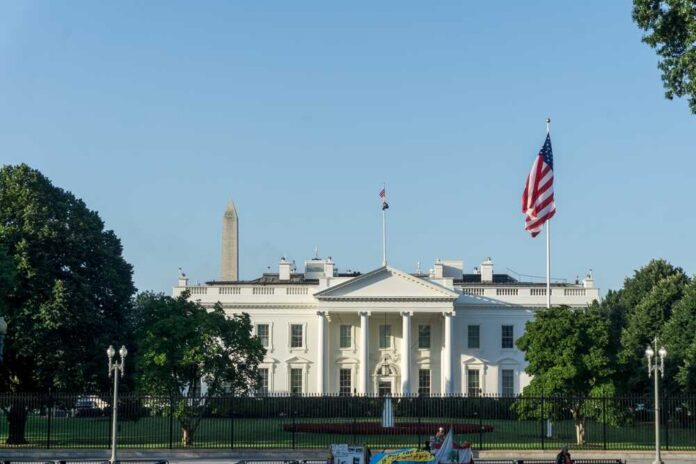
A federal judge has delivered a stinging rebuke to the Trump administration, blocking construction of a $400 million White House ballroom and declaring that the president “is not the owner” of the historic property.
Story Highlights
- U.S. District Judge Richard Leon blocks above-ground construction of 90,000-square-foot White House ballroom, calling administration’s legal arguments “brazen” and “disingenuous”
- Trump demolished the East Wing in October 2025 without full legal clearance, prompting lawsuit from National Trust for Historic Preservation
- Judge permits underground bunker construction but rejects administration’s claim that national security justifies bypassing congressional approval for above-ground work
- Legal battle highlights growing tension between executive power and constitutional checks, with administration appealing and potential Supreme Court review ahead
Judge Rejects National Security Claims as “Blank Check”
U.S. District Judge Richard Leon issued a clarified ruling on April 16, 2026, blocking above-ground construction of President Trump’s proposed White House ballroom while allowing limited underground security work to proceed. The judge sharply criticized the Trump administration’s attempt to use national security concerns as blanket justification for the project, stating “national security is not a blank check.” Leon’s order permits only “strictly necessary” protective measures above ground, such as waterproofing and sealing, while rejecting the administration’s broader interpretation that would have allowed the massive 90,000-square-foot ballroom to move forward without congressional approval.
Presidential Overreach and Historic Preservation Clash
The controversy began last summer when President Trump announced plans for a privately funded White House ballroom to replace the East Wing. In October 2025, the administration unexpectedly demolished the historic structure, triggering a lawsuit from the National Trust for Historic Preservation. Judge Leon, a Bush appointee, emphasized a crucial distinction in his ruling: “The President… is not the owner!” This statement underscores the fundamental principle that presidents serve as stewards, not proprietors, of national landmarks. The administration’s decision to proceed with demolition before securing legal authority raises questions about respect for constitutional processes and the rule of law.
Private Funding Cannot Bypass Congressional Authority
The Trump administration structured the $400 million project as privately funded, apparently attempting to circumvent normal congressional oversight of White House alterations. However, Judge Leon ruled that private funding does not exempt the project from legal requirements for congressional approval. The administration defended the ballroom as essential to national security, with President Trump stating on social media that underground facilities alone would be “useless” without the above-ground structure. The Justice Department argued that halting construction poses risks to presidential safety from drones, missiles, and biohazards. Leon rejected these arguments as conflicting with prior representations to the court, calling them “incredible, if not disingenuous.”
Legal Battle Escalates With Appeal
The D.C. Circuit Court of Appeals previously granted the administration a brief stay, citing security concerns about an “indefinitely large hole” near the Executive Residence. The appeals court remanded the case to Judge Leon for clarification on national security issues, resulting in his April 16 order that maintained the block on above-ground work while allowing underground bunker construction to continue. The administration immediately appealed Leon’s clarified ruling, with a seven-day stay in effect. The case may ultimately reach the Supreme Court, setting important precedents for executive authority over federal property and the balance between national security claims and congressional oversight.
https://t.co/Ww3794qjCA
REBUKE: Judge blocks above-ground construction of White House ballroom…— Billy Camou (@billycamou) April 16, 2026
This legal confrontation reflects broader frustrations shared by Americans across the political spectrum about government accountability. Whether one supports or opposes the ballroom project itself, the spectacle of a demolished historic structure and conflicting legal arguments raises legitimate concerns about how decisions affecting national landmarks are made. The ruling reinforces that even presidents must operate within constitutional constraints, a principle that transcends partisan politics and speaks to the foundational checks and balances designed to prevent concentration of power in any single branch of government.
Sources:
CBS News – Federal judge blocks above-ground White House ballroom construction
KTVQ – Federal judge blocks above-ground White House ballroom construction
Fox News – Judge orders Trump halt White House ballroom construction escalating legal feud