
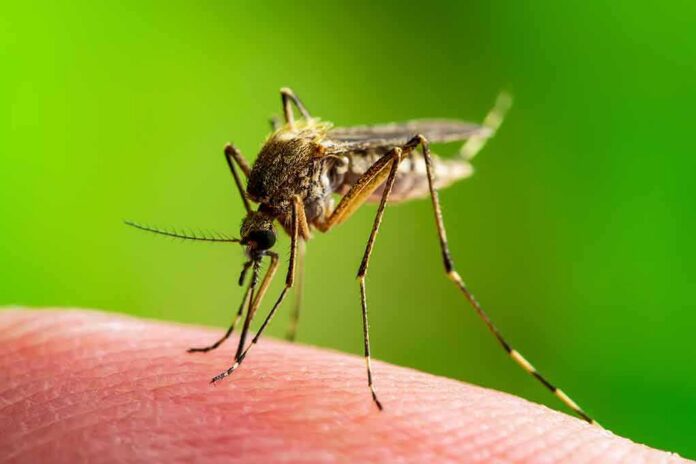
A sudden surge of locally acquired dengue in Florida triggered a federal emergency response, as state data show cases exploding in Tampa Bay.
Story Highlights
- Florida recorded 368 locally acquired dengue cases in 2026 by week 40, most in Tampa Bay.
- State reports show a sharp September jump in local transmission across multiple counties.
- Media report the Centers for Disease Control and Prevention (CDC) activated a Level 3 emergency response.
- Officials tracked positive mosquito pools tied to the outbreak across eight counties.
Florida’s Data Show Rapid Growth In Local Dengue Transmission
Florida’s official arbovirus report for week 40 lists 368 locally acquired dengue cases in 2026, with 310 in Hillsborough County and 37 in Pinellas County. The same report counts 288 travel-associated cases, showing a clear split between imported and local spread. The week 36 report, dated September 17, showed 152 local cases, which means transmission accelerated into late September. State data also note that 188 illness onsets occurred in September, underscoring the sudden jump.
Health teams identified 20 positive mosquito pools across eight counties during the 2026 surveillance period, signaling active local vectors. Polymerase chain reaction testing typed 254 infections by serotype, adding lab detail to the field findings. County alerts from the Florida Department of Health in Orange County warned residents to drain standing water, cover skin, and use repellent in response to rising risk in Central Florida. These measures aim to slow spread while crews reduce breeding sites.
CDC Emergency Response Reported As Level 3 Amid Case Discrepancies
MedPage Today reported that the Centers for Disease Control and Prevention declared a Level 3 emergency response tied to dengue in Florida and another United States jurisdiction. That report cited 745 total Florida cases, including 425 locally acquired cases, and described the scale as unusually large. KFF Health News echoed the Level 3 activation and the higher totals the next day. Florida’s week 40 report shows lower counts, likely due to different cutoffs or definitions used by the sources.
Local dengue transmission in the continental United States is uncommon but not new. Public health records show notable outbreaks since 2001 in Hawaii, Brownsville, Texas, and southern Florida, where officials stressed early detection and fast vector control. Florida also faced dengue in Key West from 2009 to 2011, with sustained control work needed to end spread. Today’s response uses those lessons: find cases fast, warn the public, and kill mosquitoes that can carry the virus.
What Floridians Should Know And Do Right Now
County alerts advise simple steps that make a big difference. Residents should dump standing water weekly, from buckets to clogged gutters, since these hold mosquito eggs. People should use Environmental Protection Agency-registered repellents, wear long sleeves, and keep window screens intact. Anyone with fever, headache, or joint pain after a mosquito bite should talk to a doctor. Doctors should consider dengue testing when patients have no recent travel but live in affected areas.
The CDC has activated a Level 3 emergency response to Florida's dengue outbreak, sending epidemiologists, mosquito experts and lab teams to the Tampa Bay area.
Florida has logged 425 locally acquired cases this year, mostly in Hillsborough County, with one death, and… pic.twitter.com/p7Xv9RazXD
— Maverick (@agentmavericksi) October 30, 2026
For conservative families, the bottom line is clear: government should focus on core duties that protect life and liberty. That means honest numbers, quick local action, and support for counties working on the front lines. Florida’s reports document the spike and identify where risk is highest, especially Hillsborough and Pinellas. Federal coordination can backstop that work when it adds people and tools, not red tape. Clear roles and clean data help communities stay open, safe, and in charge.
Sources:
zerohedge.com, medpagetoday.com, orange.floridahealth.gov, beckershospitalreview.com, floridahealth.gov, kffhealthnews.org