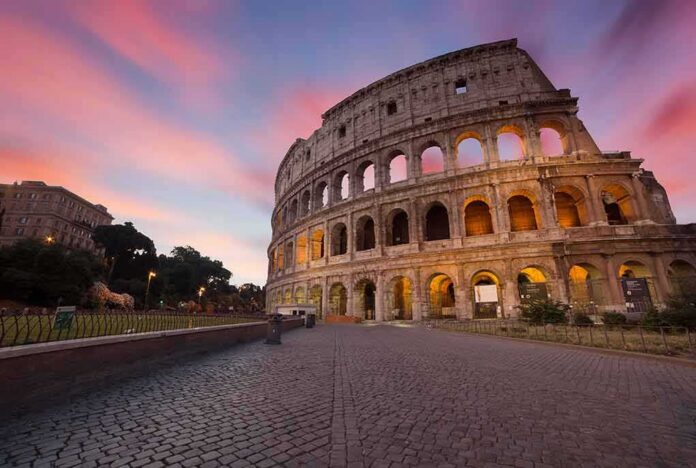
Several hundred demonstrators briefly forced their way into Rome’s Colosseum, turning a world treasure into a protest stage that rattled European authorities and tourists alike.
Story Highlights
- Associated Press reported protesters briefly occupied the Colosseum in Rome.
- Reports described clashes with police near the Colosseum, including water cannons and tear gas.
- Barcelona saw vandalism, fires, and dozens of arrests amid wider unrest reports.
- Outlets covered Rome and Barcelona incidents, though direct coordination is not established.
Rome’s Colosseum Breached During Gaza-Themed Demonstration
Associated Press reported that several hundred students and young demonstrators entered and briefly occupied the Colosseum in Rome on October 25, waving Palestinian flags and chanting against the Gaza war and Italy’s government. The event unfolded in central Rome as crowds moved near the ancient amphitheater, a global symbol of Western heritage. The breach raised alarm about tourist safety and public order at a protected site. Police presence grew as authorities worked to restore control and move people out.
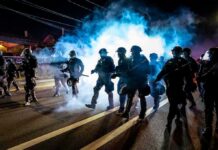
Additional reporting described running clashes between demonstrators and police in Rome. Accounts cited bottle-throwing at officers, with police responding using water cannons and tear gas near the Colosseum area. The confrontation followed an unauthorized march that pressed into sensitive zones around the monument. Tour groups and families nearby were disrupted as lines broke and streets closed. Italian authorities faced a live test of crowd control in a dense historic district packed with visitors.
Barcelona Disorder Features Vandalism, Fires, And Arrests
Reports from Barcelona described masked youths vandalizing shops, looting businesses, and setting trash containers on fire near Plaça de Catalunya. Stones and other objects were thrown at officers as the night wore on. One account cited about 100 arrests, including around 30 minors, as police pushed to regain control of the city center. Commercial blocks suffered broken windows and theft. Commuters and tourists detoured as transit stops and key streets closed for safety.
Wider coverage grouped the Rome and Barcelona incidents with broader unrest across parts of Europe. Multiple outlets highlighted overlapping scenes of clashes, vandalism, and crowd confrontations in major cities. However, published reports did not show proof that a single organization, command structure, or shared leadership linked the events across borders into one coordinated movement. The disturbances instead appeared as parallel flashpoints with different local triggers, grievances, and crowds.
Why This Matters For Security, Heritage, And Everyday Stability
Italian and Spanish authorities are now balancing free speech with the duty to protect public safety, businesses, and priceless sites. The Colosseum breach underscored how fast unrest can endanger heritage and bystanders. Police had to act to clear the monument and nearby streets, showing that swift enforcement remains key when crowds push past legal limits. Barcelona’s damage and arrests showed similar stakes for shop owners and families seeking normal life during tense nights.
Large-scale protests are taking place in several Italian cities, including Turin, Rome, Bologna, Milan and Florence, as well as Barcelona in Spain, where clashes have erupted between police and demonstrators. Protesters threw bottles, stones and fireworks at police, while… pic.twitter.com/xFBB530O8M
— TAM (@Awakeningmedia1) October 25, 2026
Research on protest patterns shows most demonstrations stay peaceful, yet a small share can turn violent. A large dataset on protests in four German cities found reported protester violence in a minority of events, while police violence appeared in an even smaller share. That record helps explain current scenes. Most marchers likely want to make a point and go home. But a subset can hijack events, drawing police into clashes and leaving citizens to pay the price in fear and repairs.
What Comes Next As Europe Weighs Its Response
Italian leaders will review how a crowd reached the Colosseum interior and what security gaps need closing. Clear perimeter controls, faster interdiction, and tighter permit rules can safeguard landmarks while respecting peaceful speech. Spanish officials will assess arrest outcomes and restitution for damaged businesses. Coordinated policing, simple communication, and quick court processing can deter repeat offenders. These steps align with core principles: protect life, defend property, and keep the public square open but lawful.
Sources:
facebook.com, ground.news, redstate.com, apnews.com, emakedonia.gr