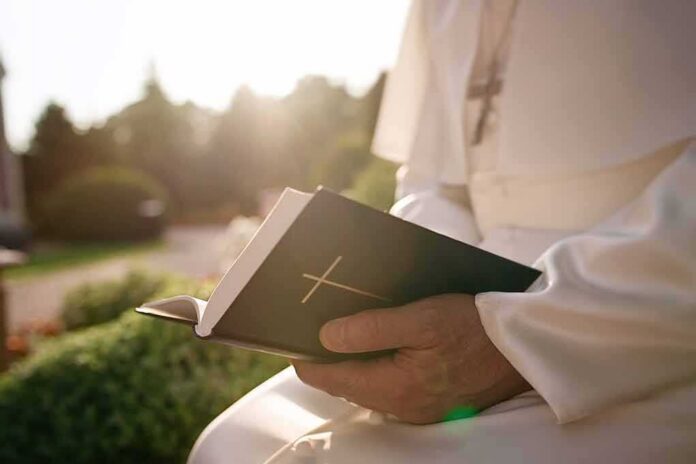
Pope Leo XIV used his France visit to press Europe to choose peace anchored in human dignity and shared duty.
Story Highlights
- Pope urged France to be a “tireless champion of peace and multilateralism.”
- Speeches in Paris, Lourdes, and Metz centered on Europe, unity, and human dignity.
- Address at the United Nations Educational, Scientific and Cultural Organization tied peace to education and truth.
- Papal appeals fit a long pattern of Vatican peace diplomacy in Europe.
Pope’s Core Message in France: Peace Built on Human Dignity
Pope Leo XIV began his four-day journey by urging France to lead for “peace that is unarmed and disarming” and to remain a “tireless champion of peace and multilateralism.” His first public address framed peace as a moral task that protects the weak and restrains the strong. He praised contributions of believers to French life and called leaders to put the human person first when states face war, technology risks, and social division.
At the United Nations Educational, Scientific and Cultural Organization headquarters in Paris, the Pope said peace cannot rest on treaties alone. He linked real peace to education that forms conscience, science that serves truth, and culture that respects the person. He warned that when learning and technology lose sight of human dignity, they weaken society and invite conflict. He asked institutions to teach virtue, tell the truth, and defend the value of every life.
Why Lourdes and Metz Mattered on This Trip
The trip’s route underscored his theme. The Holy See said the visit would close in Metz with an encounter focused on Europe, peace, and unity. That border city symbolizes past wars and today’s cross-border ties. Lourdes, the Marian shrine, placed prayer for healing at the center, showing that mercy for the suffering must guide public choices. The Pope’s schedule joined worship, youth outreach, and civil talks to push one idea: unity grows where human dignity is honored.
Vatican plans made the purpose plain. The official program detailed meetings with civil authorities, a stop at the United Nations body for education and culture, and a final message of peace in Metz’s cathedral. The design blended pastoral care and civic counsel. It aimed to lift debate above narrow politics and invite leaders to weigh moral costs, not just material ones. That balance echoed the Church’s longstanding approach to Europe’s crises.
How This Fits the Vatican’s Long Peace Tradition
Historians describe a steady Vatican pattern: speak to nations as a moral broker, connect peace to law and conscience, and try to cool rivalries without taking a soldier’s side. From the early modern era through the world wars, popes sought to mediate and to set norms that restrain power. The France visit fits this line. The Pope’s calls for dignity, truth, and multilateral effort mirror that diplomatic legacy in a time of war and rapid technology change.
🔴 Pope Leo XIV arrives in Metz for final stop of France visit; Macron to attend Mass
Pope Leo XIV arrived Monday in Metz, northeastern France, for the fourth and final day of his visit to the country. He is scheduled to lead an afternoon Mass attended by French President… pic.twitter.com/V4iPb8GPNC
— NewsTongue (@NewsTongueX) September 28, 2026
For readers who value strong families, secure borders, and national sovereignty, the Pope’s words draw a clear line. Peace fails when the person is ignored, when culture treats life as cheap, or when elites push systems that erase identity. The Pope’s appeal challenges global bodies and capitals to serve people first, not ideology. His message supports the common-sense view that order rests on moral truth, not on endless bureaucracy or top-down social experiments.
Sources:
youtube.com, vaticannews.va, osvnews.com