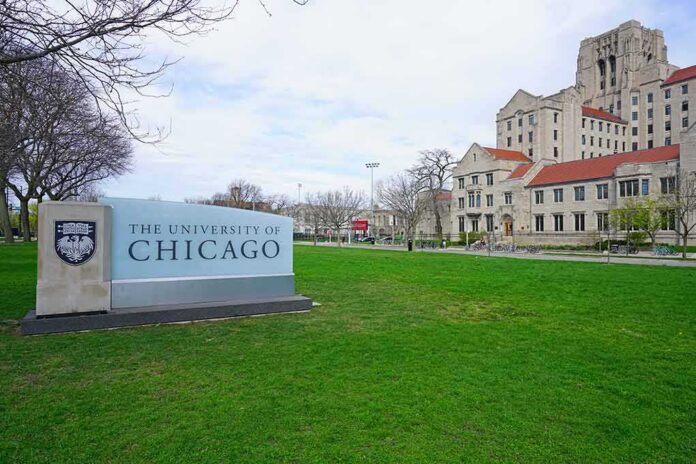
University of Chicago staff tried to sideline a Tim Pool event as “too controversial,” then reversed course after pushback.
Story Highlights
- Campus staff flagged the event as “controversial” and said the booked hall was off-limits due to security needs.
- Organizers escalated to administrators and a free speech group; the event will proceed.
- Staff did not say what was “controversial,” leaving the rule unclear.
- The dispute fits a wider battle over “heckler’s veto” tactics on campuses.
Staff Cited “Infeasible” Security To Block the Booked Venue
Emails reported by The College Fix say a University of Chicago institute told student organizers their Tim Pool event “could not occur” in Breasted Hall on October 9. Staff labeled it “controversial” and linked that label to an “infeasible heightened security arrangement” that would have required closing the museum gallery connected to the hall. The staff message also faulted organizers for not flagging special needs earlier. The venue denial came after booking steps had already moved forward, according to the reporting.
The institute’s rationale pointed to logistics rather than viewpoint alone. Still, the reported exchange did not define what made the event controversial. When organizers asked what exactly was controversial, the staff did not give an answer, the report says. That vague standard raised red flags for free speech advocates. Rules can address time, place, and manner. But unclear “controversy” labels can hide viewpoint bias if they are not tied to real, documented threats.
Escalation Led to a Reversal and a Green Light
The Chicago Thinker reported the event would proceed after organizers raised their concerns with administrators and with the Foundation for Individual Rights and Expression. That escalation prompted a reversal. The school backed off the venue block and allowed the program to move forward, according to the report. The outcome matters. It shows pressure works when rules are vague and when staff move the goalposts after rooms are booked. It also shows students can insist the school follow its own policies.
This clash follows a wider pattern on campuses. Schools often frame contested talks as security problems. Critics see a “heckler’s veto,” where threats or fear of disruption end up silencing speech the agitators dislike. Courts and experts say schools need clear evidence of a real threat before cutting back protected speech or imposing unusual burdens. Standards must be evenhanded and based on facts, not ideology. If security is the reason, it must be documented, specific, and applied the same way to all speakers.
Why This Fight Resonates With Conservative Readers
Conservatives worry that “controversy” has become a catchall to throttle viewpoints the campus left dislikes. The reported email chain checks the same boxes we have seen for years: a late-breaking claim of unnamed risks, a venue denial after planning is underway, and no clear rule explaining the call. Legal guidance stresses that unsupported fear of disruption is not enough to restrict campus speech. Institutions must meet a high bar with proof, not hunches.
University of Chicago Staff Backs Off Attempt to Cancel Campus Event With Red-Pilled YouTuber Tim Pool https://t.co/xajhXOf7nq
— The Gateway Pundit (@gatewaypundit) September 27, 2026
University of Chicago also brands itself as a leader on free expression. That promise raises the stakes when staff apply opaque standards. When the school reversed and let the event go on, it aligned better with that free speech legacy. But the process still matters. To guard against future abuse, schools should publish clear, viewpoint-neutral security criteria, require written, specific threat documentation, and forbid last-minute “controversy” labels from overriding prior approvals without evidence.
What To Watch Next
Watch for release of the full email chain and any security assessments. Those records would show who decided what, when, and why, and whether the rules were applied evenly. If there is no documented threat analysis, critics will see the initial denial as a soft attempt at a heckler’s veto. If documentation exists and is specific, the school can defend its call. Either way, transparent rules and due process protect everyone’s rights while keeping events safe.
Sources:
thegatewaypundit.com, thecollegefix.com, ground.news, gopillinois.com, podbean.com, security.uchicago.edu