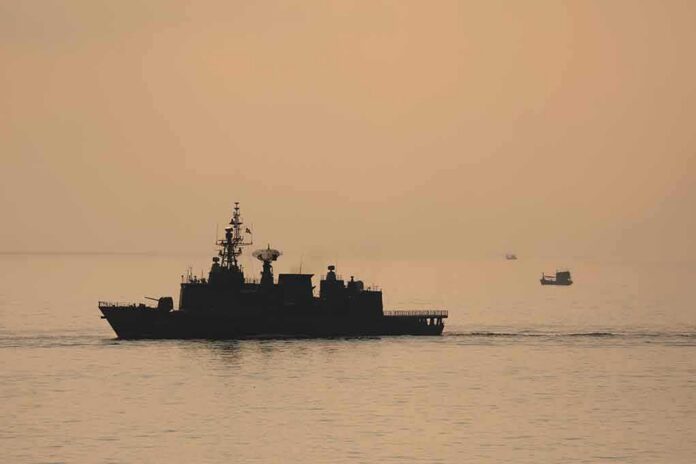
An Iranian regime adviser threatened to take the war into the Indian Ocean if the United States or Israel strikes again—putting global shipping, energy prices, and American sailors at risk.
Story Highlights
- Iran’s supreme leader’s adviser warned the conflict could spread to the Indian Ocean if attacked again.
- Another senior Iranian official said United States ships in the Indian Ocean would be targeted if war resumes.
- Strategic studies show Iran can threaten shipping beyond the Strait of Hormuz into the Arabian Sea.
- Escalation would hit energy routes and raise costs for American families and allies.
Iran’s New Threat Targets the Indian Ocean
Yahya Rahim Safavi, an adviser to Iran’s supreme leader, said the war could “expand even further, reaching the Indian Ocean and perhaps beyond” if the United States or Israel attacks again. He tied the threat to the spread of violence from the Persian Gulf and the Strait of Hormuz into the Red Sea, and warned that more strikes would widen the front. This is not idle talk; it is a signal meant to raise the cost of deterrence for America and its partners.
Mohsen Rezaei, another senior Iranian figure, raised the stakes with a direct warning. He said that if war resumes, United States ships in the Indian Ocean “will be attacked wherever they are,” unless they leave the region. He earlier told a major outlet that Iran could “drag the war” from Hormuz to the Indian Ocean, the Bab al-Mandab Strait, the Red Sea, and the Mediterranean Sea, if fighting restarts. These statements outline a clear plan to stretch our naval defenses across vast waters.
Why This Matters to America’s Economy and Security
The Indian Ocean carries much of the world’s energy and trade. Threats to tankers and cargo ships mean higher insurance rates, rerouting, and delays, which lead to higher prices at the pump and the store. Strategic research shows Iran can threaten shipping beyond Hormuz into the Gulf of Oman and Arabian Sea with missiles, drones, mines, and fast boats, even without a big navy. That asymmetric style can disrupt vital lanes and strain allied navies tasked with keeping them open.
President Trump’s team faces a hard balance: deter Iranian aggression, protect United States forces, and keep sea lanes open, without rewarding Tehran’s coercion. The United States Navy remains the only true blue-water force in the region, and it can escort ships, clear mines, and strike back if needed. But wide geography creates cost and risk. Iran bets it can create chaos cheaper than we can sustain constant protection across chokepoints and long routes.
Competing Claims Around Diego Garcia and Missile Reach
A disputed episode shows the fog around escalation. Reporting covered claims about missiles linked to the Indian Ocean base at Diego Garcia. Iran’s Foreign Ministry denied any role and called the reports a “false flag,” while an Israeli military leader claimed Iran used a missile with reach to European capitals. The competing claims do not change one fact: Tehran keeps signaling it can reach far and hit where it hurts if fighting restarts.
5/ So… does Iran have the capability?
Limited, asymmetric, and expensive for them — not a peer navy that can “take the Indian Ocean.”
They have already demonstrated they will try to hit Diego Garcia. They have not demonstrated they can do it accurately, in volume, or while… pic.twitter.com/XvQW9ggvz0— AirVector (@airpower33) September 24, 2026
Conservatives should track two risks here. First, Iran’s threats target freedom of navigation, a core American interest that keeps goods moving and prices stable. Second, Tehran wants to split coalitions by scaring partners and hiking costs. The right answer is strength with clarity: defend ships, punish attacks, and avoid blank checks or endless “de-escalation” talks that buy Iran time. A strong posture protects our sailors, our wallets, and our allies—without giving ground to a regime that thrives on extortion.
What to Watch Next
Watch for more Iranian messaging tied to any fresh clash, plus signs of strikes on ships, mines in busy lanes, and drone or missile launches from coastlines. Look for expanded convoys, mine countermeasure deployments, and joint patrols by the United States and partners. Track insurance premiums and shipping reroutes that could lift fuel and goods prices at home. These are the early indicators of whether Tehran’s threat moves from talk into action—and whether our deterrence holds.
Sources:
insiderpaper.com, newindianexpress.com, mtv.com.lb, news.az, hindustantimes.com, english.ahram.org.eg