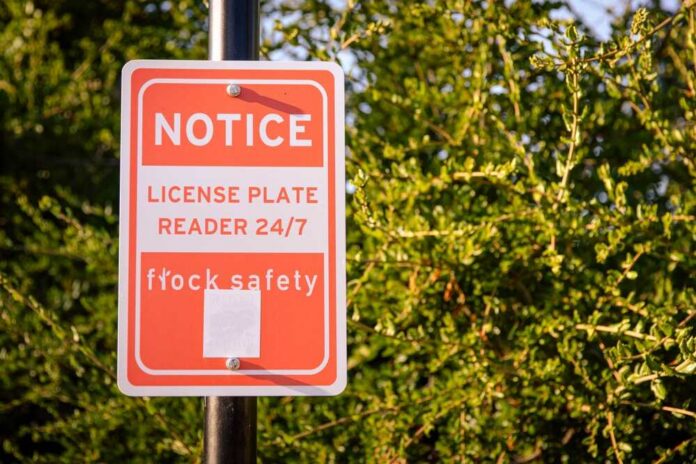
San Jose’s vast network of 474 license plate cameras tracks every driver’s movements without warrants, sparking a federal lawsuit that exposes government overreach eroding Fourth Amendment protections.
Story Snapshot
- Three residents filed a federal class-action lawsuit against San Jose, claiming the ALPR system enables unconstitutional mass surveillance of innocent drivers.
- The program captures millions of vehicle images monthly via Flock Safety cameras, storing data for 30 days accessible without warrants by over 1,000 SJPD employees and 300 agencies.
- Plaintiffs demand data deletion within 24 hours unless backed by a warrant, highlighting risks of abuse in a searchable database of movements.
- This follows a state lawsuit and city reforms, yet critics argue the system chills free travel and violates privacy expectations rooted in America’s founding principles.
Lawsuit Challenges Massive Surveillance Network
Tony Tan, Scott West, and Colin Wolfson filed a federal class-action lawsuit in U.S. District Court for the Northern District of California on Wednesday. They target San Jose’s automated license plate reader (ALPR) program, operated by Flock Safety with 474 cameras blanketing public streets. The system logs license plates, vehicle details, and locations, generating over 360 million images in 2024 alone. More than 1,000 SJPD personnel search this data daily without warrants or suspicion, averaging 15,000 queries per day in late 2025. The Institute for Justice represents the plaintiffs, arguing this creates a retrospective catalog of every driver’s movements, ripe for government abuse.
Fourth Amendment Violations at Stake
The complaint asserts San Jose’s ALPR network violates the Fourth Amendment by conducting suspicionless searches. Historically, Americans expected no government tracking of routine travel without cause. Yet this system enables reconstruction of itineraries for work, protests, or medical visits via AI and shared data across nearly 300 California agencies. Institute for Justice attorney Michael Soyfer warns prolonged storage allows searches “for whatever purpose later.” Only 0.25% of images link to hotlists like stolen cars, underscoring indiscriminate collection on millions of law-abiding residents who drive daily.
City Defends Program Amid Reforms and Precedents
City Attorney Susana Alcala Wood defends the cameras as legal public surveillance with robust policies, audits showing no misuse, and no access for private or federal entities. San Jose launched the program in 2022, reducing retention from one year to 30 days in March after public pressure and a November state lawsuit by SIREN, CAIR-CA, and EFF. SJPD claims the tech solves crimes efficiently. Flock Safety emphasizes customer controls. Still, the federal suit, part of IJ’s national campaign, seeks an injunction for 24-hour deletions absent warrants, potentially disrupting investigations.
Broader Implications for Privacy and Liberty
A victory could set nationwide precedent, mandating warrants for ALPR data and curbing expansion by firms like Flock Safety. Short-term, court orders might purge databases, hiking compliance costs. Socially, pervasive tracking chills lawful activities, eroding the freedom to move without Big Brother scrutiny—a concern uniting frustrated Americans on left and right against elite overreach. Politically, it fuels debates on balancing safety with constitutional limits, echoing Supreme Court rulings like Carpenter v. United States on warrantless location tracking. San Jose drivers, reliant on cars, face the sharpest impacts as federal and state cases proceed.
San Jose's 'Creepy' and 'Deeply Intrusive' ALPR Camera System Is Unconstitutional, a New Lawsuit Sayshttps://t.co/ZPAbP7ZG4P
— José Colón (@JoseEColon) April 16, 2026
Shared Frustrations with Government Excess
Both conservatives decrying deep state surveillance and liberals wary of unchecked police power see this as federalism run amok—local governments building dystopian databases far from founding ideals of limited authority. Even with GOP control in Washington under President Trump’s second term, such state-level intrusions persist, validating widespread distrust in officials prioritizing power over people. Outcomes here may pressure reforms, restoring privacy as a bulwark against elite control.
Sources:
Another lawsuit targets San Jose’s license plate cameras (San José Spotlight)
SIREN and CAIR-CA v. San Jose (EFF)