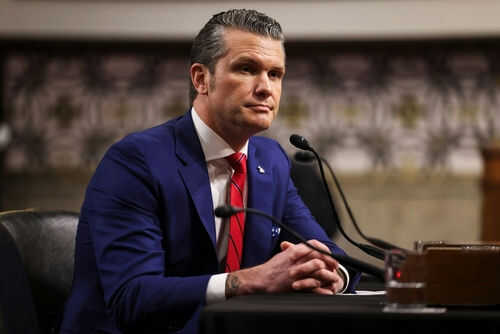
A Pentagon prayer calling for “overwhelming violence” in Jesus’ name has ignited a new civil-military fight over whether America’s wars are being sold as policy—or as a crusade.
Quick Take
- Pete Hegseth’s March 25, 2026, remarks at a Pentagon worship service are drawing scrutiny for mixing explicit sectarian language with the conduct of the U.S.-Iran war.
- Reports of a U.S. strike that hit an Iranian elementary school—and Hegseth’s public responses—have intensified questions about rules of engagement and civilian protection.
- Critics argue the episode risks alienating non-Christian service members and undermining military cohesion inside an all-volunteer force.
- Pope Leo XIV’s public pushback highlights a growing international split over religious rhetoric used to justify modern warfare.
What Hegseth Said—and Why It Became a National Flashpoint
Secretary of Defense Pete Hegseth delivered a forceful Christian prayer at a Pentagon worship service on March 25, 2026, asking God to empower “overwhelming violence of action” against enemies portrayed as beyond mercy. Multiple accounts describe the language as explicitly tying divine authority to the ongoing U.S.-Iran conflict. The controversy is less about private faith than about a senior official using a religious frame in an official setting while directing a major war.
Supporters of a strong national defense often prefer moral clarity over bureaucratic hesitation, but official rhetoric matters because it signals rules and restraints down the chain of command. When national leaders imply divine sanction for violence, critics warn it can be read as permission to loosen discipline and sidestep legal and ethical standards that are supposed to separate a professional military from a factional cause. The available coverage focuses on backlash; pro-Hegseth defenses are limited in the provided research.
The Iran War Context: Civilian Casualties and Competing Narratives
The prayer landed amid intense debate about the U.S.-Iran war’s human toll and the credibility of official messaging. The provided research cites the war’s start around late February 2026 and reports of significant casualties. A pivotal incident involves reporting that a U.S. strike hit an elementary school in Minab, killing a large number of children and teachers. Hegseth publicly rejected U.S. responsibility in early March as investigations and reporting continued.
These competing narratives are now central to public trust. If the strike was accidental, voters typically expect transparent accountability, not culture-war messaging. If the facts remain contested, officials still have an incentive to avoid language that sounds like collective punishment. Either way, the incident illustrates a broader concern shared by many Americans across parties: government institutions often appear more focused on managing optics than providing clear answers when civilians die and the stakes are national.
Constitutional and Military Culture Questions Raised by a “Holy War” Frame
The United States has a long tradition of service members practicing faith freely, including chaplains and voluntary worship. The dispute here centers on leadership conduct and tone: critics argue that sectarian calls for violence from a defense secretary blur lines between personal belief and state power. That matters for a force made up of Christians, Jews, Muslims, other faiths, and nonreligious troops who still must operate as one unit under one Constitution.
From a conservative perspective rooted in ordered liberty, two principles collide: religious freedom and limited government. Protecting service members’ faith does not require turning the Pentagon’s public posture into a theological instrument. The research also describes claims that Hegseth has pursued personnel policies tied to anti-DEI arguments and preferences for certain demographic groups. Those claims are politically explosive, but the strongest, verifiable issue in the sources is the public use of religious language to frame wartime violence.
International Blowback: The Vatican Contrast and Propaganda Risks
Pope Leo XIV’s statements, as summarized in the research, reject the idea that Jesus blesses war-making prayers, sharpening the global contrast with Hegseth’s rhetoric. That split matters because America’s alliances and legitimacy often depend on persuading neutral audiences that U.S. power is constrained by law, not driven by sectarian zeal. Analysts cited in the research argue that religiously charged messaging can become a gift to Iranian propaganda portraying the conflict as a civilizational battle.
Given all the religious criminals involved I call “the unholy war” on @MeidasTouch 🇨🇦 https://t.co/AJ4RfRcwnH https://t.co/VW9kY5CsYL
— Laura Babcock 🇨🇦 (@LauraBabcock) March 27, 2026
Republicans now controlling Washington still face a governing test: whether oversight and discipline keep wartime decisions anchored to constitutional authority and clear, measurable objectives. Democrats may attempt to obstruct, but the larger public demand is competence and accountability, not slogans. The sources provided are heavily critical and tilt left-of-center, so readers should weigh them accordingly. Still, the direct quotes and consistent timelines cited across outlets make the controversy hard to dismiss.
Sources:
Pete Hegseth’s Holy War Is an Unholy Nightmare
Patrick’s Politics: Christian fanaticism and the unholy war in Iran