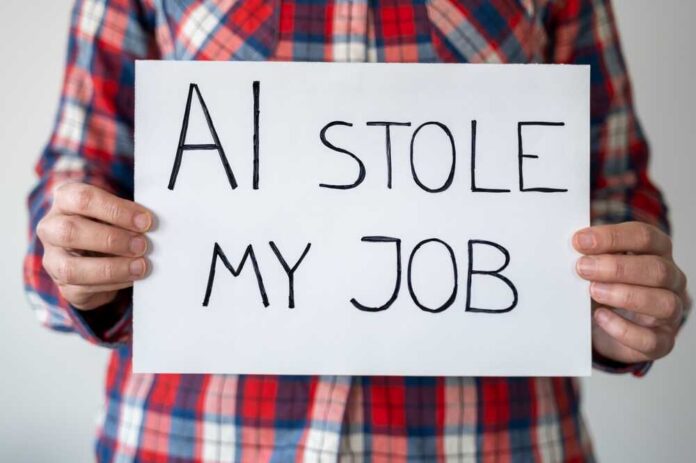
A seasoned software engineer went from a $150,000 salary to DoorDash and a trailer after AI reshaped hiring faster than his résumé could keep up.
Quick Take
- Shawn K, a 42-year-old software engineer with two decades of experience, says he lost his job in April 2024 as his employer leaned into AI-driven automation.
- He reports applying to 800+ roles with fewer than 10 interviews, suggesting a job market shift that experience alone may not fix.
- Industry layoffs piled up as AI tools spread, with reported totals exceeding 150,000 tech job losses in 2024 and another 50,000 early in 2025.
- AI leaders have publicly predicted code-writing automation will accelerate quickly, fueling fears that white-collar work is being devalued at scale.
A six-figure career collides with AI-driven cost cutting
Shawn K, 42, says a metaverse-focused company cut him loose in April 2024 as AI automation became a bigger part of how businesses staff and ship software. He had a computer science degree and roughly 20 years of experience, yet he still fell out of the traditional tech pipeline. He told Fortune he now lives in an RV trailer and tries to patch together cash through DoorDash and selling items online.
K’s situation lands like a gut punch because it doesn’t fit the older “bounce-back” story many professionals remember from past downturns. He previously lost jobs during the 2008 financial crisis and during the pandemic era, then returned to work within months. This time, he says the displacement feels structural rather than cyclical, because AI doesn’t just reduce demand temporarily—it can replace tasks permanently once companies restructure around it.
800 applications, almost no interviews: what that signals about the market
K told Fortune he has applied to more than 800 jobs while landing fewer than 10 interviews over more than a year of searching. That kind of ratio is hard to ignore, even allowing for rough hiring conditions and an unusually competitive tech market. The report also notes he brings in only “a few hundred bucks” a month from gig work and reselling, a steep drop from a $150,000 salary.
The broader backdrop is ugly for workers who thought their skills were a guaranteed ticket to stability. Fortune cites more than 150,000 tech workers laid off in 2024 and over 50,000 more in early 2025. A conservative takeaway is straightforward: when a labor market can discard productive people this quickly, Washington’s habit of promising “green shoots” and throwing money at headlines looks detached from real household budgets and real career disruption.
Big AI predictions collide with real lives—and no clear safety net
Public forecasts from AI executives are amplifying the shock. Fortune points to comments attributed to Anthropic CEO Dario Amodei predicting AI could write 90% of code by September 2025 and essentially all code within 12 months. Whether those timelines prove right or too optimistic, executives broadcasting that message can change behavior now—encouraging companies to freeze hiring, pressure teams to “do more with less,” and treat humans as a cost center.
The “metaverse to ChatGPT” whiplash shows how fast priorities can flip
The report also highlights an underappreciated factor: K worked in a metaverse niche that lost oxygen as ChatGPT-style tools captured corporate attention. That shift matters because it shows how quickly private-sector fashion can reshape livelihoods, even for experienced professionals. When a trend turns, the pain isn’t theoretical—it hits mortgages, savings, and family stability. It also raises a policy question: if government leaders keep chasing the next “industrial strategy,” can they keep up with markets moving at AI speed?
What K’s story suggests about power, accountability, and the American bargain
K’s own writing describes a “Great Displacement” already underway and warns of a coming “social and economic disaster tidal wave,” while he still calls himself an “AI maximalist.” That paradox is the heart of the story: Americans can support innovation while still demanding basic fairness in how the gains are shared. The limited data in this single case can’t prove a nationwide pattern by itself, but it captures a fear many voters share—institutions feel built to protect insiders, not workers.
Man missed red flags and lost his job to AI twice in 40 dayshttps://t.co/pCkkfbURBX
— Ave Will (@avecozave) April 14, 2026
One integrity check matters: despite the user topic claiming “lost his job to AI twice in 40 days,” the provided reporting primarily documents one job loss in April 2024 and the long job hunt that followed. Without additional verified sourcing, it’s more accurate to treat “twice in 40 days” as unconfirmed framing rather than established fact. That caution is important in an era when viral claims spread faster than accountability—especially when livelihoods are on the line.
Sources:
Hacker News discussion thread (item id: 43989615)