
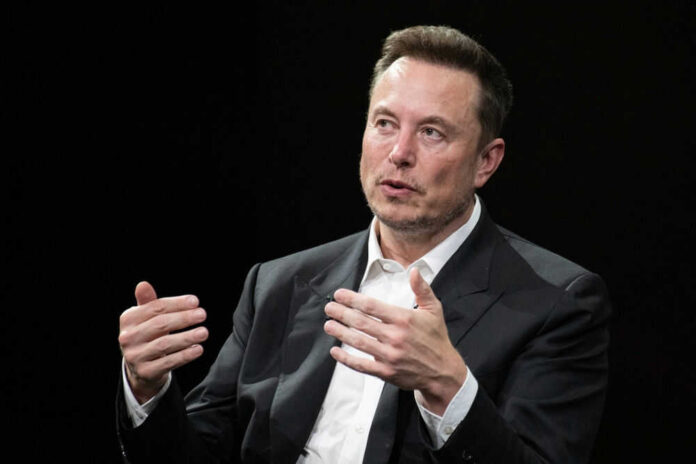
A single unconfirmed helicopter visit has turned a Miami Beach construction site into a symbol of how America’s billionaire class can move markets on rumor alone.
Quick Take
- Miami brokers are circulating claims that Elon Musk toured an under-construction, modern megamansion priced around $300 million at 5940 North Bay Road in Miami Beach.
- Developer Todd Michael Glaser declined to confirm the visitor’s identity, saying only that it “might have” been Musk and stressing he doesn’t track who tours the property.
- The property is off-market and, according to the developer, will not be shown again until completion—expected roughly two years from May 2026.
- The site’s backstory includes a high-speed value jump: purchased for $105 million in July 2025, flipped for $169 million two months later, then redeveloped into a new-build spec home.
What the rumor is—and what’s actually confirmed
Miami’s luxury real estate world is buzzing over reports that Elon Musk toured a $300 million modern mansion under construction at 5940 North Bay Road in Miami Beach. The part that’s verifiable is the project itself: it’s a major redevelopment led by developer Todd Michael Glaser and investors, located in one of the city’s most exclusive waterfront pockets. The alleged tour, however, remains unconfirmed, with brokers offering contradictory accounts.
In the reporting cited in the research, Glaser was asked directly whether Musk was the visitor and responded with deliberate ambiguity—“He might have”—while adding that he doesn’t get involved in identifying who sees the home. That answer may be legally and commercially prudent, but it also underscores a basic reality about high-end markets: a seller can benefit from curiosity without ever producing a hard “yes.” The rumor drives attention, regardless of whether it proves true.
The property details fueling the hype
The project’s specifics explain why the rumor stuck. The site spans roughly 2.3 acres with about 290 feet of frontage on Biscayne Bay—rare dimensions in Miami Beach’s most elite residential strip, sometimes compared to a “Park Avenue” for its concentration of wealth. The original house on the property dates back to 1936, but the current plan is a full modern redevelopment aimed at a headline-grabbing, record-level price.
Even the alleged arrival story reads like a Hollywood script: an unnamed visitor reportedly came by helicopter, landed in Biscayne Bay, and made it to shore by raft. Whether that detail is true or embellished, it fits the broader pattern of luxury branding—creating a narrative around exclusivity. For everyday Americans watching from the outside, it can look like an entirely separate economy, insulated from mortgage rates, inflation anxiety, and the normal constraints that shape middle-class life.
How a $105M buy becomes a $300M ambition
The business timeline is clearer than the celebrity angle. The research describes the property being acquired by Glaser and an investor group in July 2025 for $105 million, then flipped two months later for $169 million. After that rapid repricing, the home was pulled off-market and positioned as a new ultra-luxury spec build estimated around $300 million. The final number is not guaranteed, but the intent is unmistakable.
Spec development at this scale is also a reminder that today’s “real economy” and “asset economy” often diverge. When government policy drives uncertainty—through high interest rates, heavy spending, or unstable regulatory signals—scarce hard assets in prestige locations can become even more attractive to global capital. That dynamic fuels the frustration shared by many conservatives and liberals alike: ordinary workers feel asked to live with austerity and risk while elites remain protected by wealth and access.
Why Glaser’s “no more showings” matters
Glaser’s stated marketing posture is unusually strict: the home is off-market, and he reportedly does not plan to show it again until it is finished. The construction timeline offered in the research points to completion in roughly two years from the May 2026 reporting window. In practical terms, that means the market gets a long runway for speculation—who will buy it, what it will list for, and whether it will reset Miami’s residential price ceiling.
With brokers split between “I heard it was Musk” and “that’s nonsense,” the story is ultimately less about one person and more about what rumor reveals. In a polarized country where many voters believe the system favors connected insiders, high-dollar lifestyle intrigue can deepen cynicism—especially when government seems unable to deliver basics like affordability, safe communities, and predictable rules. The facts here are straightforward: the home is real, the project is massive, and the identity claim remains unproven.
Sources:
https://www.realtor.com/news/trends/rumors-swirl-among-miami-brokers-elon-musk-toured-300m-mansion/
https://traded.co/blog/elon-musk-rumored-to-eye-300m-miami-beach-megamansion-by-todd-michael-glaser/