The Biden-era Justice Department’s decision to quietly probe E. Jean Carroll for possible perjury is now colliding with jury findings that Trump sexually abused and defamed her, raising explosive questions about credibility, equal justice, and political score‑settling in one of the most polarizing cases in modern politics.
Story Snapshot
- The Justice Department is reportedly investigating whether E. Jean Carroll lied under oath about who funded her lawsuits against Donald Trump.
- Carroll allegedly testified in 2022 that she had no outside funding, but later disclosures revealed support from Democrat mega‑donor Reid Hoffman.
- Two civil juries have already found Trump liable for sexually abusing and defaming Carroll, and those verdicts remain in place on appeal.
- The investigation is unfolding inside a bitter, highly politicized fight over Trump, media narratives, and the weaponization of lawfare.
DOJ turns its focus to Carroll’s sworn testimony on lawsuit funding
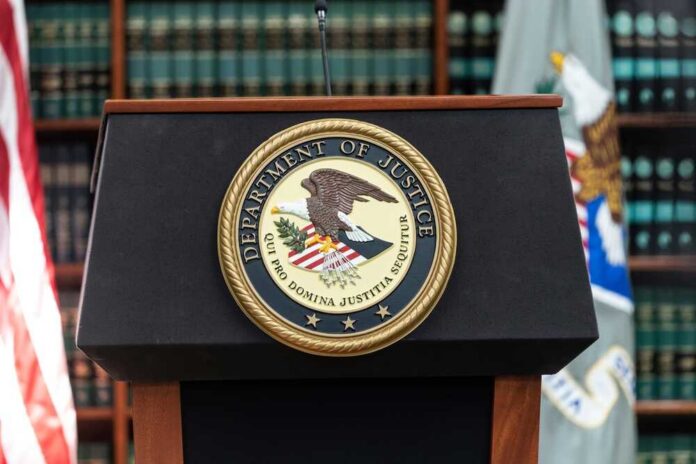
According to multiple reports, the Department of Justice has opened a criminal investigation into whether writer E. Jean Carroll committed perjury during her civil litigation against Donald Trump, focusing specifically on her 2022 deposition testimony about outside funding for her lawsuits.[1] Coverage based on sources familiar with the matter says the probe stems from statements Carroll made under oath that she had not received external financial support for her case. Later, her legal team acknowledged that some legal fees and expenses were covered by billionaire Democratic donor Reid Hoffman, a key funder of liberal causes and anti‑Trump efforts.[1][4] That apparent discrepancy between sworn testimony and later disclosures is now the reported predicate for federal investigators reviewing whether Carroll’s statements crossed the line from confusion or omission into criminal perjury, a felony that requires proof of intentional, material falsehood under oath.
Reports indicate the investigation is being handled via the U.S. Attorney’s Office for the Northern District of Illinois rather than through the New York offices that oversaw Trump‑related criminal cases, and Trump attorney Todd Blanche is said to be recused. A Justice Department spokesperson, when pressed by CNN, did not directly deny the existence of the probe and instead stated that “no U.S. Attorney’s Office has declined to investigate any case relating to the subject matter of CNN’s inquiry,” declining further comment.[1] That carefully worded non‑denial fuels suspicion among conservatives that the department is trying to keep political distance while still scrutinizing Carroll’s conduct. At the same time, the lack of any public charging documents, subpoenas, or visible court dockets underscores that the inquiry remains at an early, mostly secret stage, and that no decision has been made to bring a formal case.[1]
Jury verdicts against Trump still stand as appeals and investigations move in parallel
While the spotlight now turns to Carroll’s testimony, both of her civil cases against Trump have already produced jury verdicts that remain in force and continue to shape public perception.[2] In a high‑profile federal trial, a New York jury found that Trump sexually abused Carroll in a department store in the mid‑1990s and later defamed her by publicly calling her a liar, awarding her about $5 million in damages.[4] A second jury subsequently concluded that Trump’s 2019 statements as president also defamed Carroll, leading to an additional award bringing his total liability to roughly $83 million, according to coverage summarizing the outcomes.[5] Appellate proceedings are ongoing, and Trump has sought Supreme Court review on issues related to presidential immunity and the legal standards applied, but until higher courts say otherwise, these verdicts stand as formal judicial findings that Carroll’s core allegations met the “preponderance of the evidence” standard in civil court.[4]
Supporters of Carroll point to those jury findings to argue that she did not fabricate her accusations and that any investigation into her testimony should not be misread as an exoneration of Trump or a rejection of the civil verdicts.[2] Summaries of appellate reasoning emphasize that the jury’s determination of sexual abuse and defamation undercuts claims that Carroll’s lawsuit was a politically motivated hoax, at least under the governing civil law standards.[2][4] For conservatives, however, the picture is more complicated: the same legal system that found against Trump is now reportedly questioning whether Carroll herself was fully truthful when asked about who was bankrolling her fight. That tension reinforces a long‑standing concern on the right that lawfare, third‑party funding, and politicized civil litigation are being deployed asymmetrically against figures like Trump, while questions about accusers’ conduct receive far less media scrutiny until federal investigators step in.[1]
Unanswered questions about timing, intent, and political framing
Key details about the alleged perjury remain murky, leaving room for both sides to frame the narrative in line with their broader political views.[1] Reports acknowledge that the public record does not yet include the full 2022 deposition transcript, making it impossible to independently review the exact question Carroll was asked, how she responded, and whether she later corrected or clarified her answers.[1][7] Coverage also notes that the timeline of Reid Hoffman’s involvement is not fully clear: it is not publicly established whether his funding had already been committed at the time of Carroll’s testimony, or whether support was arranged afterward, which would bear directly on whether any sworn statement was literally false when made.[1] Without those basic building blocks—precise wording, dates, and documents—commentators cannot yet definitively assess whether the legal elements of perjury, including intent to deceive and materiality to the case, are present.[1][7]
🚨 The DOJ has reportedly launched a criminal investigation into E. Jean Carroll over possible perjury tied to her lawsuits against Donald Trump.
Well… that escalated quickly. 🔥
AG Todd Blanche has recused himself from the case, so the usual “weaponization” talking points… pic.twitter.com/CsUx9WRAlU
— OutspokenSamantha (@Outspoken_Sam) May 28, 2026
The broader context is a highly charged media and political environment in which every new development becomes ammunition for one side’s narrative.[1] Left‑leaning outlets have characterized the perjury probe as a “revenge plot” by Trump allies or a weaponization of the Justice Department against a woman juries found he sexually abused, warning that such investigations could chill victims from coming forward in high‑profile cases.[1] Conservative commentators, by contrast, see the inquiry as overdue accountability and a test of whether the same system that aggressively pursues Trump will enforce the law just as firmly when a well‑connected accuser and Democratic‑aligned donors are in the dock. Scholarly analysis of similar public‑figure defamation and assault disputes shows that these cases often evolve into secondary battles over procedure, credibility, and funding, as both sides use discrepancies and disclosure fights to reinforce their broader claims about corruption, politicization, or victimhood.[1][2] Until more records become public, the investigation into Carroll’s testimony will continue to sit at the intersection of legal scrutiny and political warfare, with high stakes for public trust in the rule of law.
Sources:
[1] Web – DOJ Launches Investigation Into Woman Whom Jury Found Trump Sexually …
[2] Web – Trump Goons Launch Revenge Plot Against Sex Attack Victim
[4] Web – DOJ opens criminal investigation into Trump accuser E. Jean Carroll
[5] Web – DOJ Launches Investigation Into E. Jean Carroll – Mediaite
[7] Web – Justice Department Launches Probe of E. Jean Carroll – Political Wire