
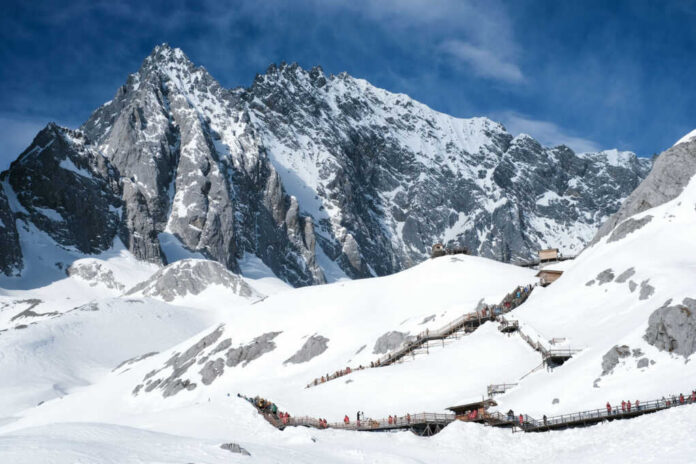
A father and his 18-month-old toddler had to be airlifted off one of California’s highest peaks after becoming trapped in deep snow — a dramatic rescue that raises serious questions about trail safety and personal responsibility in hazardous mountain conditions.
Story Snapshot
- El Dorado County Search and Rescue crews airlifted a man and his 18-month-old child from Freel Peak near Lake Tahoe on May 21.
- Two search and rescue volunteers were flown to the peak, then hiked down through deep snow to reach the stranded pair before the airlift.
- The father and toddler were transported to South Lake Tahoe airport and evaluated by first responders on the ground.
- The incident highlights ongoing dangers of underestimating late-season snowpack on California’s high-elevation trails.
Rescue on Freel Peak
The El Dorado County Sheriff’s Office confirmed that rescue crews airlifted a man and his 18-month-old child from Freel Peak on May 21. [1] Freel Peak, located in the Lake Tahoe area, is the highest point in the Sierra Nevada range accessible from that region, topping out above 10,000 feet. Deep snow blanketing the trail made conditions dangerous and ultimately left the pair unable to safely continue or retreat on their own.
The rescue operation required deploying two El Dorado Search and Rescue volunteers, who were flown by helicopter up to the peak and then hiked down through the snow to reach the stranded father and child. [1] Once the volunteers made contact, the father and toddler were airlifted out of the area. They were transported to South Lake Tahoe airport, where first responders evaluated and treated both individuals. [1] No life-threatening injuries were reported in available accounts.
Late-Season Snow Remains a Serious Hazard
California’s high-elevation trails frequently retain dangerous snowpack well into spring and even early summer, a reality that catches many hikers off guard. Freel Peak and surrounding Sierra Nevada terrain can hold several feet of snow through May, with conditions that shift rapidly depending on temperature and recent storms. Authorities routinely warn hikers to check current trail and weather conditions before attempting high-altitude routes, particularly when traveling with young children or without proper winter gear.
This rescue fits a broader pattern of outdoor emergencies driven by underestimating mountain hazards. Families and individuals venturing onto snow-covered trails without adequate preparation place themselves at risk and require costly, resource-intensive rescue operations. Search and rescue teams across California respond to dozens of such incidents each year, pulling volunteers and emergency resources away from other needs — a burden that falls on taxpayers and local communities.
A Reminder About Personal Responsibility in the Outdoors
Bringing an 18-month-old onto a snow-covered high-elevation peak underscores the importance of sound judgment when planning outdoor activities, especially with very young children. Conservatives have long championed personal responsibility as a cornerstone value — and that principle applies directly here. Parents bear the obligation to accurately assess risk before putting their children in potentially life-threatening situations, regardless of how routine a trail may seem in warmer months.
The good news is that dedicated search and rescue volunteers responded swiftly and professionally, bringing both the father and toddler home safely. [1] These teams — often made up of trained community volunteers — represent the best of local emergency response. Their rapid deployment and successful extraction under difficult snow conditions is a testament to preparation and skill. The outcome was fortunate, but the episode serves as a firm reminder that California’s mountain terrain demands respect, preparation, and honest self-assessment before heading out — especially with a child in tow.
Sources:
[1] Web – Father and toddler son airlifted from snowy California trail as …