
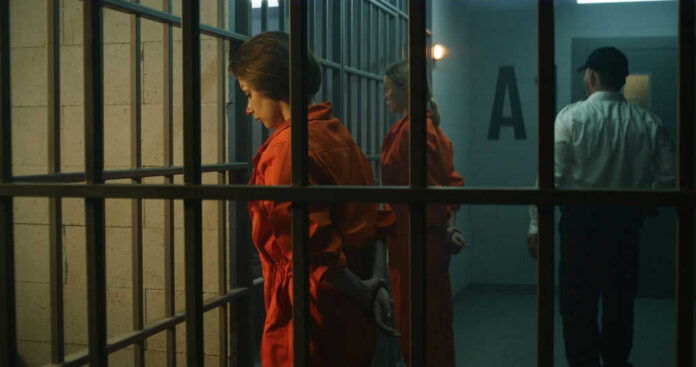
Twenty incarcerated women now claim San Francisco turned a strip search into a training video set, and the collision between their story and the sheriff’s denial exposes how fragile your rights become the moment a cell door shuts.
Story Snapshot
- Women allege a mass, suspicionless strip search in a San Francisco jail was filmed on body cameras and mocked as “just like YouTube.” [1]
- The new federal class-action lawsuit frames the episode as part of a pattern of degrading, retaliatory searches of women.
- The sheriff’s office insists its policies forbid such conduct and publicly denies that male deputies strip-searched the women. [2]
- The fight now turns on video, policy, and whether a jail can turn the most intrusive search the state performs into “training” content.
The Alleged Mass Strip Search That Sparked a Federal Case
On May 22, 2025, about a dozen San Francisco sheriff’s deputies reportedly entered B Pod, the women’s housing unit at County Jail No. 2 on Seventh Street, and ordered every woman into the common area under armed supervision. A new federal class-action complaint says at least nineteen women were then forced, one by one, to strip naked, lift their breasts, and spread their buttocks while other women and male deputies could see them.
The suit alleges the women received no advance notice, no explanation of individualized suspicion, and no claim that a specific weapon or contraband justified the sweep, which is exactly what California’s strip-search law is supposed to require. [1] According to the filing, these were not intake searches of new arrivals but detainees already living on the pod, which makes the stated “mass security” rationale a key future battleground in court rather than a settled justification. [1]
Body Cameras, “Training Footage,” and the Power of a Mocking Comment
The detail that jolts even jaded readers is not only that women say they were stripped in front of male deputies, but that those deputies allegedly left their body-worn cameras running. [1] The complaint and earlier legal claims say San Francisco’s own policy forbids camera use during strip searches, yet deputies activated them anyway. [1] When a female deputy reportedly asked a supervising sergeant if she should turn her camera off, the sergeant allegedly told her to keep filming because the footage might be used “for training purposes.” [1][3]
The women say that same sergeant joked the footage would be “just like YouTube” or “just like Cops,” and that their genitalia would be blurred before public release. If a jury believes that remark was made, it will see more than bad taste. The comment, on its face, treats the women not as citizens in government custody but as content. From a conservative, limited-government lens, that sounds less like public safety and more like a state actor forgetting that government power must be tightly constrained when it reaches the human body. [1]
Retaliation, Menstruation, and the Human Cost Behind the Legal Claims
The complaint goes beyond a single episode and alleges a pattern: degrading comments, ongoing invasive searches after court and medical visits, and retaliation when women objected. Some plaintiffs say menstruating women were ordered to remove sanitary products with no replacements, then left bleeding through their clothing. The filings describe sexual remarks about breasts and buttocks, and at least one allegation that a deputy who took part in the searches later groped a detainee. [1]
Those facts remain unproven allegations, but they align with what legal scholars have long warned about: strip searches are among the most psychologically invasive tools a jail can use, and the line between “security measure” and “sexual humiliation” can be crossed by a tone of voice, a smirk, or a camera left running. The women report severe emotional distress, shame, anxiety, sleep loss, and a lasting sense that the jail is not a controlled institution but a place where their bodies are spectacle. [1]
The Sheriff’s Denial, Policy Promises, and Evidence Asymmetry
The San Francisco Sheriff’s Office publicly insists that the conduct described “does not reflect” its policies and that female inmates were searched by female deputies in private, individual settings, not in a mass display. [2][3] Officials specifically deny that male deputies strip-searched the women, and say the incident remains under administrative review. [3] The City Attorney’s Office adds that it is reviewing the claims, which means no public confession, but also no point-by-point factual rebuttal backed by records. [2]
Women sue San Francisco sheriff after alleged mass strip searches https://t.co/BxEmYJhKkm
— Denis (@USAfree1979) May 23, 2026
That creates the classic modern jail dilemma. The women do not control the videos, the camera logs, or the written strip-search policy; the sheriff does. If the office quickly released footage showing orderly, private searches by female staff with cameras off, the lawsuit’s narrative would collapse. Instead, the public sees only broad denials and assurances that policy forbids exactly what the women describe, with no documents attached yet. From a common-sense perspective, that evidence asymmetry should make citizens press both sides harder, not choose teams based on politics. [1][2]
Why This Case Should Matter to Anyone Who Thinks “I’ll Never Be in Jail”
Most people over forty have heard “if you have nothing to hide, you have nothing to fear” at least once in a security debate. This case tests that cliché at its most literal: if the government can force law-abiding citizens who are merely detained, not yet convicted, to strip in front of cameras “for training,” then “nothing to hide” starts to look like “nothing left.” [1] Conservative or progressive, no sane person wants a government that confuses human dignity with instructional footage.
The women’s attorneys seek not only damages but a jury verdict that clarifies what the Constitution and California law actually permit behind jail walls. The real suspense now is whether the body-camera files, pod surveillance video, internal policies, and medical records will see daylight before a settlement silences the details. However this ends, the question it raises should stay with every voter: when the door closes on a jail cell, do our values close with it, or do they follow the uniform and the camera in?
Sources:
[1] Web – Legal claims allege women in SF jail were filmed during strip searches
[2] Web – Filed claim alleges San Francisco sheriff’s deputies recorded strip …
[3] YouTube – Women claim SF sheriff’s deputies recorded them during strip …