
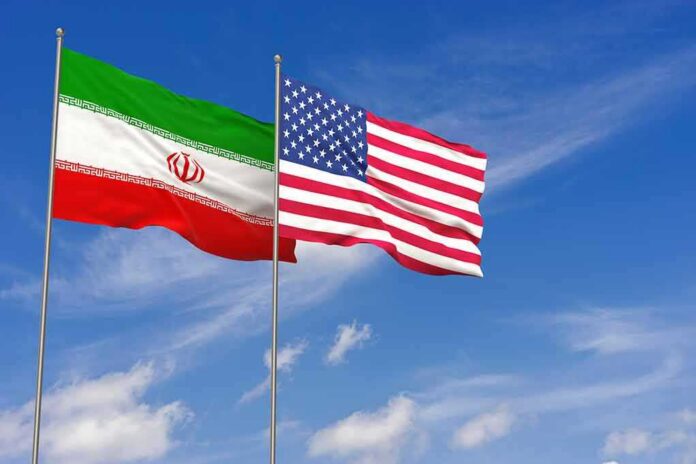
As Iran’s top media ally brags that Tehran “wants” a U.S. land invasion, American troops and taxpayers could be the ones forced to pay the price if Washington takes the bait.
Story Snapshot
- Iran’s favorite English-language spokesman says Tehran wants U.S. “boots on the ground” because it believes American troops would lose.
- Professor Mohammad Marandi claims Iran has quietly built a war machine for decades to trap and defeat a U.S. invasion by killing troops and choking off global oil.
- Senior Iranian officials publicly promise any ground war would be a “disaster” for America, echoing the same message of confidence and threat.
- Iran’s narrative aims straight at U.S. politics, betting Washington’s elites will blunder into a costly ground war that bleeds American lives and dollars.
Iran’s Mouthpiece Sells a Ground-War Trap for American Troops
Professor Mohammad Marandi, a Tehran-based academic long tied to Iran’s ruling system, is now telling global audiences that many Iranians actually want the United States to launch a land invasion. He claims ordinary Iranians think U.S. “boots on the ground” would fail and end the war on Tehran’s terms, not Washington’s. In one interview, he said Iranians wanted the United States to carry out a land operation because they believe American forces “would ultimately fail” and the war would end for good. That message is crafted to sound bold and confident, but for U.S. families with loved ones in uniform, it points to a chilling goal: lure American troops into a grinding, bloody fight far from home.
Marandi does not speak like a lone blogger. He has served as an advisor to Iran’s nuclear negotiation team and appears often as a central English-language voice for Tehran. In recent war updates, he argues that Iran has been preparing for this scenario “from the very beginning, from decades ago,” building missile and drone forces meant to defeat invading American troops on the ground. He claims Iran wants a ground operation because once the United States is deeply tied down, the “empire” will be forced to withdraw and “go away for good.” That is not a call for peace; it is a plan to break American power by bleeding U.S. forces in a long war that voters back home never asked for.
Decades of Prep: Missiles, Drones, and Oil Choke Points Aimed at America
In a detailed interview with Al Mayadeen, Marandi said Iran has spent decades preparing not just for airstrikes but for U.S. land troops, expanding underground bases and stockpiling missiles and drones to hit American forces and allied targets. He described a long-term plan for Iran to control the Strait of Hormuz, the choke point for much of the world’s oil, and use that control while fighting U.S. forces on the ground. Other clips show him warning that any U.S. ground invasion would fail and spark a wider global economic crisis, especially by disrupting energy flows from West Asia. This strategy directly threatens American drivers, retirees, and small businesses, who already lived through painful energy spikes and inflation tied to foreign conflicts.
Marandi’s message fits what U.S. analysts call narrative warfare: using bold stories to shape how Americans view war and pressure Washington’s choices. Research on Iranian disinformation shows Tehran pushes three themes – that its military is victimized yet successful, that its enemies start the wars, and that United States “forever wars” only hurt Americans. By saying Iran “wants” a land invasion because it will win, Marandi blends all three themes. He paints Iran as strong and ready, blames outsiders for aggression, and tells American audiences that U.S. leaders will once again walk their troops into a disaster. For a nation tired of long wars and blown budgets, that message is designed to deepen division and confusion inside the United States.
Official Tehran Rhetoric: ‘We Are Waiting for Them’ – But Call It Disaster
Marandi’s claims are echoed, in part, by senior Iranian officials who talk openly about a U.S. ground war, but frame it as a disaster for America rather than something Iran “welcomes.” Ali Larijani, secretary of Iran’s Supreme National Security Council, recently said Iran is ready to “capture and kill thousands” of American soldiers if they invade, vowing to disgrace U.S. troops who set foot on Iranian soil. On the same day, Foreign Minister Abbas Araghchi told an American network that Iran is “anticipating their arrival” and that a ground offensive would spell disaster for U.S. forces. He later repeated the line that a ground invasion “would be a big disaster for the United States,” while insisting Iran’s actions are purely defensive.
Those statements show how Tehran walks a line between deterrence and taunting. Araghchi stressed that when he said Iran is “waiting for them,” he did not mean Iran wants war to continue forever, but that it is prepared for “any scenario, any eventuality, any possibility.” At the same time, he and Larijani repeatedly promise humiliation and heavy losses for American forces, trying to scare U.S. planners and audiences away from a ground campaign. When Marandi then tells viewers that Iranians actually “want” a land invasion because they will win, he shifts that deterrence into a confident dare. That dare is aimed squarely at Washington decision-makers who might believe they can manage escalation and control costs.
Why This Narrative Targets U.S. Politics, Budgets, and Patriot Fatigue
Strategic studies on foreign information campaigns show regimes like Iran and Russia use bold, counterintuitive lines – such as claiming they welcome invasion – to raise the perceived cost of intervention and polarize debate inside democracies. By saying “we want land invasion” while warning it will be an American disaster, Tehran’s voices tap into U.S. public anger over past “forever wars” and deep distrust of globalist elites. This messaging seeks to make ordinary Americans doubt their own leaders more than they doubt hostile foreign regimes, weakening national unity at the exact moment U.S. troops may face new risks abroad.
Western Iran analysts or Iranian analysts based in the West rarely support the Iranian regime. Yet time and again, those of us who try to explain what we see rather than what we might want to see are accused of being pro regime. Analysis is not advocacy. Explaining the regime’s… https://t.co/c0mGUiNe7b
— Sanam Vakil صنم وكىل (@SanamVakil) July 19, 2026
For conservative Americans, the stakes are clear. A foreign regime that chants “death to America” now claims it wants our troops on its soil because it believes it can kill them, break our economy, and force our country to back down. That is not bravado we can afford to ignore. Any talk in Washington of “boots on the ground” in Iran must be weighed against decades of Iranian planning to turn such a move into a trap. Protecting our service members, our energy security, and our Constitution means refusing to stumble into wars our enemies have spent years preparing to exploit.
Sources:
pjmedia.com, indiatoday.in, foxnews.com, time.com, npr.org, instagram.com, atlanticcouncil.org