
Democrats who helped drain America’s emergency oil stockpile are now demanding President Trump tap what’s left as an Iran-driven price shock hits U.S. families.
Quick Take
- Oil prices surged above $110 per barrel amid escalating Middle East conflict and disruptions tied to the Strait of Hormuz.
- The Trump administration has not publicly committed to releasing crude from the Strategic Petroleum Reserve (SPR), despite calls from Sen. Chuck Schumer.
- Multiple reports place current SPR holdings around 58% of capacity, after major Biden-era drawdowns and ongoing infrastructure repair needs.
- Trump officials argue the priority is rebuilding the SPR and expanding “energy dominance,” while Congress debates funding and mandatory sale rules.
Oil spikes over $110 as war risk tightens global supply
Middle East escalation pushed oil prices above $110 per barrel, bringing renewed “sticker shock at the pump” fears back home. Reports describe an Israel strike on Iran’s nuclear program followed by Iranian actions affecting the Strait of Hormuz, a chokepoint for global shipping. With that corridor under pressure, traders price in disruption risk quickly, and U.S. consumers feel it through gasoline and diesel costs that ripple into groceries and household budgets.
Senate Minority Leader Chuck Schumer has urged President Donald Trump to release SPR oil immediately to stabilize markets and lower prices. The administration response, as reported, emphasizes record U.S. oil and gas production and an “all-of-the-above” posture aimed at expanding supply rather than reflexively leaning on reserves. The key factual point remains straightforward: as of early March 2026 reporting, the White House had not publicly committed to an SPR release despite the price spike.
The SPR was built for emergencies, but it is not “full” today
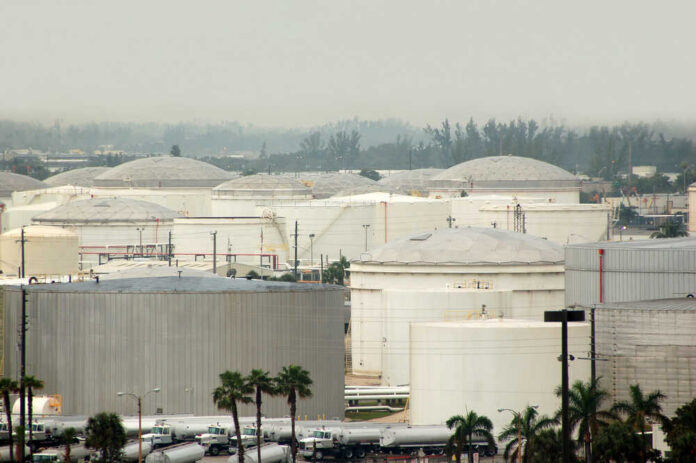
The Strategic Petroleum Reserve was created after the 1970s energy crisis to provide an emergency backstop during major disruptions. It is not a small program: the reserve consists of four major sites along the Texas and Louisiana Gulf Coast with salt caverns designed to hold vast quantities of crude. Several sources cite maximum capacity around 714 million barrels, while current inventory is reported in the low 400-million-barrel range—roughly 58% of capacity.
That depleted level is not an abstraction; it shapes what Washington can credibly do during a real crisis. Biden-era releases included a major 2022 drawdown approaching 200 million barrels—the largest sale on record—after Russia’s invasion of Ukraine shook markets. The result is a smaller cushion for the next emergency, whether it’s geopolitical conflict, hurricane damage in the Gulf, or a domestic supply disruption. Rebuilding that cushion takes time, money, and functioning facilities.
Infrastructure limits complicate “refill now” promises and “release now” demands
Energy Secretary Chris Wright has framed SPR replenishment as a national security issue and has highlighted repair costs exceeding $100 million tied to restoring full capability. Reports also note warnings going back years that aging surface infrastructure could compromise performance. Former Deputy Energy Secretary David Turk has described a practical bottleneck: purchase and refill capacity has been limited to roughly 3 million barrels per month due to physical constraints, turning a rapid refill into a multi-year project.
That physical reality matters for policy tradeoffs. Releasing barrels can calm prices temporarily, but it can also deepen the problem if the reserve cannot be refilled at a meaningful pace afterward. With inventory already well below the stated 700+ million-barrel capacity, conservatives focused on national resilience will naturally ask whether short-term price optics are worth eroding emergency readiness. The available reporting does not quantify how much relief a release would deliver under current conditions.
Schumer’s reversal highlights how Washington uses energy as a political lever
The political contrast in the reporting is sharp. A key detail cited is that Schumer previously opposed or blocked an effort tied to filling reserves when oil prices were low—around $29 per barrel during COVID-era market conditions—yet now calls for releasing oil when prices are high. That is not a minor inconsistency; it goes to whether the SPR is treated as strategic insurance or as a tool for short-term political messaging when voters are angry about fuel costs.
At the same time, congressional proposals show Republicans pushing a more structural approach: funding for SPR purchases, money for maintenance, and changes to mandatory sale requirements that have forced barrels out over time. The House-passed “One Big Beautiful Bill Act” is reported to include funding for purchases and facility maintenance, while the Senate Energy and Natural Resources Committee proposal includes purchase money, repair funding, and repeal of an annual mandatory sale requirement. Those measures reflect an emphasis on capacity and preparedness.
What we can and cannot confirm about “172 million barrels”
Some online discussion has centered on whether President Trump is releasing 172 million barrels from the SPR. The research provided here does not confirm a release of that size. Instead, the reporting states the administration has not publicly committed to tapping the SPR as of early March 2026, even amid oil above $110. If new announcements occurred after those reports, additional real-time verification would be required before treating a specific barrel figure as fact.
Sources:
Aging caverns imperil Trump push to refill petroleum reserve
Schumer once blocked Trump’s move fill nation’s oil reserves — now he wants them opened
How has the Strategic Petroleum Reserve been used by US presidents during wartime
Trump promised to fill America oil