
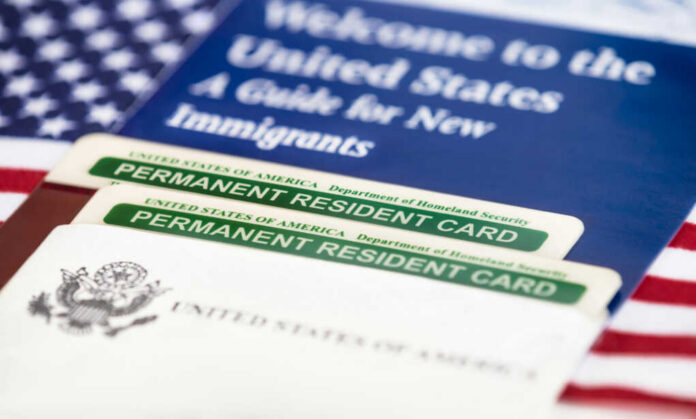
Washington just turned thousands of quiet, law‑abiding immigrants into involuntary globetrotters by telling them, “If you want to stay in America, first you have to leave.”
Story Snapshot
- New Trump administration policy pushes many green card applicants to leave the United States and apply from their home country.
- Officials brand this as an “integrity and security” upgrade with tougher vetting and fraud checks.
- Families, employers, and lawyers warn of confusion, long separations, and costly repeat paperwork.
- The fight exposes a deeper clash between border control, bureaucracy, and basic common sense.
What A Green Card Is Really Worth In This Debate
A green card is not just another government document; it is legal permission to live and work permanently in the United States, start a business, and eventually seek citizenship.[3][4] Most people do not get here through a lottery fantasy. They are sponsored by a United States citizen spouse or employer, pass medical exams, prove clean criminal records, and then wait in long lines.[1][3][5] The system already separates categories by tight quotas, age, and family ties, and requires detailed proof of income and relationship.[1][3]
Under long‑standing rules, many of these applicants used “adjustment of status,” a process that lets them complete green card steps without leaving the country if they entered lawfully and stayed in good status.[1][3] The Trump administration is now trying to flip that script. Foreign students, temporary workers, and tourists who marry, take job offers, or gain other eligibility inside the United States may be told to pack their bags and restart abroad, unless they qualify for narrow exceptions.[2]
The New Rule: Leave First, Then Ask To Stay
The United States Citizenship and Immigration Services announced that most foreigners inside the country on temporary visas who want green cards must return home and apply at a consulate, except in “extraordinary circumstances.”[2] Officers will decide what counts as extraordinary, which means a lot of power rests in individual judgment rather than clear statute. The agency frames this as a reset: temporary visitors should depart when their visit ends, not use that visit as the first step to permanent residence.[2]
This might sound tidy on a talking‑points card, but the policy lands on a system already groaning under new medical‑exam rules, tougher public charge scrutiny, and expanded background checks.[1][3] Legal and advocacy groups describe waves of pauses, re‑interviews, and re‑screening of already approved or pending applications, from refugees to employment‑based immigrants.[3][5] For many families, the message is not clarity; it is whiplash and fear that one memo could upend years of planning.
Security Upgrade Or Bureaucratic Overkill?
The administration sells this as an integrity move: more fingerprints rerun through Federal Bureau of Investigation systems, more scrutiny overseas, and fewer chances for someone to “slip through the cracks.”[4] Conservative instincts favor strong borders and serious vetting, and those are legitimate goals. No voter wants a rubber‑stamp system handing out permanent status without checking whether someone is a criminal, a security risk, or a welfare dependency risk.
The real question is not whether vetting is needed; it is whether forcing people to leave accomplishes more than the existing in‑country checks. Applicants already undergo medical exams with approved doctors, background checks, and in‑person interviews before obtaining green cards.[1][3][5] If the government duplicates the same fingerprints, the same medicals, and the same questions in a different building overseas, that looks less like “integrity” and more like busywork that wastes tax dollars and human time.
The Human And Economic Price Tag
Lawyers report broad confusion about who must now depart, with some clients facing paused applications or new trips back home,[1][2][5] and employment‑based processing for many countries already slowed or suspended by other policy changes.[4] A spouse of a United States citizen might leave for what was supposed to be a short consular appointment, only to get stuck for months by security checks or paperwork glitches. A doctor on a work visa could walk away from patients, travel home, and then watch a consular backlog grow.
L.J. D'Arrigo, leader of Harris Beach Murtha's Immigration Practice Group, says the Trump administration's most recent immigration move means most foreign nationals temporarily in the U.S. seeking a green card will have to return to their home country to apply at a U. S.…
— Harris Beach Murtha (@HarrisMurtha) May 22, 2026
From a conservative, common‑sense standpoint, any rule that disrupts intact families and productive workers without demonstrable security gain deserves skepticism. Government has a duty to enforce the law, but it also has a duty not to design booby‑trapped procedures that cause needless separation, spur job losses, or shove lawful immigrants into legal limbo to prove a political point. When the same agency that already vetted you insists you leave so it can vet you again, it starts to look like theater, not stewardship.[3][5]
Power, Process, And What Comes Next
This departure requirement fits a broader pattern: the Trump administration has leaned heavily on regulatory tweaks, memos, and “interim final rules” to tighten immigration without rewriting statutes.[4] Public charge rules were expanded to probe credit scores, job prospects, and past benefit use, with huge discretion handed to officers. Employment‑based visas in dozens of countries saw pauses or extra hurdles.[4] Each change stands alone on paper, but together they create a climate of uncertainty that deters even qualified applicants.
The missing piece is hard evidence that this specific leave‑the‑country rule uncovers fraud or danger that the existing system could not. None of the available reporting offers data on extra fraud cases revealed or measurable security gains.[1][3][4][5] What we do see are people in line being told the line just moved overseas. A serious immigration system should balance sovereignty and compassion, security and predictability. Requiring good‑faith applicants to exit just so the same government can re‑stamp their paperwork fails that balance and risks turning prudent vetting into pure bureaucracy.
Sources:
[1] YouTube – Trump admin changes requirements for green cards …
[2] YouTube – Trump’s BIG changes to Green Card Adjustment of Status …
[3] Web – Trump Immigration Policy Changes – USAHello
[4] Web – Immigration: Recent Changes and New Regulations | Insights
[5] Web – Trump Administration Abruptly Stopped Processing Green Card …