Major television networks quietly refused to air President Trump’s primetime election-security speech on their main channels, leaving many viewers feeling blacked out by the very media they once trusted.
Story Snapshot
- ABC, NBC, and CNN skipped live coverage of Trump’s election-security speech on their flagship TV channels, pushing it to smaller streaming platforms instead.
- Trump blasted the decision during the speech, accusing the networks of hiding election-security concerns and even calling for their broadcast licenses to be revoked.
- CBS, Fox News, and other outlets did air the speech in full or in part, creating a sharp split in how Americans could see their own president speak about elections.
- Many conservative viewers now say they are “deleting” ABC, NBC, and CNN, reflecting deep anger at what they see as a growing media blackout against Trump and election integrity.
Networks Block Trump’s Speech From Main Channels
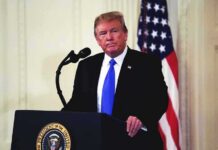
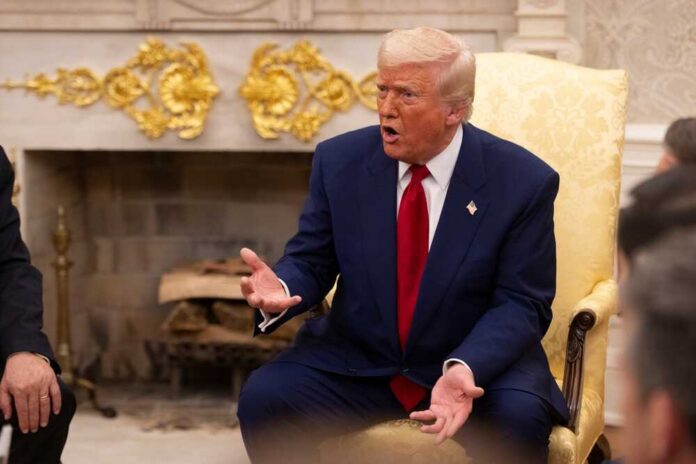
On Thursday night, President Donald Trump delivered a primetime address on election security and the integrity of past and future votes. ABC, NBC, and CNN chose not to show the speech live on their main television channels, even after the White House formally asked major broadcasters to carry it. Instead, ABC ran the address on its ABC News Live streaming service and radio network, while NBC used its NBC News NOW streaming platform. CNN monitored the speech and carried a live feed on its website and subscription streaming service, but not on its regular cable broadcast. Viewers who turned on these networks’ primary TV feeds saw normal entertainment or news shows, not the president speaking about how votes are counted and protected.
Fox News and the Fox broadcast network aired Trump’s speech live, while CBS cut into its primetime lineup with a special report that carried part of the address before leaving for analysis. Another outlet, MS NOW, began airing the speech but cut away after roughly 17 minutes to add commentary and fact-checks. This created a media split that many families noticed in real time: some channels treated the speech as important national news that deserved live coverage, while others pushed it to lesser-watched online streams or chopped it up with running criticism. For viewers who rely on traditional TV, especially older Americans, the choice by ABC, NBC, and CNN meant Trump’s remarks were effectively invisible unless they went hunting online.
Trump Slams ‘Fake News’ and Threatens Licenses
During the address itself, Trump directly called out ABC and NBC for refusing to interrupt regular programs to air his speech. He said that “in a rare move” the two “fake news” networks had decided not to cover it and accused them of being part of a “plot” to hide evidence of election fraud. Trump argued that fraud on this scale “should mean a revocation of their licenses,” urging punishment for broadcasters that blocked his message about supposed vulnerabilities and foreign interference in past elections. His criticism echoed years of conflict with major media companies, which he often says are biased against conservatives and against him personally. The move by the networks gave him fresh material to argue that the corporate press wants to control what Americans are allowed to hear about elections.
Legal experts quickly pointed out that revoking broadcast licenses is not simple and that the First Amendment protects networks’ right to choose what they air. The Federal Communications Commission (FCC) reviews licenses under rules set by the Communications Act, and the agency’s chair cannot unilaterally pull national network licenses simply because they declined to air one speech. Still, Trump’s threats highlight a growing clash between a president focused on election integrity and media companies that say they must filter out “misleading” or “false” claims. In 2020, several outlets even cut away mid-speech and told viewers they were doing so because Trump’s election comments were not backed by evidence. Now, instead of cutting away, some networks are choosing not to show the speech at all on their main channels.
Why Networks Say They Didn’t Air the Speech
Executives and anchors at these networks framed their decision as a matter of “responsible” journalism. One CNN anchor said the network would monitor Trump’s remarks but not air them in real time because he has a “history of misleading and in some cases simply false statements” about election security. ABC and NBC did not spell out detailed reasons, but major outlets often resist giving live primetime slots to what they see as overtly political content. They argue that airing claims about election fraud without context could mislead viewers and spread doubt about past results. Instead, they prefer to stream the speech online, then follow up with edited clips, fact-checks, and panel discussions after the fact.
Critics on the right say this is not neutral journalism but a form of selective blackout. When a president raises questions about voter files, foreign hacking, or problems in how ballots are handled, many Americans believe they have a right to hear him directly and decide for themselves. Pushing that speech to low-audience streaming sites, while keeping main TV channels free of his message, feels like quiet censorship to those viewers. Research on media behavior notes that big outlets often shape elections by what they choose to cover and what they choose to ignore, not only by how they fact-check. For Trump supporters, the pattern looks clear: the same networks that fought him in 2016 and 2020 are now gatekeeping his push for stronger election rules.
Conservative Viewers Push Back, Even if Quietly
Families like “Aunt Mary and Uncle John” have become a symbol of the backlash from everyday viewers who feel betrayed by the big alphabet networks. Many people posting online say they are “deleting” ABC, NBC, and CNN from their channel lineups and streaming apps after seeing the speech sidelined. Past flare-ups over media blackouts have rarely produced hard numbers showing large subscription losses, but they do deepen distrust and anger among conservative audiences. These viewers already resent years of slanted coverage on immigration, energy, and cultural issues and now see election integrity being treated as something too dangerous for them to watch live.
Scholars who study political media talk about “outrage-mongering,” where strong language about censorship and fraud is used to fire up supporters. Whatever one calls it, the core reality here is simple: three of the biggest news brands in America decided their viewers should not see Trump’s election-security speech on the main TV channels they trust every night. For a constitutional system that depends on informed citizens and open debate, many conservatives feel this crosses a line. Whether or not every claim in Trump’s speech stands up to scrutiny, they argue the decision belongs in the hands of the people, not in a closed meeting of network executives in New York and Washington.
Sources:
pjmedia.com, yahoo.com, theguardian.com, axios.com, nytimes.com, usatoday.com, bostonglobe.com, pbs.org, sites.bu.edu, journalism.uoregon.edu