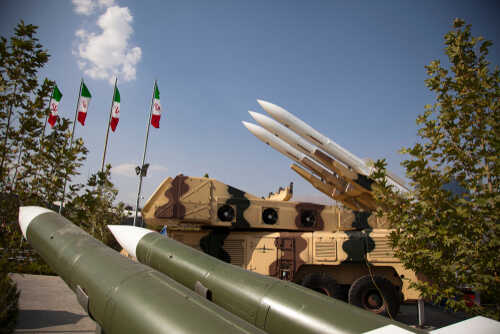
New evidence shows Chinese money, banks, and technology quietly powering Iran’s war machine while American taxpayers still foot the bill to contain the chaos it creates.
Story Snapshot
- U.S. government analysts say Chinese trade and banking networks are helping Iran dodge sanctions and fund its military.
- Chinese-origin parts show up in drones and missiles used by Iran and its proxies against U.S. forces and allies.
- China’s oil purchases are now a lifeline for Tehran’s war budget, effectively underwriting attacks on American interests.
- Much of the worst evidence is still hidden behind classified walls and anonymous sources, leaving voters in the dark.
How Chinese Money Keeps Iran’s Regime Afloat
United States government experts on China and Iran now openly state that Beijing’s commercial networks help Tehran survive sanctions and sustain its military buildup. The United States–China Economic and Security Review Commission explains that Chinese banks, front companies, and intermediary firms move Iranian oil, launder the proceeds, and provide access to controlled technologies for missiles and drones.[3] That means while Washington announces new sanctions lists, Chinese-linked channels quietly refill the Iranian regime’s coffers and supply chain.
Policy analysts tracing Iranian weapons supply chains describe a similar picture from the battlefield side. The Atlantic Council reports that China has supplied Iran with drones, anti-ship cruise missiles, surface-to-air missiles, and key components, feeding Tehran’s aerial and maritime capabilities.[1] These are the same kinds of systems Iran and its proxies use to threaten American ships, bases, and partners across the Middle East. Every Chinese-facilitated shipment that reaches Iran ultimately raises the risk to American servicemembers and our already strained defense budget.
From Discounted Oil to Missile Fuel: The Economic Lifeline
Research from the Foundation for Defense of Democracies outlines how China’s oil purchases now serve as Iran’s financial oxygen tank. Analysts estimate that China buys roughly ninety-five percent of Iran’s oil exports, often at a discount because of sanctions risk, saving Beijing billions while keeping Tehran’s exports flowing. About half of Iran’s total oil revenue goes directly to its armed forces, so Chinese demand effectively helps fund the regime’s missiles, drones, and security apparatus aimed at Americans and our allies.
The same analysis notes that China underwrites much of Iran’s “shadow economy” through smaller Chinese banks and clearing systems that launder the proceeds from oil sales. These institutions, which lack deep exposure to Western financial markets, act as safe havens for transactions that more responsible banks would reject. For conservatives who believe in rule of law and fair markets, this is the worst of crony globalism: opaque financial networks propping up a terror-sponsoring state while American businesses play by the rules and absorb higher compliance costs.
Chinese Components Inside Iranian Weapons
Open-source reporting on Iranian drones and missiles repeatedly finds Chinese-origin components embedded in systems used operationally against United States forces and partners. The Atlantic Council describes how Iranian designs rely on imported electronics, engines, and other parts, noting that many of these components come from China.[1] These are not simply old blueprints; they are modern supply chains that move chips, batteries, and guidance hardware into weapons that end up over American bases or shipping lanes.
Fox News coverage of United States sanctions adds another layer, citing the Treasury Department’s decision to target Chinese-linked entities involved in evading restrictions to procure electronic components for Iranian unmanned aerial vehicles.[2] Treasury’s designations are based on classified investigations and financial tracking; they do not come lightly. For readers who remember years of empty talk about “getting tough” on Iran, this is one of the few concrete indicators that Washington knows exactly how some Chinese actors are helping Tehran build tools of war.
Weapons Talks, Sanctions Evasion, and the Limits of What We Know
The United States–China Economic and Security Review Commission further notes reports that Chinese state-linked firms have discussed direct arms sales to Iran, including offensive drones and anti-ship cruise missiles, though delivery timelines remain unclear.[3] The same fact sheet highlights intelligence suggesting Iranian vessels left a Chinese port in early 2026 believed to be carrying sodium perchlorate, a key ingredient for solid rocket fuel.[3] While those details rely partly on anonymous sources, they line up with the broader pattern of Chinese dual-use exports slipping into Iranian weapons programs.
NEW — 🇺🇸 US intelligence assessments confirmed that China 🇨🇳 is preparing to send MANPADS (Man-Portable Air-Defense Systems) to the Islamic Regime / IRGC in Iran 🇮🇷 — CNN
Trump really must be tired of so much winning in Beijing. The Meetings with Xi seems to be a total success.
— @BrennpunktUA 🇩🇪🇺🇦 (@BrennpunktUA) May 15, 2026
At the same time, Chinese officials publicly deny fueling the conflict and posture as responsible mediators, and some of the most dramatic claims about large weapons packages remain unconfirmed in open sources.[3] That tension should matter to conservatives. On one hand, there is a growing stack of government assessments, sanctions actions, and forensic reporting pointing to Chinese support. On the other, much of the hard proof—shipping manifests, banking trails, intercepted contracts—stays locked behind classification walls, leaving citizens to trust filtered summaries instead of seeing the receipts.
What This Means for American Voters and Policymakers
For Americans who have watched decades of failed Middle East policy, this pattern is familiar and infuriating. China gets cheap oil and greater leverage, Iran gets missiles and drones, and our troops and taxpayers get the bill. Conservative principles of sovereignty and limited government demand a clearer approach: cut off the foreign networks that arm regimes like Iran, insist on transparency from our own bureaucracy, and avoid new endless commitments that spring from problems created by globalist profiteers.[1][3]
That starts with demanding more disclosure from the Treasury Department, the State Department, and the intelligence community about how Chinese banks and companies are helping Iran, and what tools Washington is actually using to stop them. It also means tying any future trade or financial concessions with Beijing to verifiable reductions in this support. If China wants access to American markets, it should not be able to quietly bankroll a regime that targets American servicemembers and threatens our allies.
Sources:
[1] Web – From drones to rocket fuel, China and Russia are helping …
[2] Web – China aiding Iran missile program amid US-Israeli strikes …
[3] Web – China-Iran Fact Sheet: A Short Primer on the Relationship