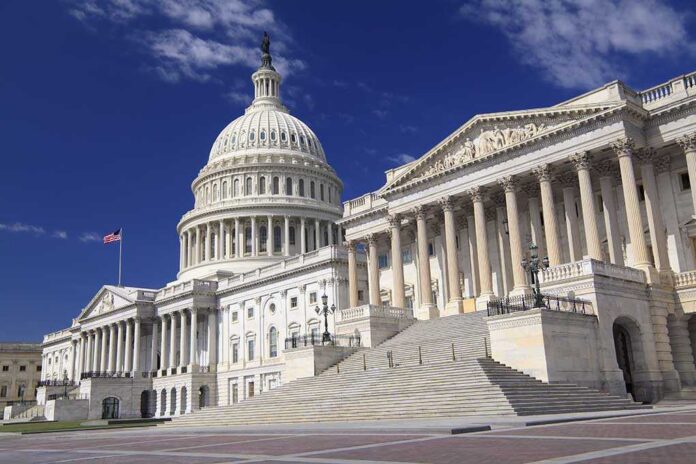
The Senate blocked a measure to require a State Department report on nine Americans killed in the West Bank, keeping Congress from demanding answers now.
Story Highlights
- The Senate rejected a resolution to compel a State Department report on nine slain Americans in the West Bank.
- Votes fell mostly along party lines; Senator Rand Paul backed it, Senator John Fetterman opposed it.
- The resolution used a long-standing human-rights oversight tool under Section 502B(c).
- Blocking the request avoids a 30-day deadline for an unclassified State Department statement.
What The Senate Just Decided
The United States Senate voted to block a resolution that would have required the State Department to report on the killings of nine American citizens in the West Bank and on human-rights practices there. The vote tally was 47 to 51 against advancing the measure, with members largely split by party. Senator Rand Paul supported the resolution, while Senator John Fetterman voted no, setting him apart from most Democrats. Sponsors said the report would cover deaths tied to Israeli settlers or security forces.
The resolution cited a list of Americans killed since 2022 and would have forced an unclassified response from the State Department within a set window. Backers argued the move was a common-sense oversight step that did not prejudge blame but demanded clarity. They said the deaths of nine citizens warranted direct answers for families and Congress. Opponents warned the mechanism could be used to pressure a close ally and carried downstream risks if the administration missed deadlines.
How The Oversight Tool Works
The resolution relied on Section 502B(c) of the Foreign Assistance Act. That provision lets Congress request a formal, unclassified human-rights statement from the State Department about a country that receives United States security aid. It is a lawful oversight tool Congress can use to seek facts quickly and in plain language. Sponsors pointed to that process to keep the focus on information, not punishment, while leaving policy choices to separate debates.
Congress has referenced this tool in recent years to spur more timely reporting. The text of S.Res. 852 describes a direct request for information on Israel’s human-rights practices, including treatment of Americans in the West Bank. The official bill summary lays out the request path and the communication back to the foreign affairs committees in both chambers. The approach is built to get facts on the record within 30 days when adopted.
The Specific Cases And Why They Matter
Reporting on the resolution highlighted at least nine Americans killed in the West Bank since 2022. The names listed include journalists and young adults, and the incidents involve both Israeli security forces and settlers. Coverage noted that families have sought investigations and accountability. Several reports said prior cases did not lead to charges or sanctions, which fueled the new push to require a formal United States government statement to Congress.
Press accounts also described how past efforts to secure justice have faced hurdles across agencies and borders. Advocates say a clear State Department timeline and an unclassified summary would set a baseline for facts and help guide next steps. They argue that when Americans die overseas, Congress should verify whether proper inquiries occurred and whether promises to victims’ families were kept, no matter which ally is involved.
What Blocking The Measure Means Now
Stopping the resolution removes the immediate 30-day clock for a State Department response and any follow-on compliance triggers tied to the request. Political leaders who opposed the move said they want to avoid steps that could be used to curb aid or punish Israel during ongoing security threats. Backers countered that the request was only for information and that Congress cannot defend American lives or values if it refuses to ask for basic facts in black and white.
The administration and Congress can still seek information without the formal mechanism, but the Senate’s vote signals where power centers stand. For conservative readers, two points cut through: Americans were killed, and Congress declined to force a transparent accounting. A strong alliance rests on truth and shared standards. Getting a straight, timely report from our own government should not be controversial when U.S. citizens are dead and their families want answers.
Sources:
reuters.com, aljazeera.com, thehill.com, responsiblestatecraft.org, commondreams.org, us.headtopics.com, mediaite.com