
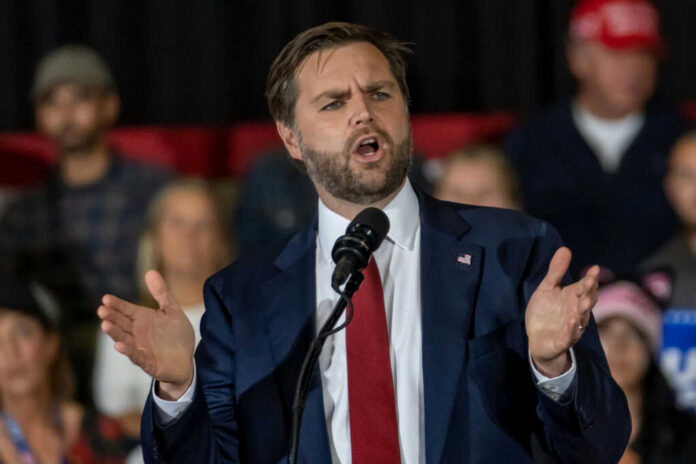
Vice President JD Vance reportedly invited a top Iranian hard-liner to immediate talks that would put Iran’s nuclear program on the table, signaling a push to end the war without giving Tehran a free pass.
Story Highlights
- Reports say Vance sent a letter to Mohsen Rezaei proposing swift talks through Qatari channels.
- The outreach targets Iran’s hard-line power brokers and the Revolutionary Guard network.
- Vance’s proposal would include Iran’s nuclear program as a core topic at the talks.
- Multiple outlets corroborate the contact, though the letter text has not been released.
Direct Outreach To An Iranian Hard-Liner
U.S. officials and Iranian sources told reporters that Vice President JD Vance sent a letter to Mohsen Rezaei through Qatari intermediaries and proposed renewed direct talks as soon as next week. The message reportedly named Qatar or Turkey as possible venues and said Vance would personally lead the U.S. effort. Outlets including the Wall Street Journal, Axios, and the Times of Israel carried similar details, describing a real attempt to restart dialogue after months of war.
Reports say the White House aimed the approach at someone with pull among Iran’s hard-liners and the Islamic Revolutionary Guard, where resistance to compromise is strongest. Choosing Rezaei signals that Washington wants messages to reach those who can actually stop attacks and enforce a deal. That track mirrors past practice in tough talks with Tehran, where back channels often opened doors to more formal talks without conceding U.S. leverage or security interests.
Nuclear Program On The Agenda
Axios reported that Vance made clear any talks must cover Iran’s nuclear program, a point that goes to the heart of U.S. concerns. That demand keeps pressure on Tehran to halt steps that shorten breakout time. It also lines up with lessons from earlier negotiations, where pairing pressure with clear conditions helped force choices in Tehran. Past efforts show that talks work when demands are firm and verification is tight, not when terms are vague or delayed.
The outreach comes as President Trump weighs next steps in the conflict, including possible renewed strikes if attacks continue or diplomacy stalls, according to several reports. That timing underscores a classic approach: speak plainly, carry leverage, and offer a path to de-escalate if the other side is serious. It is not a concession. It is a test. If Iran wants relief from pressure, it must prove it with actions that stop attacks and cap nuclear risk.
What Is Known, And What Comes Next
The Philadelphia Inquirer reported that the letter proposed an early meeting and that Vance would lead the U.S. team, emphasizing speed and clarity on scope. The reports agree on key facts: contact went through Qatar, Rezaei was the addressee, and nuclear terms would be on the table. The outlets also agree this is an opening for talks, not a final deal. The letter itself has not been released publicly, which limits the exact wording we can cite.
BREAKING: NAILED IT! Fearless journalist Mehdi Hasan savages JD Vance for being a shameless racist despite having an Indian family.
This is a knockout punch…
"JD Vance's in-laws' names are Radhakrishna Chilukuri and Lakshmi Chilukuri. I wonder if he tells them this stuff,… pic.twitter.com/FPI9XYiulT
— Occupy Democrats (@OccupyDemocrats) October 27, 2026
For conservatives, the stakes are simple. America must end the war on terms that protect our people, our troops, and our allies. Any talks must defend U.S. strength, stop terror proxies, and prevent a nuclear dash by Tehran. Reaching out to the real power centers in Iran can speed that outcome. But the standard remains the same: verifiable limits on nuclear activity, an end to attacks, and real enforcement if Iran cheats. This is the peace-through-strength model our side expects.
Sources:
theamericanconservative.com, investinglive.com, inquirer.com, wsj.com, news.abplive.com, axios.com