Maine’s Democrat Senate candidate is sounding alarms over a federal program that has existed since 1965, even though his own state’s top election official says the monitors can’t touch a ballot, talk to a voter, or slow down a single line.
Quick Take
- The Department of Justice plans to send about 1,000 election monitors to all 50 states for the 2026 midterms, roughly three times the number used in 2022.
- Maine State Senator Troy Jackson, the Democrat challenging Senator Susan Collins, has joined other Democrats attacking the plan as federal “weaponization.”
- Maine’s Secretary of State confirms monitors cannot interact with voters, touch ballots, or disrupt voting in any way.
- Assistant Attorney General Harmeet Dhillon says the monitors are meant to protect voters and catch violations of federal voting-rights law.
- Election monitoring has been a routine Justice Department practice under presidents of both parties since the Voting Rights Act of 1965.
A Bigger Monitoring Effort Draws Democrat Fire
The Justice Department will deploy roughly 1,000 federal monitors across all 50 states during the 2026 midterms, about triple the number sent in the last midterm cycle. Assistant Attorney General Harmeet Dhillon has called it the biggest DOJ election-observer effort in history. That scale has grabbed headlines, but the actual job of these monitors hasn’t changed much from decades past: watch, document, and report.
Troy Jackson Jumps on the Bandwagon
Troy Jackson, the Maine state senator running against Senator Susan Collins, has used the word “weaponization” to describe Trump administration law enforcement actions, including Justice Department and Federal Bureau of Investigation activity. Maine happens to host one of the most competitive Senate races in the country this year, a fact that hasn’t escaped Democrats worried about losing ground in a cycle that could decide control of the chamber.
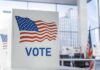
Maine’s Secretary of State, Shenna Bellows, instructed local election supervisors to notify the state if federal monitors show up requesting access to polling places. That’s a reasonable chain-of-command move. But it’s worth noting what Bellows herself has already confirmed: federal observers follow the exact same rules as any other poll observer. They cannot interact with voters. They cannot touch ballots or voting equipment. They cannot disrupt voting in any way.
What the Monitors Are Actually Doing
Dhillon has described the monitors as federal “eyes and ears,” watching polling operations for legal violations that could lead to follow-up action. The Department says its goal is enforcing federal voting-rights laws already on the books, including protections for voters with disabilities and those needing language assistance. Dhillon has also pressed states to clean up voter rolls, warning officials that leaving ineligible voters on the rolls can carry legal consequences.
None of that sounds like a plot to intimidate voters. It sounds like the Justice Department doing the job Congress gave it under the Voting Rights Act of 1965, a law passed to stop real, documented discrimination at the polls. Federal courts have long recognized Washington’s authority to enforce that law, even while limiting how and when observers can enter a polling place without a court order or state agreement.
A Practice Older Than Most of Today’s Senators
Federal election monitoring didn’t start with President Trump. It’s been used by Republican and Democrat administrations alike for almost 60 years, aimed at making sure no voter is excluded or intimidated because of race, national origin, or disability. Democrats raised similar objections in 2024 when some Republican-led states pushed back against federal observers, proving this fight cuts both directions depending on who holds the White House.
Some Democratic-led states say they’ll coordinate with their attorneys general if monitors show up, which is their right. But coordinating with your own legal team is a far cry from the intimidation narrative Jackson and his allies are pushing on the campaign trail. Nothing in the public record shows a single Maine voter denied access, misled, or blocked because a federal monitor stood nearby.
Politics Dressed Up as Principle
Jackson’s complaints arrive conveniently close to Election Day, in a race where he’s trying to unseat a sitting senator. Calling routine federal oversight “weaponization” without pointing to a single documented incident looks less like a civil-rights concern and more like a campaign talking point. Voters deserve election security and ballot integrity, not scare tactics dressed up as outrage over a program that’s been standard practice for generations.
Maine voters will decide next month whether Collins keeps her seat or Jackson takes it. Until then, the Justice Department says its monitors will keep doing what federal observers have always done: watch, document, and make sure every eligible voter gets a fair shot at the ballot box, nothing more.
Sources:
bangordailynews.com, pbs.org, washingtonexaminer.com, warner.senate.gov, cnn.com