
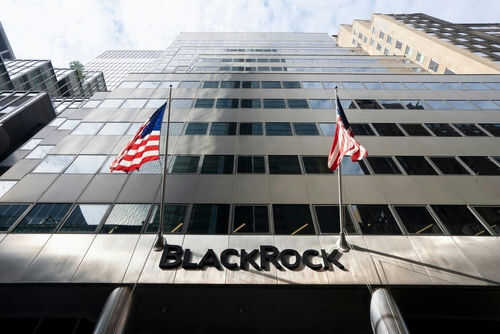
Federal prosecutors reportedly scrutinizing BlackRock’s private credit valuations signal a broader transparency test for Wall Street’s opaque lending machine—and a wake‑up call for savers tired of games with their retirement money.
Story Highlights
- Manhattan federal prosecutors reportedly questioned executives about valuation practices at BlackRock TCP Capital [1].
- TCP disclosed an unusual off‑cycle 19% markdown that preceded a sharp share drop and investor lawsuits [1].
- Critics say internal models and fee structures can encourage inflated marks in illiquid private credit [1].
- Rising rates and borrower strain heighten risks that stale valuations mask real losses [1][2].
Prosecutors Focus on Valuations After Unusual Off-Cycle Markdown
Bloomberg-reported coverage said federal prosecutors in the Manhattan United States Attorney’s Office questioned executives about how BlackRock TCP Capital valued its illiquid loans [1]. The reported inquiry followed TCP’s disclosure of an off-cycle, roughly 19% markdown in asset values, which the record ties to a steep share-price decline and class-action complaints alleging improper valuations and misleading statements [1]. The research here does not include a subpoena, charging document, or official statement, so the scope and status of the probe remain secondhand in this record [1].
The YouTube-transcript summary attributes the event to April 2024 Bloomberg reporting and frames the markdown as severe enough to move markets and trigger litigation [1]. The same source connects the issue to whether prior valuations were overly optimistic in a higher-rate environment that pressures borrowers and increases default risks [1]. A TradingView digest echoes the report that the Department of Justice and Manhattan prosecutors are probing TCP valuations after the markdown and notes market value pressure following the news [2].
Why Private Credit Marks Invite Scrutiny and Investor Distrust
The materials emphasize that private credit portfolios rely on internal models and committee judgment, enabling managers to set values when no active market price exists [1]. That subjectivity, combined with advisory fees commonly linked to fund values, creates a straightforward incentive narrative that critics say can tilt marks upward [1]. The transcript quotes Jay Clayton warning that mismarking to generate fees is unacceptable, though the quote appears in secondary form without the original remarks for full context [1]. These dynamics explain why sudden repricings ignite suspicion.
Broader context reinforces the concern: when interest rates rise, borrower cash flows tighten and default risks climb, making previous assumptions less reliable and valuations more fragile [1][2]. In that setting, delayed markdowns look like concealment to skeptics and like model lag to defenders. The record supplied here does not identify specific loans, assumptions, or accounting line items that were allegedly wrong; it also does not include loan-level reconciliations that might rebut the allegation of inflated marks [1]. That information gap sustains doubt on both sides.
What Is Known, What Is Alleged, and What Is Missing
Known facts in this record: executives were reportedly questioned by Manhattan federal prosecutors; TCP announced an off-cycle 19% markdown; shares fell sharply; and investor lawsuits followed [1]. Allegations include that prior valuations were too high and that fee structures may have encouraged optimistic marks [1]. Missing items include any Department of Justice filing, executive testimony, auditor workpapers, valuation committee minutes, or the shareholder complaints themselves, which would show precise claims, time periods, and asset-level details [1]. Absent those, the public case rests on secondary reporting.
The secondary sources connect TCP’s event to potential sector-wide risks, arguing private credit’s opacity can mask deteriorating credits until repricing becomes unavoidable [1]. That framing raises the stakes for retirees and conservative savers who already distrust financial engineering. If marks were stale, pensions and income portfolios could have been flattered on paper. If they were reasonable at the time, the off-cycle move may reflect prudence under fast-changing conditions. Only underlying documents can resolve the difference.
Why This Matters for Conservative Investors and Market Discipline
Conservative investors prize honest books, limited government, and rule-of-law accountability. Reported prosecutorial scrutiny—if confirmed—underscores that markets work best when numbers reflect reality, not fee incentives. Sudden markdowns can gut retirement planning and erode trust, particularly after years of inflation, rising energy costs, and policy excess that already strained household budgets. A transparent reckoning in private credit would protect savers and reinforce equal treatment under the law, whether the target is a small lender or the world’s biggest asset manager [1][2].
$BLK
BlackRock Stock Drops After DoJ Initiates Probe Into Private Fund Valuations: Report– The Manhattan US Attorney’s office has been seeking information about BlackRock TCP Capital.https://t.co/Z7caMmkCSV
— stock setter (@MarcJacksonLA) May 16, 2026
Practical steps for readers include watching for primary documents: any Department of Justice action, shareholder complaints with loan-level allegations, and disclosures of valuation policies and fee schedules. Those materials would clarify whether this was mismarking or overdue realism. Until then, discipline suggests diversification, skepticism toward opaque yield, and a preference for managers who publish clear valuation methodologies and independent checks. Sunlight—plus consequences for any proven deception—is the conservative path to healthier markets [1][2].
Sources:
[1] YouTube – THE UNWIND IN PRIVATE CREDIT HAS BEGUN
[2] Web – Key facts: TCP Capital Valuation Probe; BlackRock Used Microsoft AI