
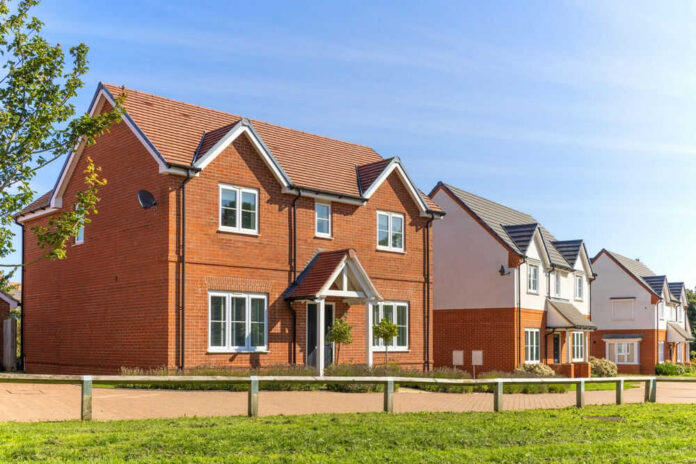
New data show that for millions of Americans, a modest new home is no longer a realistic dream but a financial impossibility engineered by years of big-government inflation, green mandates, and housing red tape.
Story Snapshot
- Industry data show most households cannot afford a typical new home under standard mortgage rules.
- Stagnant wages, high interest rates, and construction costs are colliding with a severe housing shortage.
- Federal policy choices, from inflationary spending to regulatory overreach, helped create today’s broken market.
- Targeted conservative reforms on energy, regulation, and local zoning could reopen the door to homeownership.
Affordability Math: When “Median” Homes Become Luxury Purchases
National Association of Home Builders analysis for 2024 shows how far out of reach even relatively modest new homes have become. Using conventional underwriting that caps mortgage, property tax, and insurance at 28 percent of household income, the group finds 66.6 million households, or 49 percent of all households, cannot afford a $250,000 home at a 6.5 percent mortgage rate.[2] That is not a McMansion; it is supposed to be starter territory for young families and working-class buyers.
Affordability collapses completely when you move from entry-level prices to what builders actually charge in today’s market. The same National Association of Home Builders study reports that roughly 77 percent of United States households cannot afford the nationwide median-priced new single-family home when mortgage rates sit at 6.5 percent.[2] That means barely one in four families can qualify, under standard rules, for the kind of new home that now counts as “typical” in America’s subdivisions and new developments.
Wages, Prices, and a Rigged Game Against Working Families
Independent Center reporting distills the root of the problem in one blunt comparison: the median home price today is more than six times the median income, making it harder for younger and middle-income buyers to ever catch up.[1] That gap did not appear overnight. Urban Institute’s affordability tracker notes that since 2017, home sale prices have risen about 80 percent nationwide while average earnings grew only 38 percent, leaving over half of American families without enough resources to live securely in their communities.[4]
This is the classic squeeze that conservatives warned about when Washington flooded the economy with cheap money, stimulus checks, and massive new spending bills. Inflation pushed up materials, land, insurance, and interest costs, while wages lagged behind. Bankrate data cited by CBS News now estimate that more than 75 percent of homes on the market are unaffordable to the typical household, leading one analyst to conclude that only a “sliver” of the housing market is realistically within reach.[3] For first-time buyers, that has translated into a collapse in opportunity.
First-Time Buyers Shut Out as New Homes Drift Out of Reach
National Association of Realtors figures highlighted by CBS show that just 24 percent of home sales last year involved first-time buyers, less than half the 50 percent share seen around 2010.[3] When entry-level buyers vanish, it usually means the ladder’s bottom rungs have been sawed off. National Association of Home Builders calculations underline that problem: at 6.5 percent mortgage rates, a household needs an income of about $45,975 to afford a $150,000 home, yet roughly 40.5 million households fall below that bar.[2] Those families are effectively locked out of even the most modest new construction.
That exclusion is not simply the result of “market forces”; it is compounded by policy decisions. The National Low Income Housing Coalition estimates a shortage of more than seven million affordable homes for extremely low-income households, noting there is no state in America with enough affordable units for the poorest families.[5] States and cities that embraced aggressive environmental rules, impact fees, and anti-growth zoning have made land scarce and permitting painfully slow. Federal inflation and energy policies then multiplied those local mistakes, pushing construction and financing costs even higher.
How Conservative Reforms Could Reopen the Door to Homeownership
National Association of Home Builders priced-out analyses show how sensitive the system is to policy-driven cost increases. In one study, the group found that each additional $1,000 in the price of a median-priced new home is enough to push about 156,000 households out of qualifying range.[6] A separate 2025 special study estimates that with a median new-home price of about $459,826 and a 6.5 percent mortgage rate, roughly 100.6 million households—nearly three-quarters of all households—cannot afford that home based on standard lending rules.[7] Small changes in costs and rates move millions of families on or off the edge.
Permitting delays used to drive up housing costs and slow down new homes. Today, houses, duplexes, and laneways can be approved in as little as 2.5 weeks — down from 11+ weeks. 3-3-3-1 permits. ePlan. 83,000 home approvals by 2033.
And the results matter: Vancouver rents are… https://t.co/I2IkPFCQIG
— Lenny Zhou 🇨🇦🇺🇦 (@LennyNanZhou) May 15, 2026
Those numbers suggest a clear path for a conservative, pro-family housing agenda in the Trump era. Rolling back unnecessary federal regulations that inflate building and energy-compliance costs would immediately lower the baseline price of new homes. Restoring stable, non-inflationary fiscal policy can help bring mortgage rates and insurance costs down over time. And pushing states to reform zoning, streamline permitting, and stop weaponizing fees against builders would increase supply where Americans actually want to live. None of this requires social engineering—just common-sense respect for markets, property rights, and the families now priced out of the American dream.
Sources:
[1] Web – Why Does Homeownership Feel Impossible? – Independent Center
[2] Web – Nearly Half of U.S. Households Can’t Afford a $250,000 Home | NAHB
[3] Web – More than 75% of homes across the U.S. are unaffordable, study finds
[4] Web – The American Affordability Tracker | Urban Institute
[5] Web – The Problem | National Low Income Housing Coalition
[6] Web – Households Priced-Out by Higher House Prices and Interest Rates
[7] Web – [PDF] Nearly 75% of U.S. Households Cannot Afford a Median-Priced New …