
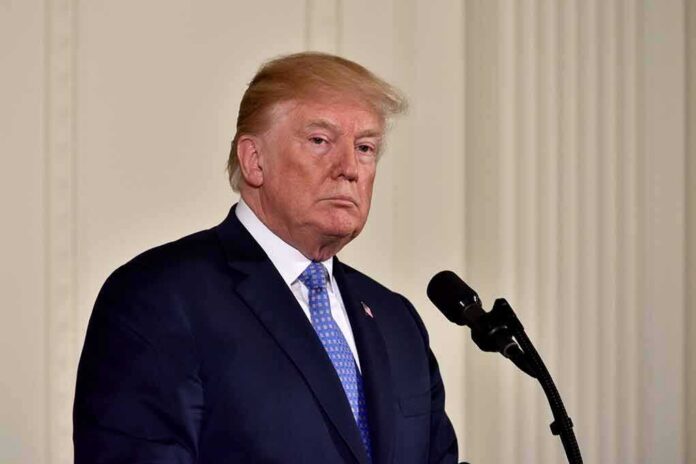
President Trump formally told Congress he resumed hostilities with Iran and opened a fresh 60‑day clock for military action without new approval, sharpening a high-stakes fight over war powers.
Story Highlights
- Trump sent Congress a notice that hostilities with Iran resumed July 7, restarting a 60-day window under the War Powers Resolution.
- The Senate and House passed war powers measures pushing Trump to halt or seek approval for further action.
- The House voted a third time to end the Iran war, with seven Republicans joining Democrats.
- Rep. Thomas Massie moved to impeach Defense Secretary Pete Hegseth over alleged war powers violations.
Trump’s Formal Notice and the 60-Day Clock
Reuters reported that on July 13, President Trump notified Congress that hostilities with Iran resumed on July 7. The letter stated he directed the action to protect Americans and United States security interests. The administration views the notice as opening a new 60-day window for military operations without fresh approval from Congress under the War Powers Resolution’s timelines. This move signals resolve against Tehran and a belief that Article II powers cover swift, limited strikes to deter threats.
The White House has argued the president must be able to act quickly to defend U.S. forces and vital interests. Supporters say past presidents from both parties have used similar authority when time mattered. They point to the duty to protect Americans and stop aggression before it grows. Critics counter that extended hostilities require a vote. The legal clash now centers on whether new fighting truly resets the clock or if Congress’s earlier actions should bind the executive branch.
Congress Pushes Back With War Powers Votes
The United States Senate approved a war powers resolution pressing Trump to halt military action against Iran or seek authorization. While symbolic without the president’s signature, the vote shows growing concern, including among some Republicans, about continued hostilities without a new mandate. The House separately passed a similar measure, marking the third attempt to end the Iran war and block continued action without congressional approval, with seven Republicans joining Democrats in the 220–204 vote.
Backers of the resolutions claim Congress must reassert its Article I duty to declare war. They argue a limited engagement has stretched into months of on-and-off strikes, and that the public deserves a clear strategy and legal basis. The administration maintains that defensive operations and proportional responses fall within the commander in chief’s power. The practical result is a stalemate: Congress is signaling limits, while the executive insists on flexibility to deter Iran and shield U.S. personnel abroad.
Massie Targets Hegseth Over Alleged Violations
Representative Thomas Massie forced a vote to impeach Defense Secretary Pete Hegseth. Massie alleges Hegseth engaged in hostilities in Iran for more than 90 days without authorization, breaking the War Powers Resolution and frustrating Congress’s constitutional role. The articles describe an “unlawful” war from inception and accuse the department of defying orders to wind down. The move underscores a divide on the right between hawkish deterrence and strict constitutional process.
The impeachment bid is a warning shot to future administrations: even in moments of crisis, process matters. Many conservatives agree that America must project strength, but also want a clear mission, tight rules of engagement, and a defined end state. They ask how long limited strikes can continue without a vote, and whether new notice letters can keep resetting legal clocks. The administration’s answer is that Iran’s actions require readiness and that U.S. credibility depends on it.
What It Means for Security, Law, and Energy
Regional security and U.S. energy costs hang in the balance. Prolonged tension with Iran can rattle shipping lanes and raise prices at the pump. Voters already shoulder high costs after years of globalist energy policy and missed opportunities for domestic production. A decisive posture can deter attacks and stabilize markets. But an open-ended fight risks mission creep. The sweet spot, many on the right argue, is peace through strength paired with clear congressional backing when fighting extends.
The constitutional fight is not new. Since Vietnam, presidents have often used force first and sought political cover later. Congress pushes back when operations drag on. That script is playing out again. The Senate and House votes do not end hostilities by themselves, but they raise pressure to define objectives, timelines, and metrics for success. Trump’s notice asserts legal footing to keep pressure on Tehran now. Lawmakers may answer with funding levers or a tailored authorization if the conflict continues.
What to Watch Next
Watch whether Congress sends a binding measure to President Trump’s desk, and whether leaders pursue a narrow authorization focused on deterring attacks and protecting U.S. assets. Track any change in Iran’s behavior after U.S. strikes. Monitor fuel prices and shipping risk in the region. Most of all, look for clear mission statements from the Pentagon that explain targets, limits, and exit conditions, so strength abroad does not erode constitutional order at home.
Sources:
aljazeera.com, apnews.com, reuters.com