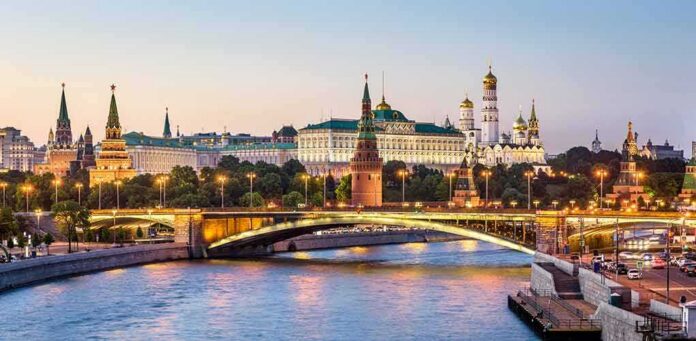
Russia opened a three-day parliamentary vote across 11 time zones, while meaningful opposition was sidelined and occupied Ukrainian regions were folded into the process.
Story Snapshot
- Polling stations opened Friday for a three-day election to fill Russia’s 450-seat State Duma.
- First ballots were cast in Kamchatka and Chukotka as voting rolled west across Russia’s time zones.
- President Vladimir Putin urged citizens to vote, framing the contest as a civic duty.
- Reports say real competition is scarce, with the anti-war Yabloko party off the ballot.
Polls Open Nationwide Over Three Days
Russian polling stations opened Friday for a three-day parliamentary election scheduled for September 18 to 20. Officials are selecting 450 members of the State Duma, Russia’s lower house of parliament, with initial results expected Sunday evening and near complete results Monday. The vote was publicly set in advance, with national and regional contests running at the same time. Authorities describe a routine nationwide process that will fill tens of thousands of posts across the country during the weekend.
Voting began in Russia’s Far East at 8:00 a.m. local time, starting in Kamchatka and Chukotka before moving west across 11 time zones. Election organizers use staggered openings due to the country’s size and geography. This timetable is standard for Russia’s national votes. Officials have said preliminary numbers will arrive after polls close Sunday, with fuller counts the next day. That cadence matches recent Russian election reporting patterns seen in past cycles.
Kremlin Pushes Participation As War Looms Over Politics
Two days before the polls opened, President Vladimir Putin urged citizens on national television to vote and “make a thoughtful, responsible decision” during the three-day window, stressing participation as a civic duty. State media presented the election as a broad exercise in national life. Major outlets also linked the vote to Russia’s ongoing war, casting it as a measure of public backing for the Kremlin’s current course, including the military campaign in Ukraine this year.
Coverage from international reporters said the contest includes residents in annexed or occupied areas of Ukraine, folding those territories into the process and prompting sovereignty concerns outside Russia. That move widens the map of who is taking part and shapes how foreign governments will read the outcome. It also blends domestic politics with the battlefield stakes, turning the Duma tally into another signal of wartime resolve, at least in official messaging.
Competition Is Narrow As Opposition Options Shrink
Major outlets reported that genuine competition is thin. The anti-war Yabloko party is not on the ballot, and other candidates who oppose the war face heavy barriers. The field is dominated by pro-Kremlin forces or parties that do not challenge the core direction of the government. This means the vote likely reflects alignment among approved parties rather than a broad marketplace of ideas. Analysts have called this Russia’s first wartime parliamentary election since the full-scale invasion began.
Past scholarship and prior election studies have documented patterns of managed politics in Russia that favor incumbents and shape outcomes, even when voting procedures run on time. Those studies have found irregularities in earlier national elections, including turnout inflation and ballot stuffing signals, which frame how observers will interpret any big swings or round-number totals reported this cycle. Today’s reporting, however, centers on the schedule and mechanics: polls are open, ballots are cast, and counts are slated to arrive as planned.
Why This Matters For American Readers
Russia’s Duma controls laws on war funding, energy, and foreign policy that touch the United States and our allies. A chamber aligned with the Kremlin can lock in decisions that keep energy markets tight and Europe on edge. That can raise fuel costs, strain supply lines, and test North Atlantic Treaty Organization unity. When elections happen without full competition, leaders face fewer checks as they push policies that run against American interests and the cause of liberty abroad.
Russia holds its parliamentary election today — and markets already price Putin's United Russia at 76%+ to win the most seats. Real vote, or pre-decided theater? https://t.co/YJkEbIlhG4
— Future News🐱 (@futuredotnews) September 18, 2026
For conservatives at home, this story shows how central control tries to turn voting into a show of strength. The schedule looks orderly, but the choice set is narrow and shaped by power. Free speech and real rivals are the safety valves in any healthy system. When those vanish, the ballot becomes a signal, not a shield. America must stay alert, defend our constitutional order, back secure borders, and keep our energy strong, because global rivals gain when the West is weak.
Sources:
youtube.com, reuters.com, rmb.reuters.com, hurriyetdailynews.com, france24.com, rferl.org, economictimes.indiatimes.com