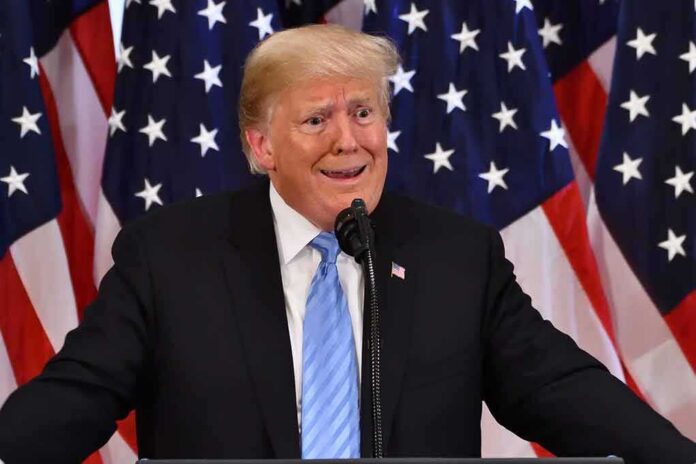
A federal judge barred the Kennedy Center’s board from putting President Trump’s name on the building or its grounds, citing a 1964 law that fixes the memorial’s name.
Story Highlights
- A judge said only Congress can change the Kennedy Center’s name, not the board.
- The order requires removing Trump’s name from the facade, website, and branding.
- The ruling cites a 1964 statute that established the center as a memorial to John F. Kennedy.
- A later order reportedly blocked inscriptions and plaza renaming tied to Trump.
Judge Says Congress Alone Controls the Memorial’s Name
U.S. District Judge Christopher R. Cooper ruled that Congress, not the Kennedy Center’s board, controls the institution’s name. His May 29 opinion stated that Congress “gave the Kennedy Center its name, and only Congress can change it,” and held the board overstepped by adding Trump’s name to official identifiers. The opinion relied on the 1964 law that created the center as a living memorial to President John F. Kennedy, and treated renaming as a legal power, not marketing.
The court ordered the Kennedy Center to remove Trump’s name from the front portico letters, the facade, and all official branding within two weeks. The order extended to digital uses and required withdrawal of trademark applications for “Trump Kennedy Center.” That scope showed the court viewed the move as a real renaming effort, not a symbolic inscription. The center’s staff later circulated guidance reflecting the ruling’s direction to restore compliance with the statute.
What the 1964 Statute Requires and Why It Matters
Congress in 1964 passed a joint resolution that renamed the planned National Cultural Center as the John F. Kennedy Center for the Performing Arts and designated it as Kennedy’s memorial. That law fixed the memorial name in federal statute. Judge Cooper read that statute to mean the board cannot alter the formal name absent a new act of Congress. This matches a common pattern for national memorials, where boards manage operations but cannot change core congressionally set features.
News accounts quoted the court’s description of the statute as “crystal clear” on naming. Reports emphasized that the judge rejected the idea that the board could adopt inscriptions or plaza labels that functioned like a rename. The ruling also blocked a proposed push to label the grounds as “President Donald J. Trump Plaza,” reinforcing that memorial naming is not a casual branding choice. Any change must come through Congress, which has not acted to do so.
The Board’s Moves and the Court’s Response
Media reports described board votes to add Trump’s name to the facade and to describe the center as “Restored and Renovated by President Donald J. Trump.” Some reports also noted a plan to rename the grounds “President Donald J. Trump Plaza.” The board characterized parts of the proposal as honorific, tied to renovations and fundraising. The court treated those changes as outside the board’s power because they altered or paired the memorial’s name in a way the statute does not allow.
Following the initial injunction, subsequent coverage in September reported an order blocking the board from installing inscriptions or plaza renaming that would place Trump’s name on the building or grounds. That report tied back to the same legal theory from May: the organic statute controls the name, and the board cannot revise it on its own. The continuing orders underscore the court’s focus on legal authorization, not messaging or design preference.
Conservative Takeaway: Separation of Powers, Not Culture War Theater
The core issue is who holds legal authority, not whether President Trump deserves credit for work at the center. Congress wrote the memorial’s name into law. A federal judge enforced that limit and told the board to follow the statute. For conservatives, this is a civics lesson. Institutions must live within the law as written. If the name should change, lawmakers must vote. If donors deserve thanks, the center can recognize them without rewriting a congressionally set memorial.
#BREAKING: Kennedy Center board voted Tuesday to close the main building, people familiar with the meeting told AP — citing money problems and the fight over Trump’s name on the venue.
Hours earlier Judge Christopher Cooper blocked putting the name back. Only Congress can… https://t.co/DGhu46aTDN pic.twitter.com/v1kjULzf8E
— The Digital Free Press (@tdfreepress) September 15, 2026
Readers should also separate the legal ruling from media spin. Some coverage framed the dispute as personality drama. The record shows a straightforward holding: the memorial’s name sits in statute, and only Congress can amend it. That boundary protects more than a plaque. It guards the rule of law against unilateral moves by boards or agencies. Respect for process, not theatrics, is what keeps government limited and accountable to the people.
Sources:
courthousenews.com, bbc.com, politico.com, deadline.com, congress.gov, reuters.com, nytimes.com, pbs.org