President Trump walked away from the NATO summit in Turkey without a single new commitment from European allies to support U.S. military operations against Iran — and he’s now openly threatening to pull America out of the alliance entirely.
Story Snapshot
- Trump called NATO a “paper tiger” and said he is “strongly considering” withdrawing the U.S. from the alliance after allies refused to back the Iran campaign.
- U.S. Ambassador to NATO Matthew Whitaker confirmed Trump is “reevaluating” American membership, while European nations including Germany, France, and the UK declined U.S. requests for military support.
- A 2023 law — backed by both Republican and Democratic senators — bars the president from pulling the U.S. out of NATO without two-thirds Senate approval, creating a major legal hurdle.
- Trump’s pressure tactics have a track record of working: allied defense spending has risen each time he rattles the NATO cage, and allies just agreed to $50 billion in new defense deals.
Trump Calls NATO a “Paper Tiger” After Iran Snub
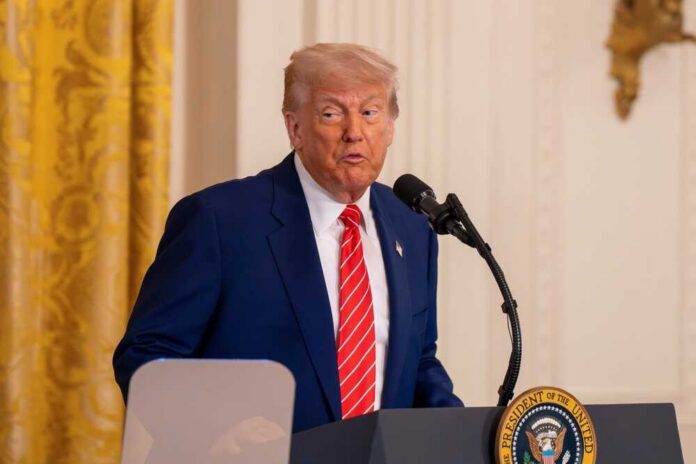
President Trump blasted NATO allies at the Turkey summit after Italy, Germany, France, the United Kingdom, and Spain all turned down U.S. requests for military support against Iran. Trump called the alliance a “paper tiger” and said membership is “beyond reconsideration.” He told reporters he is “strongly considering” pulling the United States out of NATO altogether. His ambassador to the alliance, Matthew Whitaker, confirmed publicly that Trump is “reevaluating” America’s role in the pact.
Trump’s frustration is not new. He has long argued that European nations freeload off American military power while paying too little themselves. He claimed he forced allies to pay $100 billion more by threatening to leave during his first term. His core argument now is simple: if allies won’t stand with America when it matters, why should U.S. taxpayers keep footing the bill for Europe’s defense?
Why Allies Said No — And What the Law Says
European allies say NATO was never designed for offensive military operations. France explicitly stated that joining the Iran campaign was “not warranted for offensive missions.” NATO’s charter focuses on defending member nations from attack — not backing one member’s decision to strike another country first. That legal and strategic argument is real, even if it frustrates Americans who feel allies take U.S. protection for granted while refusing to return the favor.
There is also a domestic legal wall blocking Trump. In 2023, Congress passed a law — championed by both Republican Senator Marco Rubio and Democratic Senator Tim Kaine — that bars any president from pulling the U.S. out of NATO without two-thirds Senate approval or a separate act of Congress. That law is now codified in federal statute. No formal withdrawal notice has been filed, and without Congress on board, Trump cannot exit the alliance on his own.
Pressure Tactic or Real Threat? History Offers a Clue
Trump has threatened to leave NATO before — and it has worked. Each time he rattles the alliance, European nations boost their defense budgets. Studies show that U.S. withdrawal threats make European publics significantly more willing to spend on their own defense. At the Turkey summit, NATO allies agreed to $50 billion in new defense industry deals. That is a real, measurable result that comes directly from Trump’s pressure.
Trump on further US troop cuts in Europe: "We will see. I am very disappointed by NATO." No decision made yet, despite privately floating a one-third reduction this spring after allies refused to join his Iran operation. Didn't threaten full NATO withdrawal at the summit though.
— MacroSphere (@MacroSphereX) July 9, 2026
The pattern over the past decade is clear: Trump threatens, allies pay more, and the U.S. stays in. Whether this time ends differently depends on whether Congress would ever vote to let him leave — and right now, there is no sign of that. What is not in dispute is that Trump’s strategy of demanding more from wealthy European nations is producing results. American taxpayers deserve allies who carry their weight, and Trump is the first president in years who has actually forced the issue.
Sources:
redstate.com, time.com, thehill.com, atlanticcouncil.org, krishnamoorthi.house.gov, youtube.com, facebook.com, habtoorresearch.com, everycrsreport.com, kaine.senate.gov, ejiltalk.org, politico.com, defensepriorities.org, cambridge.org