
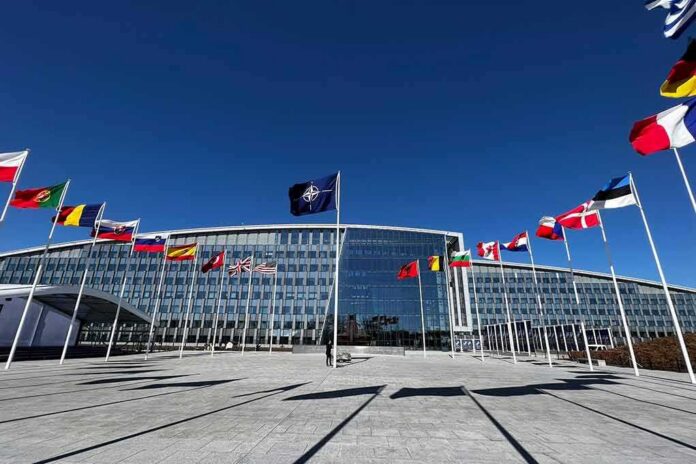
A quiet internship at NATO’s top European command just turned into a major spy scare that should worry every American who cares about national security and Western strength.
Story Snapshot
- Belgian prosecutors arrested a Canadian woman of Chinese origin who interned at NATO’s Supreme Headquarters Allied Powers Europe on espionage charges.
- She is suspected of spying for an unnamed third country and of links to a criminal organization, turning a student-style role into a serious counterintelligence case.
- NATO’s own security staff flagged her first, then Belgian intelligence and federal police moved in, searching her home and office before the arrest.
- Authorities are keeping key details secret, including her name, the country she allegedly served, and what information may have been targeted.
Intern Arrest at NATO’s Top Command Raises Hard Security Questions
Belgian prosecutors say they arrested a Canadian woman of Chinese origin who was working as an intern at NATO’s Supreme Headquarters Allied Powers Europe in Mons on spying charges. The federal prosecutor’s office states she is suspected of spying for a third country and being part of a criminal organization. Reports describe her as a Canadian national of Chinese descent, but officials have refused to release her name. The arrest took place after a formal national security investigation began.
Belgian authorities explain that the case started when NATO security services at the Supreme Headquarters Allied Powers Europe grew suspicious. Those security officers alerted Belgian military intelligence, which then triggered a federal probe. Investigators searched the woman’s home and her workplace inside NATO’s command center before detaining her. This chain shows that the alliance’s internal security systems did spot a possible insider threat and passed it to national authorities for action, as they are supposed to do.
What We Know So Far — And What Is Still Hidden
Prosecutors have laid out only the broad charges so far, not the detailed proof. They say she is suspected of spying for a third country and of being linked to a criminal group, but they have not named the foreign state or any organization. They have not said what documents, systems, or briefings she may have tried to reach. Officials have also kept quiet about whether they seized devices, files, or messages that show contact with foreign handlers or other suspects.
A spokesperson for the Supreme Headquarters Allied Powers Europe insists that NATO’s operational readiness, command systems, and ongoing tasks have not been affected by the incident. That statement aims to assure allies, including the United States, that missions and planning remain secure. Yet the fact that an intern inside the alliance’s main European command is under investigation for espionage is a clear warning. It shows that even low-level staff inside large institutions can become potential weak points if vetting fails or access is not tightly controlled.
Insider Threats, China Concerns, and the Stakes for the West
This case fits a pattern that experts on spying have seen many times. A person with limited but real access inside a sensitive building is accused of espionage, while the public is told almost nothing about the alleged acts until much later, if ever. Security services often protect their sources and methods by keeping details secret. That secrecy can be needed, but it also means voters and taxpayers are asked to trust official statements about threats they cannot see.
🚨 SECURITY & CONFLICT DESK | NORTHERN CANADIAN MEDIA
A Canadian intern working at NATO’s Supreme Headquarters Allied Powers Europe (SHAPE) in Belgium has been arrested on espionage charges.
Belgian prosecutors allege she was spying on behalf of an unnamed third country and was… pic.twitter.com/kQToRHjKSw
— Northern Canadian Media (@NorthernMediaCA) July 25, 2026
The suspect’s described Chinese origin comes at a time when many Western governments are already worried about Chinese intelligence activity against military and technology targets. The Belgian prosecutor has not said that China is the “third country” involved, and there is no public proof naming any state. Still, that background will shape how many people read this story. For Americans who watched decades of weakness on borders, defense, and spying, the idea of a suspected agent inside NATO’s top European command feels like one more sign that the West cannot afford sloppy security or political naivety.
Why This Matters for American Conservatives Watching NATO
For conservative readers, this case is not just a distant European drama. NATO is the backbone of Western defense, and the United States is its anchor. If an intern can get inside the Supreme Headquarters Allied Powers Europe and end up under investigation for spying, it raises hard questions about how allied institutions screen staff and share information. It also shows why strong counterintelligence and clear-eyed views of foreign regimes are vital, not optional.
President Trump has pushed allies to spend more on defense and take security seriously, and this arrest underscores that message. The fact that NATO’s own security staff spotted the suspect and alerted Belgian intelligence is a good sign; systems were awake, not asleep. But the lack of public detail means citizens must stay alert as more facts emerge. Conservatives who care about national strength, limited government, and honest oversight will want to see whether this episode leads to tougher vetting, better protection of secrets, and real accountability inside the alliance, instead of another quiet scandal that fades without lessons learned.
Sources:
thegatewaypundit.com, reuters.com, straitstimes.com