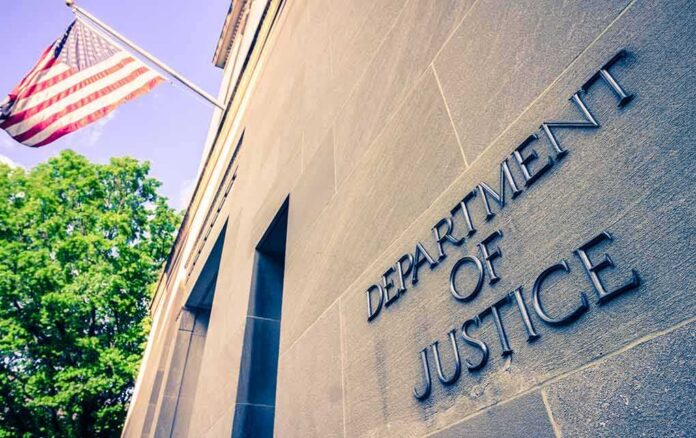
The core issue is not whether Portland policing is politically controversial; it is whether the Justice Department used a legitimate civil-rights inquiry as a pretext to pry loose records under a settlement framework that the court said did not fit the request. Judge Michael H. Simon’s ruling matters because it does not merely deny access; it brands the government’s litigation posture as bad faith and unclean hands, which is a far more damaging judicial finding than an ordinary discovery loss.
Key Points
- The court did not decide the underlying bias allegation on the merits; it rejected the DOJ’s request to compel records through the consent-decree mechanism.
- Judge Simon found by clear and convincing evidence that the United States acted in bad faith and with unclean hands.
- The ruling directly rejected the DOJ’s stated justification that the motion was about viewpoint discrimination or First Amendment enforcement.
- The broader fight sits inside a longer Portland pattern: protest policing, federal oversight, and recurring disputes over whether the government’s factual narrative is reliable or tactical.
What the ruling actually did
Judge Simon’s order is best understood as a gatekeeping decision. The Justice Department sought Portland police body-camera footage, reports, communications, and related protest records by invoking the city’s long-running settlement obligations, but the court held that this particular motion did not belong inside that enforcement structure. That distinction matters. A court can conclude that a party is using the wrong procedural vehicle, or using it for an improper purpose, without reaching the ultimate factual question of whether misconduct occurred on the street.
Simon’s language was unusually forceful. He found that the United States had brought the motion in “bad faith and with unclean hands,” and he concluded that the request had “nothing to do with enforcing the 2014 settlement agreement.” He also wrote that the case “has never been about viewpoint discrimination, or even any issues arising under the First Amendment.” Those phrases are not casual judicial color. They are a direct repudiation of the government’s asserted rationale, and they tell future readers that the court saw the motion as something other than a straightforward civil-rights enforcement effort.
Why “bad faith” is such a consequential finding
In ordinary litigation, losing a motion means the court was unconvinced. A finding of bad faith means the court believed the movant’s stated purpose was not credible. That is a materially different judgment, and it carries reputational force far beyond the immediate discovery dispute. Judge Simon said he reached that conclusion “soberly” and by clear and convincing evidence, which signals a credibility determination grounded in the record rather than a broad policy preference. For a Justice Department alleging viewpoint discrimination, that is a serious setback because civil-rights investigations depend heavily on institutional trust, especially when the agency is asking for sensitive law-enforcement material.
The phrase “unclean hands” comes from equity practice and means a party seeking relief has acted improperly in relation to the matter before the court. In practical terms, Simon was not merely saying the DOJ overreached; he was saying the government’s posture disqualified it from the kind of equitable assistance it wanted. That is why the decision has such rhetorical punch. It does not prove Portland police behaved lawfully. It does prove the court believed the federal request was not a clean vehicle for testing that question.
The underlying allegation remains unresolved
This is where the public conversation often becomes sloppy. A ruling against the DOJ’s motion is not the same thing as a vindication of Portland police. The search record supplied here does not include the body-camera footage, incident logs, or comparator evidence that would let a reader test the alleged bias claim on the merits. What it does show is narrower and more precise: the judge refused to let the government use this particular proceeding to obtain the records. That leaves the substantive question open, even while it sharply undercuts the DOJ’s credibility in the way it pursued the records.
That distinction matters because the original controversy is not abstract. The DOJ’s broader theory, as summarized in reporting on the request, was that Portland had treated conservative journalists and right-leaning counterprotesters differently from left-wing demonstrators, and that body-camera footage and related documentation would help evaluate that claim. The court’s response did not confirm or deny the policing theory itself. It instead said the government’s motion, as framed, was a bad-faith attempt to use a settlement case for a different purpose.
Portland is not a normal backdrop
Portland has spent years as a federal litigation laboratory for protest policing, use-of-force disputes, and executive-branch intervention. The city has also been locked into recurring clashes with Trump-era federal actions, including National Guard litigation and other records fights that have produced repeated judicial skepticism toward government narratives. That history matters because it shapes how every new Portland dispute is read. Once a court has already treated a government account as unreliable in one case, later claims from the same political ecosystem face a steeper burden of persuasion.
The record package also shows that the DOJ framed its request as part of a broader civil-rights investigation into Portland police, invoking a 2014 settlement and alleging noncompliance with access obligations. That is a plausible legal theory on its face. But a plausible theory is not the same thing as a good-faith application of it. Simon’s ruling says the court found the latter lacking. In other words, the legal backdrop may have been real, but the judge believed the motion was being used opportunistically rather than faithfully.
What the evidence supports — and what it does not
The strongest conclusion supported by the supplied materials is that the DOJ suffered a sharp judicial rebuke: the court found bad faith, unclean hands, and pretext, and it rejected the government’s claimed connection between the records request and viewpoint-discrimination enforcement. That is not a trivial setback. It is a judicial statement that the process the DOJ chose was, in the court’s view, tainted.
What the materials do not support is a definitive final judgment on the policing allegation itself. There is no primary-source release of the disputed footage here, no complete docket package, and no sworn officer testimony explaining the exact enforcement decisions at the ICE protests. The public record in this package is therefore strong on motive and procedure, weaker on the underlying merits. That is exactly why the ruling is so politically combustible: each side can claim the authority of a federal judge while talking past the part of the case the judge actually decided.
Why this dispute will keep resonating
Cases like this endure because they sit at the intersection of law, politics, and institutional trust. The DOJ wanted access to sensitive local records to test an allegation of viewpoint discrimination; Portland wanted to keep the scope of federal inquiry boxed in; and the court concluded the federal motion was not being pressed honestly. Once a judge makes that kind of finding, the legal fight stops being only about records and starts becoming about credibility, especially in a city already accustomed to federal oversight battles.
The larger lesson is structural. When the government asks for protest records, it must do more than point to a serious allegation. It must persuade the court that its demand is tied to the authority it invokes, proportionate to the need, and honestly presented. Judge Simon’s ruling says that standard was not met here. Whether Portland police engaged in viewpoint discrimination is a separate question; whether the DOJ was entitled to use this motion to reach the records is the question the court answered, and it answered it harshly.
Sources:
abcnews.com, slate.com, cnn.com, opb.org, democracydocket.com, lawdork.com, youtube.com