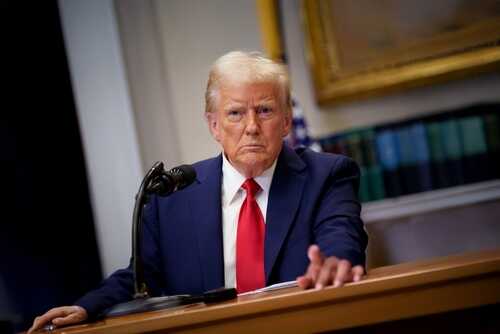
A new advertising campaign invoking Ronald Reagan’s words has ignited a diplomatic rift, prompting the Trump administration to suspend trade negotiations with Canada and impose additional tariffs.
Story Highlights
- Trump ends trade negotiations with Canada over a controversial ad.
- Ontario’s ad misrepresented Reagan’s views on tariffs, prompting backlash.
- Trump imposes an additional 10% tariff on Canadian imports.
- The Reagan Foundation criticizes the ad for historical inaccuracies.
Trump’s Swift Reaction to Misleading Advertising
President Donald Trump abruptly ended trade negotiations with Canada after Ontario’s provincial government aired a televised advertisement quoting former U.S. President Ronald Reagan’s remarks on tariffs. Trump publicly criticized the ad in a Truth Social post on October 22, 2025, describing it as “misleading” and “a distortion of Reagan’s legacy.”
According to coverage from Reuters and The Toronto Star, the ad aired during the World Series, reaching a large North American audience. The Trump administration subsequently announced a 10% tariff increase on Canadian imports. Officials from the U.S. Trade Representative’s Office said the decision reflected the administration’s intent to defend U.S. trade policy from what it viewed as inaccurate foreign messaging.
Historical Context and Controversy
The Reagan Foundation issued a statement condemning the ad, arguing it “misrepresented Reagan’s record” on trade. While Reagan did oppose broad protectionism, he also implemented selective tariffs in the 1980s to protect American industries. Scholars such as Douglas Irwin, a trade historian at Dartmouth College, note that Reagan’s approach was “strategically pragmatic, not ideologically anti-tariff.” The ad’s selective quoting of Reagan’s 1987 address failed to reflect that nuance, sparking broader debate about political messaging and historical interpretation. Trump framed his response as an effort to “protect the truth about Reagan’s trade philosophy,” positioning it as a stand for accuracy in public communication.
Trade relations between the United States and Canada have long been cooperative but occasionally strained, particularly over steel, dairy, and auto tariffs. This latest dispute has further complicated ongoing negotiations on agricultural exports and digital trade. Legal observers note that a pending federal court challenge (not yet before the Supreme Court) will test whether the administration’s use of Section 232 of the Trade Expansion Act to impose tariffs exceeds presidential authority. The Trump administration maintains that such actions fall within its constitutional purview.
Implications for Future Relations
In the short term, the halt in trade talks and higher tariffs are expected to raise costs for U.S. importers and Canadian exporters. Economists at the Peterson Institute for International Economics estimate a 0.2% increase in consumer prices if tariffs remain in effect for more than six months. Longer term, analysts warn that escalating measures could result in extended trade tensions unless negotiations resume. The controversy has also raised questions about the impact of political advertising on cross-border relations and the potential need for clearer international communication guidelines.
President Donald Trump halts Canada trade talks over Reagan ad criticizing tariffs https://t.co/TOcdaR4vjR
— USA TODAY Politics (@usatodayDC) October 24, 2025
As the situation evolves, U.S. and Canadian officials are expected to explore ways to restart dialogue while maintaining public accountability. The dispute highlights the fragility of modern trade diplomacy, where media narratives can quickly influence policy decisions. Analysts at the Council on Foreign Relations suggest that both countries will need to prioritize transparency and measured rhetoric to rebuild trust. The episode underscores how intertwined communication, history, and policy have become in shaping public perception of trade fairness.
Sources:
Trump Announces Tariff Increase on Canada Over Reagan Ad Spat
Why has Trump ended trade talks with Canada over a Reagan advertisement?