President Trump is weighing something Washington rarely admits out loud: putting taxpayers on the hook to buy a bankrupt airline now, then trying to sell it later for a profit.
Quick Take
- Trump said he is considering a taxpayer-backed takeover of Spirit Airlines during ongoing bankruptcy proceedings.
- The White House plan, as described publicly, centers on keeping roughly 18,000 jobs intact while preserving a low-cost airline option.
- A financing concept discussed in court includes a loan reportedly up to $500 million tied to warrants that could translate into an ownership stake.
- The proposal depends heavily on future fuel-cost relief, with Trump explicitly linking a resale plan to oil prices coming down.
What Trump is proposing—and why it’s different from a typical bailout
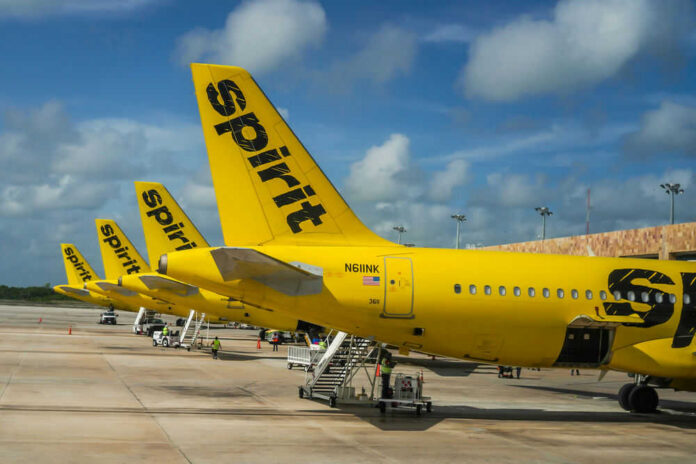
President Trump said Thursday that he is weighing a taxpayer-funded acquisition of Spirit Airlines “for the right price,” with a plan to resell the carrier once oil prices decline. Unlike past rescue efforts that relied mostly on loans or temporary liquidity programs, this approach contemplates direct government ownership—at least for a period—paired with a stated intent to stabilize operations under new management and exit later through a sale.
Spirit’s situation is not a sudden downturn. The carrier filed for Chapter 11 bankruptcy protection in November 2024 and again in August 2025, signaling deeper structural stress. In recent weeks, creditors reportedly questioned the airline’s viability as jet fuel costs climbed amid geopolitical tensions affecting energy markets. Spirit’s ultra-low-cost model can work when expenses are predictable; when fuel spikes and financing tightens, margins can collapse quickly.
How the bankruptcy talks are shaping the potential taxpayer exposure
Spirit’s bankruptcy counsel told a U.S. Bankruptcy Court that advanced talks with the federal government are underway on a financing arrangement, and that details have been shared with the airline’s three main creditor groups. One reported concept involves a loan of up to $500 million in exchange for warrants, a structure that can give taxpayers an equity-like upside if the company recovers. Key terms, including the size and triggers, have not been publicly finalized.
That uncertainty matters because “takeover” can mean very different things in practice. A straightforward purchase would put operational and reputational risk on the federal government, while a loan-plus-warrants package could resemble a monitored restructuring with an option to convert value later. Reporting indicates it remains unclear how any acquisition would differ from previously discussed financing terms. For taxpayers and lawmakers, the difference is the line between temporary backstop and becoming the owner of an airline.
The political crosswinds: jobs, competition, and distrust of elite dealmaking
Trump has emphasized job protection, pointing to an estimated 18,000 Spirit employees. Keeping those paychecks flowing is a tangible, near-term goal, and maintaining a budget competitor could help restrain fares on certain routes. But a federal purchase also collides with a long-running public skepticism—shared by many on the right and the left—that government and well-connected interests cut complex deals behind closed doors, then socialize losses when plans fail.
That skepticism is sharpened by the backstory. The Biden administration sued in 2023 to block JetBlue’s proposed $3.8 billion acquisition of Spirit, a move the current White House blames for limiting Spirit’s options. Whether or not that decision was decisive, it illustrates a broader pattern: Washington often shapes markets with aggressive regulation and litigation, then confronts downstream consequences when an industry player weakens. The public still ends up paying, one way or another.
What to watch next if Trump moves from talk to a signed deal
The next concrete milestone will be clarity on structure: purchase versus financing, the size of taxpayer commitment, and what oversight would exist while Spirit is stabilized. Trump has also said he has “a smart person” in mind to run the airline, but no name has been disclosed publicly, making it difficult to evaluate operational credibility. The resale concept hinges on oil prices falling, a timeline no administration can guarantee.
Critics have described the concept as “highly problematic,” but available reporting does not provide detailed objections beyond the broad concern that government ownership can distort markets and invite political decision-making into commercial operations. For conservatives who prefer limited government, the tension is obvious: preserving jobs and competition may be appealing, yet taxpayers carrying airline risk is exactly the kind of precedent that can expand federal power. The details will determine whether this looks like disciplined restructuring—or another permanent “temporary” program.
Sources:
Trump weighing taxpayer takeover of Spirit Airlines
Trump signals interest in buying Spirit Airlines with taxpayer backing, aims to resell for profit
Trump weighs US-backed takeover of Spirit Airlines amid bankruptcy talks
Trump considers taxpayer takeover of Spirit Airlines and would aim to resell
Trump considers a taxpayer takeover of Spirit Airlines and would aim to resell carrier