
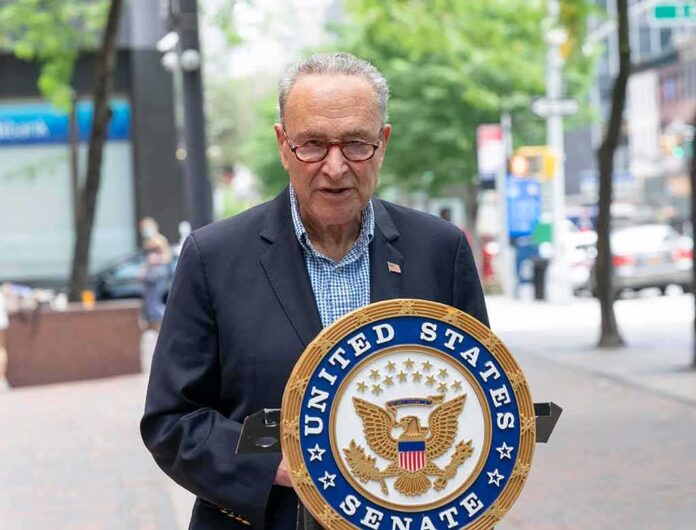
Bernie Sanders publicly refused to back Chuck Schumer for Senate Democratic leader, signaling an open power fight inside the left’s caucus.
Story Highlights
- Sanders said he will not support Schumer’s reelection as Democratic leader.
- Sanders urged a real contest and “vigorous debate,” not a rubber-stamp vote.
- Several Democrats and Democrats-elect declined to endorse Schumer.
- Reports named Chris Van Hollen as a possible alternative, still “listening”.
Sanders Announces Opposition To Schumer’s Leadership
Senator Bernie Sanders said on November 10 that he will not support Senator Chuck Schumer to lead Senate Democrats in the next Congress. Sanders praised Schumer’s work ethic but said the party needs change. He stated, “I will not be supporting Chuck to be re-elected as the Democratic leader.” The remark came at a joint appearance and was reported across major outlets that quoted his words directly. The move formalized a leadership challenge inside the Democratic caucus.
Sanders also pushed for an actual leadership race, not an easy glide path. When pressed on whether Schumer would run unopposed, Sanders said he did not think that would happen. He called for “vigorous debate” and an open process for choosing the next leader. That stance rejects a behind-closed-doors coronation and sets up a high-profile test of party direction in the Senate.
Dissent Spreads Among Democrats And Newcomers
NBC News reported that Sanders and Senator Elissa Slotkin both said they would not back Schumer for the top job. Several incoming Democratic senators also declined to endorse Schumer, signaling wider unease with a simple renewal of his leadership. Public refusals from incumbents and freshmen alike matter because they show visible cracks, even if the caucus vote itself happens out of sight. Their statements make the split concrete for voters watching at home.
Additional reports noted names of Democrats-elect who did not line up behind Schumer when asked. That adds weight to Sanders’s call for open debate and a real choice. It also undercuts any claim that opposition is limited to a fringe. The trend hints at a broader struggle over message, strategy, and priorities inside the left’s Senate ranks. For Republicans and independents, this feud exposes the party’s strain after years of big promises and thin results.
Possible Challenger And The Process Ahead
Coverage identified Senator Chris Van Hollen as a possible alternative leader. One Democrat-elect publicly praised him as an “amazing” option, while Van Hollen said he was in “listening mode” on a run. He had not declared a formal bid at the time of the reports. That leaves Democrats with energy for change but no defined platform from a challenger. It also gives Schumer time to rally loyalists and frame the contest on his terms.
🚨 Bernie Sanders Refuses to Back Chuck Schumer for Senate Majority Leader, Setting Up Democratic Leadership Showdown
🔴 Sanders Breaks With Schumer: Sen. Bernie Sanders announced Tuesday that he will not support Sen. Chuck Schumer's bid to become Senate majority leader when…
— Washington Report (@Washington_Rep) November 11, 2026
Senate party leaders are picked by their caucuses in internal votes, often by secret ballot. Candidates need only a simple majority of their conference to win. These rules limit public visibility and make press statements an imperfect gauge of support. That means the loudest voices do not always win on vote day. Still, Sanders’s move is important because it gives permission for others to question the status quo in public and demand a contest.
Why This Matters To Readers Who Want Accountable Government
This fight shows a party that talks unity but struggles to agree on a path. Sanders’s message is simple: change the leadership or change the results. Democrats face backlash for years of high costs, border chaos, and cultural battles that many families reject. Internal discord now risks more gridlock. For conservatives, the key point is clear. A Senate run by Democrats cannot steady the economy or secure the border if it cannot even agree on its own captain.
President Trump is pressing an agenda focused on growth, border security, and lower energy costs. Senate Democrats are instead wrestling over who holds the gavel. Sanders’s public stand forces them to debate their record, not just their rhetoric. Whether Schumer keeps his post or not, this rift lays out a contrast in priorities. Voters can see which side aims to deliver results that protect families, free speech, and the Constitution—and which side is busy fighting itself.
What To Watch Next In The Leadership Showdown
Watch for any formal challenger to step up with a clear plan and vote pledges. Look for public endorsements from sitting senators as a test of momentum. Track whether Democrats allow open forums or keep most of the process behind closed doors. If the caucus stays secret, final tallies may not be disclosed. In that case, the best public signals will be on-camera commitments and whether Schumer can still claim broad support after weeks of open dissent.
Sources:
youtube.com, nbcnews.com, bloomberg.com, newrepublic.com, themirror.com