Kamala Harris told a national audience she is “thinking about” a 2028 run, and new polls show she could top the Democratic field.
Story Highlights
- Harris said she “might” run in 2028 and is weighing her role for the country.
- Media coverage and a public transcript show sustained signals of interest.
- Polling ranges from the low teens to 50%, showing advantage but real volatility.
- No formal campaign or filing exists yet; timing and plan remain unclear.
Harris Says She Is Considering a 2028 Bid
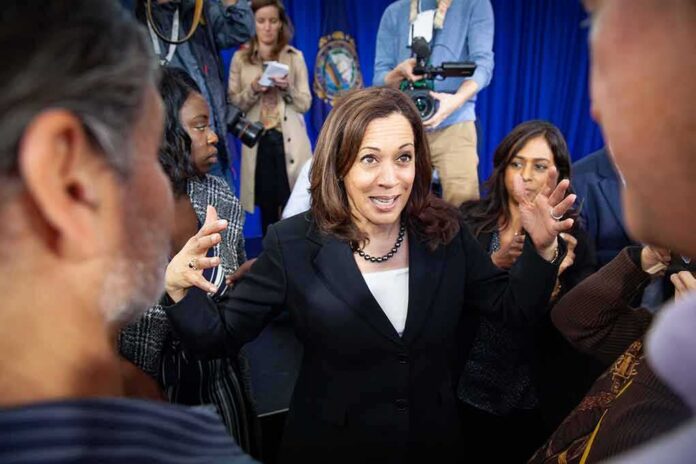
Vice President Kamala Harris answered a direct question about 2028 and said, “I might. I’m thinking about it.” The exchange happened at the National Action Network convention on April 10, where she also said she knew what the presidency requires from her time in the White House. She framed the choice as what best serves the American people and added, “I’ll keep you posted.” Multiple outlets reported the remarks as active consideration of another run.
A transcript from the event captured Harris saying she would be “more involved than ever before in 2028 because we can’t lose.” She also joined a light joke about saving her a seat for lunch, which underscored her comfort engaging a friendly crowd. The appearance signaled she plans to stay central in Democratic politics. The New York Times featured the comments as fresh fuel for a possible third presidential bid, highlighting their on-record nature and timing.
Polling Shows Early Strength, But Results Clash Across Surveys
Several polls show Harris as a leading name among Democrats for 2028. One national survey by Focaldata reported her near 30% when respondents picked a possible nominee. Another set of surveys from Center Square showed her around 29% with a stable range in the high twenties to low thirties. These results suggest a soft lead in a still-fluid field with many big names still in the mix.
Other results are far less settled. A New York Times and Siena report placed Harris at only 12%, with almost half of respondents undecided. At the other end, a Harvard and Harris survey showed her at 50% support among Democrats, and up from earlier months. The spread from 12% to 50% shows how wording, timing, and field lists can drive large swings before candidates declare and voters focus.
No Formal Campaign Yet, Only Signals and Positioning
Harris has not formed a committee, filed paperwork, or announced a formal campaign. She has not rolled out a platform, senior team, or a launch date. Her public line remains that she is thinking it over and weighing how to serve best. That leaves observers with hints, transcripts, and polls, but without a calendar, state plan, or funding map to measure hard intent or readiness for a long primary fight.
Coverage warns that early “front-runner” talk can mislead when the field is not set and most voters are not yet engaged. Political analysis over the years shows early polls can miss later turns once debates, fundraising, and endorsements reshape the race. The 2028 Democratic lineup could add governors, cabinet officials, and members of Congress, each able to peel support and donors away from a name-identity lead formed this far out.
What Harris’s Move Means for Conservatives Watching 2028
Harris’s signal matters for readers tracking who may lead the left’s agenda on spending, energy, and social policy. If she runs, she could carry forward policies that raised costs and pushed federal power deeper into local life. Her ties to the party’s national networks also mean major money and media attention. Conservatives who want lower energy bills, secure borders, and limited government should assume her ideas will get prime airtime and prepare to contest them early.
For now, the practical takeaway is simple. Harris put her name on the board. National outlets amplified it. Some polls show a lead; others do not. No campaign exists yet. Voters should watch for hard steps that turn talk into action: filings, staff hires, travel to early states, and clear positions that affect your family’s budget, your community’s safety, and your constitutional rights. Until then, this remains a test of message, not a march to nomination.
What to Watch Next
Watch Federal Election Commission filings for any new Harris committee. Track sustained visits to early primary states and the build-out of a senior team. Look for donor events that match past presidential efforts. Compare new polls that repeat the same method over time, which can separate noise from real movement. These concrete markers will reveal whether Harris is only exploring or is ready to lead the party into a full contest for the White House in 2028.
Sources:
facebook.com, yahoo.com, thehill.com, pdclarion.com, nytimes.com, apnews.com, kentucky.com, nbcnews.com