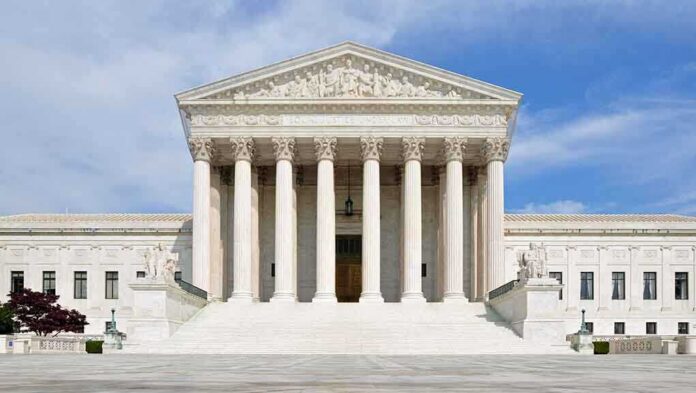
Justice Samuel Alito says the Supreme Court’s 2015 same-sex marriage ruling marked a decisive turn against religious liberty, putting people of faith on the defensive in public life.
Story Snapshot
- Justice Alito warned Obergefell would fuel conflicts that punish traditional beliefs about marriage.
- Supporters of Obergefell say clergy and faith groups keep core protections under the First Amendment.
- Later cases show the clash often centers on speech and public accommodations, not church rites.
- The fight now shapes contracts, licensing, and small business rights across the country.
Alito’s Core Warning From 2015
Justice Samuel Alito argued in his Obergefell v. Hodges dissent that the ruling would undermine self-government and threaten religious liberty. He said the Court’s move would push people who hold the long-standing view of marriage as a man-woman union to the margins of public life. He warned that officials and citizens could face penalties for acting on those beliefs under anti-discrimination rules. The dissent flagged this shift as a direct risk to free exercise and free speech.
His point rested on a simple idea. When the Court rewrote the rules for marriage licensing, the change did not end debate. It moved the dispute into every place where faith meets law. That includes local permits, state contracts, school policy, and small businesses that offer custom services. Alito predicted that public power would be used to punish dissent from the new orthodoxy. He viewed that as a serious blow to people of faith who engage daily in civic and economic life.
Where The Conflicts Now Happen
Since Obergefell, the most intense fights have not been inside churches. They have been in public-accommodations laws, speech disputes, and government contracting. The Supreme Court’s decision in 303 Creative v. Elenis held that a state cannot force an artist to create speech that conflicts with her beliefs about marriage. The ruling drew a line between selling standard goods and compelling custom expression. It showed how speech rights limit state power in this arena.
More conflicts involve social-service contracts and licenses tied to state rules. Religious providers that serve children or families sometimes lose contracts when they keep faith-based criteria. Cities say they enforce neutral rules. Faith groups say the state is coercing them to violate doctrine. Legal scholars describe a pattern after major rights rulings: new claims of exemption follow, and courts must weigh equal access against religious exercise and speech, case by case.
What Obergefell’s Supporters Say Is Still Protected
Supporters of same-sex marriage stress that Obergefell requires states to license and recognize marriages but does not force clergy to perform weddings. They point to the majority’s assurance that people remain free to advocate and teach their beliefs about marriage. They also cite long-standing protections that let religious groups control their rites and facility use. They argue that this framework keeps core religious practice safe while ensuring civil marriage is available to all.
They also claim there is no broad right for religious groups to ignore neutral rules in the marketplace. They say when a business opens its doors to the public, it must follow the same laws as everyone else. Backers of this view frame accommodations as possible in narrow settings, but not as a license to deny service. Their stance accepts robust freedom in the sanctuary, but tighter limits in commerce, where anti-discrimination laws apply to all vendors equally.
Why This Matters To Everyday Believers
Parents, teachers, coaches, and small business owners now face the front lines of this legal tension. City rules, school policies, and procurement terms can carry quiet but powerful pressure to conform. People of faith ask for room to live and work by their beliefs without losing contracts, licenses, or their voice. Alito’s warning highlights that the cost of dissent often lands on regular citizens, not just churches or seminaries, as these conflicts spread through daily life.
The path forward runs through clear limits on compelled speech, fair terms for public contracts, and respect for conscience. Courts can protect expression while ensuring access to basic goods and services. Lawmakers can write targeted safeguards so no one is forced to say what they do not believe or close their doors to keep their faith. That balance defends the First Amendment for all and keeps government from punishing traditional views on marriage in public life.
Sources:
lifesitenews.com, advocate.com, bricker.com, cbsnews.com