An Israeli drone strike hit a moving vehicle in Gaza City, killing two people and injuring others, as Israel says it targeted Hamas engineers rebuilding terror capabilities.
Story Snapshot
- Israeli military says the strike killed two Hamas engineers restoring weapons capacity.
- Medics and reporters on the ground counted two dead and several wounded near the vehicle.
- Witness and activist outlets framed the vehicle as civilian transport and said bystanders were hurt.
- Conflicting claims persist while no underlying targeting intelligence has been released.
What Israel Says It Hit and Why It Mattered
Israeli forces said a precision drone strike in Gaza City targeted two Hamas engineers tied to weapons development and efforts to restore the group’s capabilities during a ceasefire. The Israel Defense Forces identified the men as Hassan Ali Abu Nada and Abd al-Rahim Ahmad Khalil Khawa and said the action removed a threat to Israelis and troops operating near the area. Reuters likewise described the strike as hitting a single vehicle, with deaths limited to its occupants.
Israeli statements fit a pattern used in prior vehicle strikes that officials framed as responses to ceasefire breaches or imminent danger to personnel. Reuters reported a similar justification in an earlier case, where the military said it would act against any vehicle that posed an immediate threat or violated truce terms. Those claims underline Israel’s legal position: target militants, not civilians, and take steps to reduce harm in dense areas even when the enemy blends into crowds.
What On-The-Ground Accounts Reported
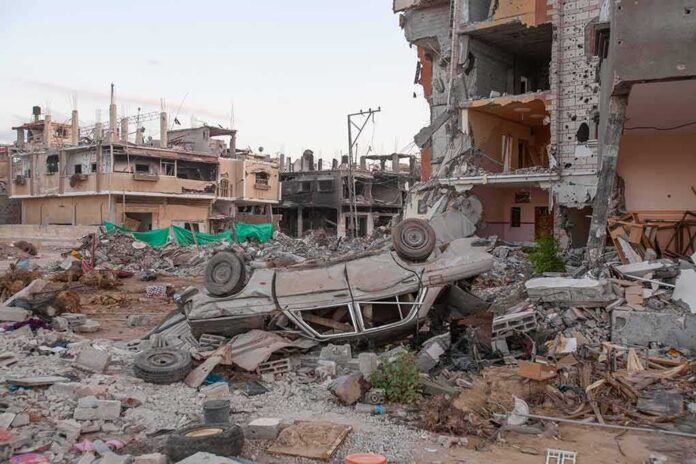
Medical workers and local reporters in Gaza said two people died and more than a dozen were injured around the strike site, with injuries among passersby. Anadolu cited witnesses who said the drone fired at least two missiles and killed the vehicle’s two occupants on impact. Reuters also described a mangled car and casualties consistent with a direct vehicle hit rather than an area bombardment. These details point to a focused strike but do not resolve who the occupants were.
Some outlets tied to Palestinian sources described the vehicle as civilian transport and highlighted wounded bystanders, which deepens the dispute over target status. Middle East Eye framed a closely timed incident as a strike on a civilian transport vehicle in western Gaza City with broader casualties, including women and children. Such reports stress human cost and imply misuse of force. They do not, however, independently verify who was inside the targeted car in the case Israel addressed.
What Is Known, What Is Not, and Why It Matters
The most solid overlap across reports is that a single vehicle in Gaza City was struck, two people were killed, and others were hurt nearby. Israel named the alleged Hamas engineers and linked them to weapons work, asserting a threat removal. Independent outlets on the ground recorded the death toll and injuries but did not confirm militant status. No public release of surveillance feeds, target packets, or forensics has surfaced to validate either narrative beyond statements.
For American readers who value rule of law and clear goals, two points are key. First, Israel says it aimed at specific militants, not civilians, which aligns with the laws of war if true. Second, Gaza-based sources report civilian spillover injuries, which raises questions about proportionality in a crowded city. Without released targeting intelligence, the public debate will keep splitting along familiar lines. That vacuum lets partisan frames eclipse facts and invites pressure on U.S. policy.
What Conservatives Should Watch Next
U.S. leaders face loud calls to micromanage Israel or halt support any time contested strikes occur. That push often ignores that Hamas embeds among civilians, a tactic that endangers families and complicates targeting. Americans should demand transparency, not show trials by media. If Israel can declassify strike video, battle-damage assessments, and named target histories, it should. If critics have proof the men were not combatants, they should produce verifiable records, not slogans.
Bottom Line for U.S. Policy Under President Trump
The administration backs Israel’s right to self-defense while urging steps that spare civilians where possible. That balance serves American interests: weaken terror networks, deter Iran-backed proxies, and avoid endless escalations that drag in U.S. forces. Congress should resist grandstanding that ties the hands of an ally fighting a group that hides behind civilians. Clear evidence, not viral clips, should guide aid terms, intelligence sharing, and any future red lines on urban strikes.
Sources:
youtube.com, apnews.com, english.wafa.ps, timesofisrael.com, menafn.com