
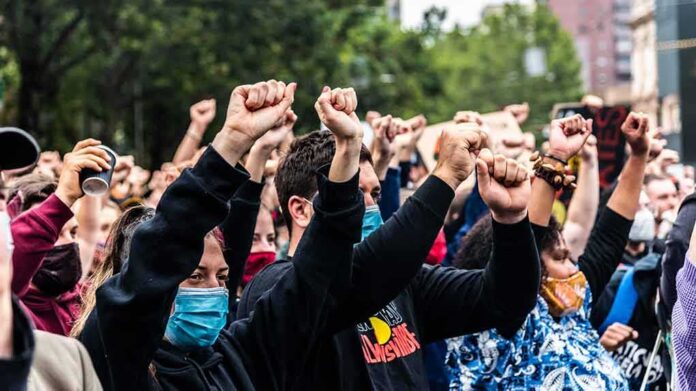
France’s student unrest has morphed into a nationwide push backed by major labor unions, turning school blockades into a broader political test for Paris.
Story Highlights
- National labor federations joined student actions, threatening wider strikes and shutdowns.
- Student leaders called a nationwide school blockade to force government action.
- Protest crowds now include students, teachers, and union delegates across France.
- Left parties show support, while leaders deny running the operation.
Unions Turn School Protests Into a National Showdown
Reuters reported that major unions escalated pressure on the French government. The General Confederation of Labour leader Sophie Binet gave a 48-hour deadline to reverse spending cuts, warning of further strike action if Paris refused. The British Broadcasting Corporation said a broad coalition, including the French Democratic Confederation of Labour, urged members to join students in the streets. Education unions also coordinated actions to back the student movement, raising the stakes beyond local school issues.
Sortiraparis described a joint education-sector call by several federations, including the Federation Syndicale Unitaire and the General Confederation of Labour, urging school staff to mobilize and, where needed, strike. The World Socialist Web Site said an all-trade union alliance backed a national education strike call for October 6, showing cross-union support for students. This union muscle matters. In France, union-backed marches can shut transit, slow industry, and force leaders to the table. That is what Paris now faces.
Student Blockades Spark Nationwide Momentum
The protests started with school grievances. Students complained about overcrowded classrooms, teacher shortages, and run-down buildings. Reuters reported water leaks and even rat infestations in some schools. The British Broadcasting Corporation said the unrest spread after the main secondary-school union called for a nationwide blockade when earlier student actions drew no response. That call flipped scattered local protests into a coordinated push that closed or disrupted hundreds of schools across France.
Cable News Network reported that “hundreds of thousands” of protesters took to the streets, including students, teachers, and union delegates. That mix shows how fast a school issue can become national politics in France. Student groups led the early days. Then labor allies and educators stepped in, increasing pressure on the government to answer. This pattern mirrors past French movements that swelled once unions amplified campus anger into broader marches.
Hard-Left Support and Denials of Command
Coverage shows the hard left stepping in to cheer the marches. The British Broadcasting Corporation reported that government officials and right-leaning figures blamed the hard-left party La France Insoumise for fueling the protests. Euronews reported that Jean-Luc Mélenchon, the party’s leader, said his group supports the movement but is not organizing it. That denial matters because public proof of a command structure has not surfaced in press reports.
Fox News framed the unrest as part of a larger activist ecosystem. Its digital review counted dozens of groups and said transnational left networks are boosting the protests online and on the ground. That lens fits what we see on the streets: student unions, parent groups, educators, and labor allies moving in parallel. Still, the strongest confirmed facts show broad participation and public endorsements, rather than a single central command with documented orders.
What This Means for Americans Watching Abroad
France’s turmoil shows how fast street politics can expand when institutions fail students. When officials ignore basic service problems, activists fill the gap. That is when unions and political actors step in and scale the fight. The French case now links local school pain to a national debate over spending, priorities, and public order. If unions follow through on strike threats, daily life in France could slow, and leaders will face hard choices on budgets and discipline.
France has officially summoned Iran's ambassador following allegations of a coordinated online disinformation campaign targeting French student protests. Paris authorities accused Iranian state networks of deliberately spreading manipulated media out of context to inflame public… pic.twitter.com/RxPP4oabSB
— Green Time (@greentime_media) October 8, 2026
For conservatives, the lesson is clear. Strong institutions, clear rules, and honest budgeting prevent crises like this. When leaders let facilities rot and duck staffing needs, they hand the megaphone to the loudest radicals. France is now wrestling with that cost. Student voices started the fire over real problems. Union power turned it into a blaze. Whether Paris restores order and fixes schools without caving to extreme agendas will decide what comes next.
Sources:
facebook.com, foxnews.com, sortiraparis.com, richtmann.org, bbc.co.uk, bbc.com, cnn.com, deseret.com