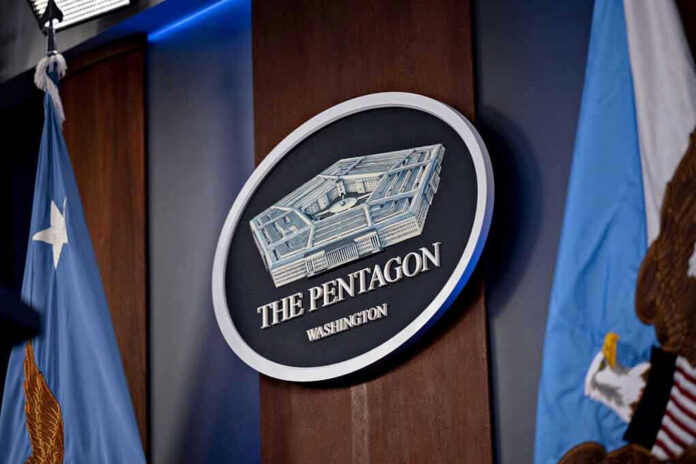
President Trump approved execution by U.S. Army firing squad for Fort Hood terrorist Nidal Hasan, marking the first military execution in more than six decades.
Story Highlights
- Pentagon said Defense Secretary Pete Hegseth recommended firing squad; President Trump approved.
- Army Secretary will set the time and place for the execution, which are not yet announced.
- Hasan was convicted in 2013 for killing 13 and wounding dozens at Fort Hood in 2009.
- Military executions are extremely rare; the last was in 1961, not by firing squad.
Pentagon Announces Approval and Execution Method
Pentagon spokesman Sean Parnell said Monday that Defense Secretary Pete Hegseth recommended death by firing squad for Nidal Malik Hasan, and President Trump approved the method. Parnell stated that the Secretary of the Army will decide the time and place. The announcement makes clear the method will be a U.S. Army firing squad, not another form of execution. The decision ends years of uncertainty about how the sentence would be carried out for the convicted terrorist.
Officials said the execution will proceed within the military justice system, which sets procedures for capital sentences after appellate review. Reports describe a clear approval chain: Hegseth recommended the method, President Trump approved it, and the Army Secretary now manages logistics. No date or site has been named. The Pentagon announcement came on October 5, 2026, with follow-up coverage on October 6, reflecting a coordinated public release across multiple outlets.
The Case: Conviction, Sentence, and Years of Review
A military jury convicted Hasan in 2013 for the 2009 attack at Fort Hood, Texas, that killed 13 people and wounded more than 30 others. The panel sentenced him to death, and the case moved through years of review and appeals. Coverage notes that appellate courts upheld the sentence and that the conviction and capital sentence stood at the time of the Pentagon’s announcement. The core facts of the case are not disputed in the contemporaneous reporting cited here.
Hasan’s crime shocked the nation and the military community. Families waited years for finality. With the approval of firing squad, the administration signaled it intends to carry out the lawful sentence in a manner aligned with military tradition. Officials emphasized that the Army Secretary controls scheduling next. That detail matters because it separates policy approval from operational execution, which follows established rules inside the Army’s legal and command structure.
Why Firing Squad, and How Rare This Is
Firing squads have long ties to military discipline rather than civilian prisons. In American history, the method appeared most around wartime, often for military offenses like desertion. Modern use in the United States is very rare. The Pentagon announcement stressed Hasan’s execution will be the first U.S. military execution since 1961, underscoring how unusual this moment is in military justice practice today.
🚨Trump has approved the execution of Nidal Hasan, the former U.S. Army psychiatrist convicted of killing 13 people at Fort Hood, Texas, in 2009.
🔷 Hasan opened fire on soldiers who were waiting at a medical clinic, killing 13 people and injuring 32 others.
🔷 He was convicted… pic.twitter.com/TiF05C1dO3
— Leah_לאה (@Weisslbj333Leah) October 6, 2026
The use of a firing squad in a military context reflects historic norms inside the armed forces. News accounts explain that while civilian executions shifted to other methods, firing squads remained more associated with the armed services. That background helps explain the method choice. The Pentagon did not release the specific legal citation for the method in the announcement, but reporting is consistent that the method was recommended by Hegseth and approved by President Trump.
What Comes Next for Families, Troops, and the Country
Victims’ families and service members have waited since 2009 for closure. The approval signals movement to enforce a jury’s sentence after extensive appeals. The next milestone will be the Army Secretary’s order setting time and place. That step will trigger detailed procedures to protect safety, dignity, and compliance with law. For many, this is about justice, deterrence, and restoring moral clarity after a terrorist attack on a U.S. base. The administration framed it as carrying out a lawful verdict.
Conservatives see this as the government finally doing its job: punishing a terrorist who attacked American soldiers on American soil. Supporters point to constitutional order, rule of law, and the duty to defend troops and families. The announcement does not change the verdict, but it does end limbo over method. The process now shifts from policy approval to execution logistics, with the Army Secretary responsible for the final schedule and location decision under military rules.
Sources:
nampa.org, cnn.com, washingtonexaminer.com