
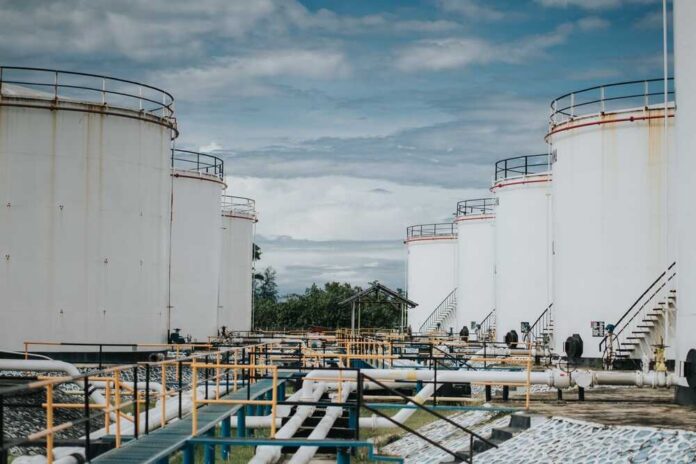
America’s emergency oil shield has thinned to levels that invite risk if a major crisis hits, and the numbers show why vigilance—and a serious refill plan—cannot wait.
Story Snapshot
- Strategic Petroleum Reserve barrels fell sharply this spring, hitting roughly the mid-300 million range [1][6]
- One recent week alone saw a 9.1 million barrel draw, underscoring rapid depletion [1]
- Energy Department materials describe the reserve as an emergency-response tool with rapid release capability [4]
- Statutory sales and past policy choices helped push inventories lower over recent years [5][3]
What The Data Shows About The Shrinking Strategic Petroleum Reserve
Government energy statistics and financial reporting confirm a significant drop in the United States Strategic Petroleum Reserve this spring. For the week ended May 22, inventories declined by 9.1 million barrels, leaving about 365 million barrels, after falling by more than 40 million barrels since late February [1]. Federal Energy Information Administration data series tracking end-of-month balances corroborate the broad downtrend to the mid-300 million range by late spring, marking one of the lowest levels in decades [6]. These figures define the problem clearly and quantify today’s thinner buffer.
Department of Energy materials explain how the Strategic Petroleum Reserve functions during emergencies, including a maximum nominal release capability of about 4.4 million barrels per day and roughly 13 days from a presidential decision to oil hitting the market [4]. That design makes sense for wartime or disaster response. However, when inventories sit near multi-decade lows, the cushion for a large, sustained disruption is reduced. The mechanics still work, but the margin for error narrows when starting volumes are smaller.
How We Got Here: Emergency Releases, Mandated Sales, And Market Pressures
Multiple forces drove the decline. Coordinated emergency releases with international partners during recent geopolitical shocks moved substantial barrels out of government storage to blunt price spikes, consistent with the reserve’s legal purpose [4]. In parallel, congressionally mandated sales authorized in prior budget laws required ongoing barrels to be sold from the reserve regardless of current global stress, steadily drawing stocks lower over several years [5]. Public documentation of drawdowns since the mid-2010s shows how scheduled sales and crisis responses combined to compress inventories [3].
These facts help separate rhetoric from record. The Strategic Petroleum Reserve was always intended for crisis management, and using it during genuine supply threat periods aligns with its charter [4]. Yet mandated off-budget sales layered on top of emergency exchanges have left today’s balance materially thinner than historic norms [5][6]. That mix adds complexity to refill planning. Policymakers must now rebuild inventories without reigniting consumer price pain, while ensuring statutory sale schedules do not undercut restocking progress.
Why Refill Timing Matters For Security, Prices, And Supply Chains
Energy security depends on both flow capacity and starting inventory. The Department of Energy can move several million barrels per day in a pinch, but the duration of protection depends on how many barrels are available at the outset [4]. With about 365 million barrels on hand as of late May, the nation can still respond, but resilience to a prolonged disruption—such as a sustained shipping choke point or major producer outage—declines as total stock falls [1][6]. Rebuilding the reserve strengthens deterrence and reduces volatility risk for families and businesses.
American crude oil and petroleum inventories have fallen to their lowest level in more than two decades as the conflict with Iran continues to disrupt global energy markets, FT writes.
Total U.S. stocks of crude and refined products dropped by 10.6 million barrels last week to… pic.twitter.com/RuoXit1t2Q
— Global Report (@Global_ReportHQ) June 3, 2026
Refill strategy must be disciplined and transparent. Clear purchase targets tied to price ranges can avoid bidding oil away from consumers during seasonal tightness. Coordination with producers to prioritize domestic supply growth and refining reliability can further stabilize markets while barrels are redirected into storage. Most importantly, halting or offsetting non-emergency, mandated sales would stop the policy-induced leak that undermines restocking [5]. Those guardrails align with limited-government prudence and protect taxpayers from paying more later to fix a preventable vulnerability.
Sources:
[1] Web – OIL RESERVES LOWEST IN DECADES
[3] YouTube – USA PANICS as Oil Reserve Drains at Record Speed
[4] Web – Strategic Petroleum Reserve (United States) – Wikipedia
[5] Web – SPR Quick Facts | Department of Energy
[6] Web – History of SPR Releases – Department of Energy