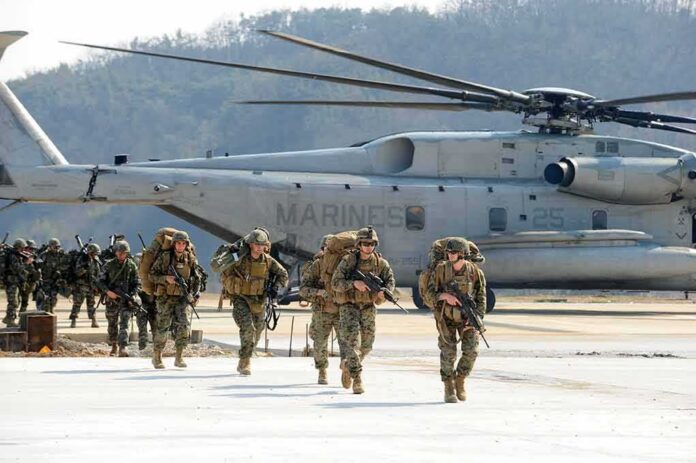
President Trump announced the last American forces have left Iraq, declaring the costly mission over and our troops headed home.
Story Highlights
- President Trump said the final U.S. troops have left Iraq and the mission is complete.
- Trump called the exit a victory for America and Iraq after the defeat of the caliphate.
- U.S. forces departed Erbil Air Base as part of a shift to a bilateral defense relationship.
- The President framed the withdrawal as ending an expensive “excursion into Hell”.
Trump Announces End Of U.S. Mission In Iraq
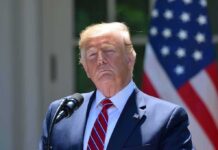
President Trump said on September 30, 2026, that the last American forces are leaving Iraq, marking the end of the U.S. mission there after more than two decades of involvement. He tied the decision to his long-standing pledge to stop endless wars and bring service members home. The Associated Press and other outlets reported the military confirmed completion of the withdrawal that same day, aligning with the President’s announcement. Trump stated it was time for America to go home and close this chapter.
The President described the exit as complete and orderly, stressing that the United States came to crush a terrorist caliphate and accomplished that task. He emphasized that mission success allows a clean departure, not a half-step. Coverage of his remarks noted directions to remove equipment fully, underscoring a tidy handover and no lingering footprint. He connected this outcome to a clear choice: stay and prolong risk and cost, or leave once the core objective was met—and he chose to leave.
Military Confirms Departure And Base Closure Actions
The U.S. military and regional reporting said forces and equipment left Erbil Air Base, a key site in northern Iraq. That movement signaled the end of the coalition mission against the Islamic State group and the start of a normal bilateral defense relationship between Washington and Baghdad. Outlets tracking Central Command-linked updates described completion of the departure and said the new focus would be state-to-state ties instead of a boots-on-the-ground mission. The Pentagon’s confirmation matched the President’s timeline.
National Public Radio and the Associated Press reported the withdrawal was done on September 30, closing a 12-year counterterror mission that followed the earlier 2011 exit and 2014 return to fight the Islamic State group. The administration framed this transition as a hard-won victory and a reset of American priorities. It ends a deployment that demanded money, manpower, and constant vigilance. The government’s message is simple: destroy the caliphate, remove our troops, and refocus American strength where it best serves our people.
Why This Matters For Security, Spending, And Strategy
Trump called the end of the deployment a victory for both nations and a decisive win over the Islamic State group’s caliphate. For many families, this means fewer repeat combat tours and a lower chance of grieving another folded flag. For taxpayers, a smaller overseas footprint reduces costs and waste tied to open-ended missions. For strategy, it shows America can strike hard, meet a clear goal, and then step back, instead of funding nation-building that never seems to end.
Trump Says Over 4,500 US Soldiers Killed In Iraq War
US President Donald Trump has said more than 4,500 American soldiers were killed and about 31,000 wounded during more than two decades of US military involvement in Iraq.
Trump made the remarks as the last American forces… https://t.co/RuoJwAYoee
— frontis (@frontisHQ) September 30, 2026
The exit also resets how Washington engages abroad. The United States will deal with Iraq as a sovereign partner, not as a base for permanent deployments. That model respects national independence and American limits. It also rejects the globalist habit of writing blank checks for far-off entanglements. The White House message fits conservative priorities: defend America, defeat terrorists, and avoid forever wars. The military’s same-day confirmation gives this policy shift solid ground under it.
Sources:
youtube.com, washingtontimes.com, npr.org, apnews.com, thehill.com, nbcrightnow.com, kurdistan24.net