
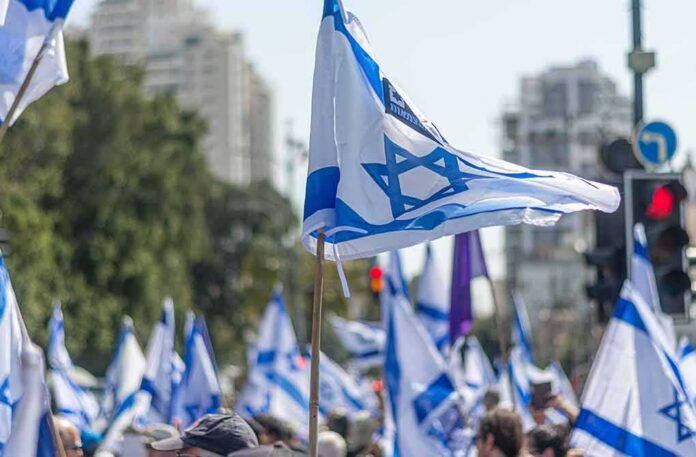
Israelis headed to the polls in a high-stakes Knesset election widely seen as a verdict on Prime Minister Benjamin Netanyahu’s leadership after years of war and turmoil.
Story Highlights
- Israel held a national election seen as a referendum on Netanyahu’s leadership
- Former military chief Gadi Eisenkot emerged as Netanyahu’s main challenger
- Voters chose party lists for the 120-seat Knesset; coalitions decide the government
- Early reports signaled a tight race that could extend coalition talks
Election Day Put Netanyahu’s Future on the Line
Reporters in Israel said voters were casting ballots in a national election that could decide whether Prime Minister Benjamin Netanyahu stays in power. Major outlets called the vote a referendum on his leadership. They linked the stakes to years of conflict and security concerns after the October 7, 2023 attacks and ongoing regional threats. The Associated Press and Reuters framed the choice as pivotal for Netanyahu’s political survival and direction of the country’s security policy.
Coverage identified Gadi Eisenkot, a former military chief of staff, as the central challenger heading an opposition push to unseat Netanyahu. Live updates from major outlets described a charged atmosphere and heavy focus on security, governance, and wartime decision-making. The New York Times and the Associated Press both placed Eisenkot at the front of the opposing camp, reflecting how the race centered on leadership and war records more than routine domestic issues.
How Israel Votes and Why Coalitions Matter
Israel’s system elects a 120-seat Knesset through party lists and proportional representation. Voters choose parties, not a prime minister on a separate line. After results, parties must build a majority coalition of at least 61 seats to form a government. That process can take time and often requires difficult deals. Analysts noted that even strong showings by any party still require partners to govern under Israel’s Basic Laws framework.
Reuters reported that a close outcome could delay a clear verdict on who governs, with extended talks likely if neither bloc reaches a majority outright. That means the election may not produce an instant winner. Instead, it sets the starting point for coalition bargaining that decides who becomes or remains prime minister. Live coverage abroad echoed that message, pointing to possible deadlock or a narrow path for either side.
Security, Leadership, and What’s at Stake for U.S. Interests
News reports underscored that the war years shaped this race. Voters weighed leadership under fire, relations with Iran, and the fight against Hamas. The Associated Press said the election followed three years of conflict and deep social strain. For American readers, this matters. Israel’s path on security, courts, and coalition stability affects U.S. policy, regional deterrence, and energy markets. A steady partner helps contain Iran and keeps extremists in check.
For conservatives in the United States, the stakes are clear. Strong borders, strong defense, and secure allies are vital. Israel’s voters were not choosing a slogan; they were choosing which party mix can protect families and hold the line against terror. The parliamentary process can be messy. But a firm coalition grounded in security helps deter enemies and supports peace through strength. That aligns with America’s interest in stability and moral clarity abroad.
Reading the “Referendum” Frame Without Missing the Mechanics
Major outlets used “referendum on Netanyahu” as shorthand for the race’s meaning. That description captured the campaign’s focus on his record, but the ballot still worked through party lists. Seats will be allocated proportionally, and only then will leaders try to form a government. Understanding both the drama and the rules helps readers track what comes next and why the initial vote count will not alone settle who runs the country.
ELECTION DAY: Israel heads to the polls Tuesday in its most consequential vote in a generation — the first national election since the Oct. 7 Hamas massacre that killed over 1,200 people and shattered the country's sense of security.
Prime Minister Benjamin Netanyahu is fighting… pic.twitter.com/fgWMRAiRAR
— Fox News World (@FNCGlobalNews) October 27, 2026
Bottom line for readers: Israelis voted in a decisive contest over leadership and security. Netanyahu sought to extend his tenure amid a test led by Eisenkot. The process now may move from ballot boxes to negotiating tables. Watch for the seat split, the president’s mandate, and coalition deals. Those steps will decide who leads Israel’s war policy and regional posture, which in turn shapes America’s closest alliance in the Middle East.
Sources:
youtube.com, heraldbulletin.com, reuters.com, apnews.com, irishnews.com, boston25news.com