As cars burned and police clashed with masked rioters, a BBC segment still called France’s nationwide unrest “mostly peaceful.”
Story Snapshot
- BBC described protests as “mostly peaceful” while airing violent riot footage, prompting criticism.
- BBC reports documented hundreds of thousands marching and widespread arson, looting, and clashes across many cities.
- Arrests ranged from more than 1,200 to about 1,800 in the same time frame, with no clear explanation for the gap.
- CNBC also reported peaceful marches alongside some of France’s worst riots in years.
What the BBC Said Versus What Viewers Saw
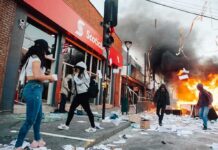
Mediaite reported that a BBC correspondent said protests were “mostly peaceful” while the broadcast showed a car set on fire, masked rioters battling police, and people storming a wine shop. The wording suggested calm. The pictures showed chaos. That clash matters. People judge events first by what they see. When images feature flames, smashed glass, and street battles, a “mostly peaceful” label can feel like spin even if many marchers behaved lawfully.
BBC articles did include serious violence in their text. They reported more than 1,200 arrests, torched vehicles, and injuries to police and emergency crews. Another BBC piece cited about 1,800 arrests, burnt cars, and shattered storefronts while again stressing large peaceful participation. Those two arrest totals did not match, and the stories did not resolve why. In a breaking story, counts can change. Still, that inconsistency fuels doubt when paired with soft-sounding labels.
Scale of Marches and Spread of Riots Across Cities
BBC coverage described a massive turnout, with a main Paris march appearing largely peaceful during the afternoon. At the same time, their live and follow-up reporting detailed violence in Paris and other cities including Marseille, Lyon, Rennes, Toulouse, Angers, and Grenoble. That spread shows the unrest was not a single hotspot. Violence and looting popped up in many places. When disorder stretches across cities, calling the day “mostly peaceful” without clear measures invites backlash.
CNBC framed the day as hundreds of thousands marching peacefully while fringe groups attacked buildings, shops, and police, calling it some of the worst riots in years. That two-part view—many lawful participants, plus hardened rioters—matches the facts on the ground. It also highlights the core tension. Are we measuring peace by headcount, by hours, or by damage? The phrase “mostly peaceful” does not tell us the denominator. That is why audiences bristle when pictures show fire and broken glass.
Images, Words, and Trust in News
BBC’s own live updates and video packages described demonstrations that “quickly descended into violence,” with cars and buildings set alight and shops ransacked. Mediaite underscored this with clips of burning buildings, looting, and attacks on police, including a fire at Limoges City Hall reported as arson during the protests. Viewers do not parse newsroom methods. They react to what is on screen. When words and visuals clash, trust drops. That gap is the issue here, not whether many French citizens marched peacefully.
On Saturday, October 17, 2026, France experienced its most severe nationwide violent protests since the "Yellow Vests" movement of 2018. The Ministry of the Interior reported approximately 550,000 participants, while labor unions estimated the figure at 800,000. At least 1,200… pic.twitter.com/cI1RzN3LtM
— THE WORLD CORRESPONDENT (@TheWorldCorresp) October 18, 2026
For conservatives, this pattern feels familiar. American outlets used similar language during past unrest at home, softening scenes of fires and assaults with euphemisms. Clear language protects public trust. Precise numbers, city-by-city breakdowns, and plain descriptions help viewers judge scope and risk. BBC reporting carried many of those facts. But the “mostly peaceful” line, set over fire and mayhem, undercut its own facts. Words should fit the pictures, or viewers will tune them out.
Why the Denominator Matters—and What Was Missing
BBC cited large crowds and documented serious crimes, but did not define what “mostly” meant in that segment—people, hours, locations, or events. Two arrest totals, more than 1,200 and about 1,800, added confusion without a stated update path. The reporting also did not quantify the property damage across cities in a single tally. Those gaps do not erase the peaceful majority. They do weaken a blanket label when violence spread across many urban centers and left burned vehicles and broken shops behind.
Responsible coverage can carry both truths at once. Hundreds of thousands marched without incident. Violent groups also hijacked the moment, attacked police, and torched property across France. Stating both plainly respects viewers and the facts. Viewers deserve candor, not comfort words. Say how many marched. Say how many were arrested. Map where fires burned. Then let people judge. When broadcasters match words to visuals and numbers, trust grows. When they do not, doubt wins.