
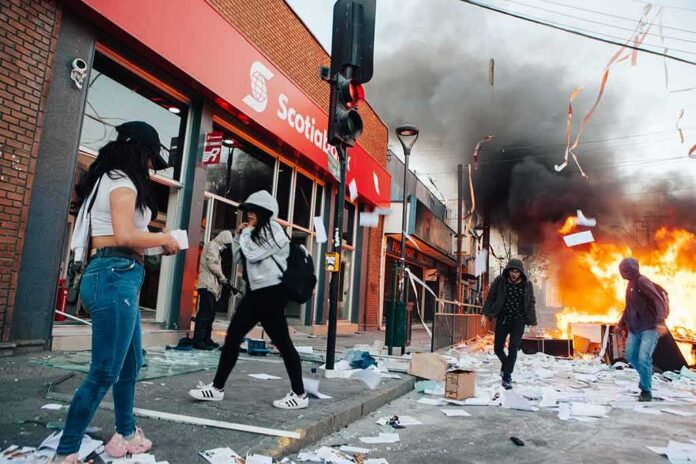
Looting and street fires erupted across French cities as rioters targeted shops during nationwide cost-of-living protests, with Paris officials reporting streets “devastated.”
Story Highlights
- Reporters documented looting of shops in Paris and other cities during protests.
- Specific Paris targets included Galeries Lafayette, a Lacoste store, and a mobile-phone shop.
- Witnesses saw store windows smashed and goods tossed to crowds near Place de la République.
- Paris’s deputy mayor condemned vandalism that marred otherwise peaceful marches.
Looting and Clashes Across Multiple French Cities
Agence France-Presse reported groups attacking shuttered stores and looting in Paris and other cities as night fell on a day of mass protests. Reporters on the ground saw fires, smashed windows, and crowds pushing toward key shopping districts. The unrest followed rallies over rising prices and social strain. Police deployed in force to contain breakaway groups that turned violent. The scenes included ransacked storefronts and debris-strewn sidewalks in affected neighborhoods.
In Marseille, reporters observed a Hermès boutique targeted during the disorder, while in Paris, crowds pressed toward the Champs-Élysées, home to many high-end stores. The violence did not reflect every march. Many people demonstrated peacefully earlier in the day. But when windows shattered and alarms sounded, thieves grabbed goods and fled. By late evening, images of looted shops and burning barricades had spread, showing a hard core using the protests as cover for crime.
Specific Incidents Reported in Paris
A correspondent described a skincare-brand window near Place de la République shattering, followed by looters tossing beauty products to a crowd. A telecommunications shop was breached nearby, and mobile phones were thrown into the street, where people grabbed them and ran. These scenes showed quick, opportunistic theft amid chaos. The smash-and-grab pattern matched past flare-ups in France, where small groups exploit police gaps during large gatherings and then disperse.
Separate reporting identified several Paris retail targets. Rioters tried to force entry at Galeries Lafayette. A Lacoste store was ransacked. An SFR mobile-phone shop was looted. These attacks focused on easily resold goods, from apparel to electronics. The footage and descriptions highlighted the mix of locations hit, not only luxury boutiques but also mainstream retailers. That range makes recovery and insurance assessments more complex for businesses and city leaders.
Officials Condemn Vandalism and Promise Order
Paris deputy mayor Emmanuel Grégoire said most demonstrators wanted a calm march, but vandalism tarnished the event. He described entire streets as devastated. City officials stressed the difference between lawful protest and criminal violence. Police units moved to clear hot spots and protect major shopping corridors. Fire crews handled ignited trash and barricades. Public leaders urged restraint, warning that violence would bring tougher responses and legal consequences for those caught looting.
The situation echoed past Paris unrest tied to economic anger. During the 2019 Yellow Vest violence, dozens of shops on the Champs-Élysées suffered major damage, including high-end brands and restaurants. That history shows how a fringe can warp a broader movement’s message when crowds swell and police lines stretch. Today’s pattern appears similar: a large protest, a smaller violent core, and targeted attacks on businesses that symbolize wealth or offer goods easy to fence on the black market.
Why It Matters for American Readers
America knows this pattern: peaceful protest hijacked by looters, small businesses and major brands hit, and families left with broken storefronts and fear. France is living it now. When leaders excuse chaos or slow-walk accountability, law-abiding people pay the price. Stable policing, clear consequences, and respect for property rights are not optional. They keep communities safe and protect jobs. French authorities now face a test: defend order or invite more nights like this.
How far will France’s anger go as protests erupt into chaos across the country?
What began as mass demonstrations has descended into scenes of destruction, with young people looting stores and setting fires in Paris, police firing tear gas and charging crowds with batons, and… pic.twitter.com/5RoggOgY5B
— APT News (@APT__News) October 18, 2026
These events also track with a broader cost-of-living squeeze. When energy and food prices bite, radicals exploit anger. The United States saw similar risks when local leaders tolerated disorder in past years. President Trump’s administration has stressed law and order at home. The French experience is a warning: strong borders, stable energy policy, and firm policing matter. They prevent fringe actors from turning real hardship into street crime that punishes working people the most.
Sources:
instagram.com, afp.com, news.com.au, cnbc.com