
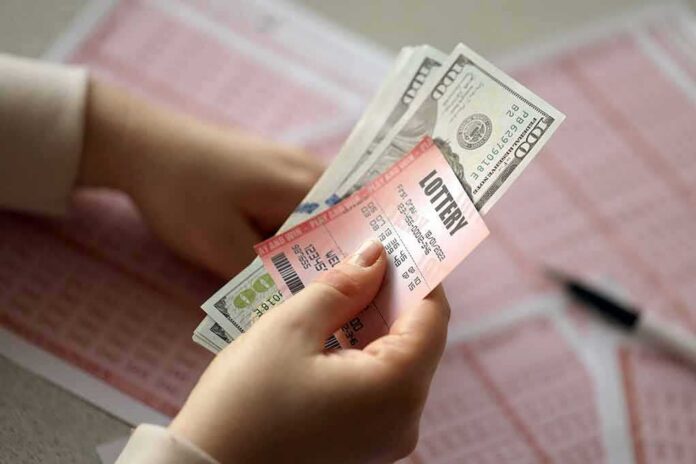
A Queens woman lost about $5,000 in jewelry after two men used a fake lottery ticket to pull off a classic street scam.
Quick Take
- Police said the suspects claimed they had a winning lottery ticket but could not claim it because of their immigration status.
- The woman handed over jewelry worth about $5,000 in exchange for the ticket.
- The men sent her into a pharmacy, then fled with her valuables.
- The case matches a wider lottery scam pattern that has hit New York before.
How the Queens Scam Worked
Authorities said the 69-year-old victim was approached near 86th Street and 78th Avenue in Ozone Park around 10 a.m. Saturday. The two men arrived in a BMW and told her they had a winning lottery ticket they could not cash because of their immigration status. Police said they persuaded her to trade jewelry valued at about $5,000 for the ticket, then sent her to a nearby pharmacy for pain medicine while they disappeared with the valuables.
The setup follows a familiar con. Scammers create urgency, dangle easy money, and ask for cash or valuables up front. The Federal Trade Commission says real prizes do not require payment, and the Better Business Bureau warns that true lotteries do not ask people to hand over money to claim winnings. In this case, the alleged jackpot itself was never the point. The ticket was only bait to get the woman’s jewelry.
A Familiar Fraud Pattern in New York
New York readers have seen this kind of scam before. In a similar Queens case reported by CBS News, suspects told a woman they had a winning ticket and convinced her to hand over cash and jewelry. Other recent reports describe lottery scams in the Bronx and Harlem that used the same playbook, with thieves distracting victims, promising a share of winnings, and then stealing valuables.
That pattern matters because it shows how street scams keep exploiting trust and simple greed. The tactic works by making the victim believe the deal is temporary and harmless. Once the target steps away, the thieves are gone. Officials have urged New Yorkers to reject any stranger’s request to redeem a ticket, split winnings, or hold valuables as collateral.
Why the Scam Still Works
Lottery fraud works because it sounds personal and immediate. The scammer is face-to-face, offers a reward, and uses confusion to push a quick decision. The New York State Lottery warns that any message claiming a prize is fraudulent and says people should never respond with money or personal information. Consumer groups give the same advice: if someone says you won but asks for anything before payment, it is a scam.
For conservative readers, the deeper lesson is plain: common-sense caution still beats smooth talk and fake promises. Hard-working people should not have to defend themselves from sidewalk hustlers using deception and immigration excuses as props. Police have released images of the suspects and are asking anyone with information to come forward. For now, the case stands as another example of how easily fraud can drain savings and family valuables in broad daylight.
Sources:
nypost.com, dnyuz.com, abc7ny.com, queenspost.com, consumer.ftc.gov