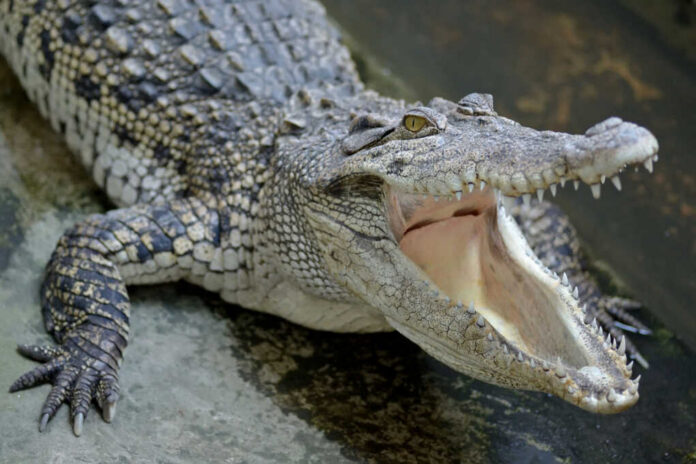
Florida officials say recent alligator attacks are tied to risky water contact, but they also admit the exact trigger in the Seminole County death is still not known.
Quick Take
- Florida Fish and Wildlife Conservation Commission officials said low water and the end of mating season may have played a role.
- University of Florida researchers said 96 percent of alligator attacks are linked to risky human behavior.
- Officials said alligators are common across Florida, so anyone near freshwater should stay alert.
- The Statewide Nuisance Alligator Program remains the main state tool for handling dangerous gators.
Why the Seminole County case drew so much attention
The deadly attack in Seminole County set off fresh concern because officials quickly removed two large alligators from the area. Florida Fish and Wildlife Conservation Commission spokesman Chad Weber said crews took two animals, one 12 feet and one 13 feet long, while investigators kept working to match the right one to the attack. The agency also said serious injuries from alligators are rare, even as the incident drew heavy public attention.
Officials gave the public a cautious explanation. Lieutenant Grant Eller said the end of mating season can make alligators more territorial, and low water from drought may have pushed animals into tighter space. But he also said it was hard to know the exact reason for the attack. That is the key point for readers: state officials pointed to real conditions, yet they did not claim a final cause for this one death.
What the research says about most attacks
The broader research points in a different direction. A University of Florida study found that 96 percent of alligator attacks were tied to risky human behavior, not random aggression from the animal. Researchers said the most dangerous situations involve people entering water where alligators live, while lower-risk actions near shore usually do not lead to attacks. The study also found that most bites remain rare over long periods.
That finding fits older wildlife research as well. Federal and university sources say alligators are usually not aggressive toward people, but they can become conditioned when food is involved. Wildlife experts also warn that feeding alligators makes them less afraid of humans, which raises danger for the next person who comes close. That is why safety advice keeps repeating the same rules: do not feed them, stay away from the water’s edge, and keep pets out of the danger zone.
Why state warnings keep sounding the same
Florida officials keep stressing the same message because the risk is statewide, not limited to one river or one county. The Florida Fish and Wildlife Conservation Commission says alligators live in all 67 counties and that every body of water could hold one. The agency’s nuisance alligator program exists to remove animals that threaten people, pets, or property, which shows how often the state must deal with this problem outside of one headline-grabbing attack.
Father of Florida woman killed in alligator attack honors daughter: She loved people, nature, adventure https://t.co/XhAvuluy4p
— FOX 35 Orlando (@fox35orlando) July 3, 2026
For families, the lesson is simple and hard to ignore. The data does not support panic, but it does support caution. Florida’s own safety guidance says to swim only in designated areas, avoid dawn and dusk, keep pets away from shorelines, and never feed alligators. The recent death has renewed that warning, while the research makes clear that human choices still matter most when people enter water shared by large predators.
Sources:
youtube.com, palmbeachpost.com, journalistsresource.org, clickorlando.com, wifitalents.com, nbcnews.com, wildlife.onlinelibrary.wiley.com








![[Breaking News] Bill to establish "national flag desecration" offense passes Lower House; vote fo...](https://conservativevalor.com/wp-content/uploads/sites/41/2026/06/hqdefault-4-100x70.jpg "Japan’s New Flag Law Sparks Free Speech Fears")