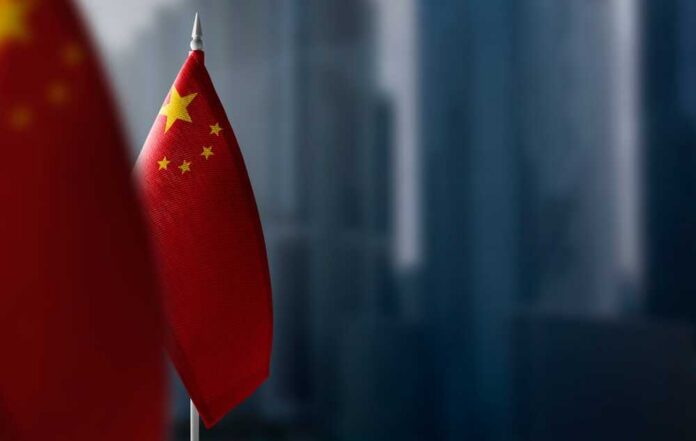
China is aggressively establishing its own version of America’s Monroe Doctrine in Latin America, turning the Western Hemisphere into a theater for global dominance while Washington scrambles to reassert control over its own backyard.
Story Snapshot
- Trump administration revived Monroe Doctrine in 2025 National Security Strategy to counter Chinese expansion in Latin America
- China has leveraged Belt and Road Initiative investments to establish military ties, intelligence operations, and economic influence across 20+ Latin American nations
- Beijing supplies arms and technology to anti-U.S. regimes like Cuba and Venezuela, operating listening posts just 90 miles from American shores
- U.S. responses include pressuring Argentina on China currency swaps, threatening fees on Chinese vessels, and challenging dual-use infrastructure projects
- The escalating rivalry risks destabilizing the region as Latin nations caught between superpowers face economic disruption and geopolitical pressure
China’s Western Hemisphere Power Play
China’s strategy in Latin America directly mirrors the 1823 Monroe Doctrine that established U.S. dominance by excluding European powers from the Americas. Beijing has spent two decades building economic leverage through massive infrastructure investments, port construction, and trade agreements that have made it the top trading partner for many Latin American countries. This economic foothold now serves as the foundation for military expansion, intelligence gathering, and political influence operations designed to challenge American preeminence in its traditional sphere of influence.
Strategic Assets and Military Positioning
The scope of Chinese military and intelligence operations in the region should alarm anyone concerned about national security. China operates listening posts in Cuba positioned just 90 miles from U.S. territory, supplies advanced jets and missile systems to the Maduro regime in Venezuela, and pursues Panama Canal alternatives through Nicaragua and Guatemala. Peru’s Chancay Port represents the dual-use infrastructure that could serve commercial and military purposes. These strategic chokepoints and surveillance capabilities give Beijing unprecedented ability to monitor and potentially disrupt U.S. operations while supporting anti-American regimes that threaten regional stability.
Trump’s Doctrine Revival Faces Headwinds
The Trump administration’s 2025 National Security Strategy explicitly revived the Monroe Doctrine to deny adversaries hemispheric positioning, marking a significant shift in U.S. foreign policy. Washington now pressures countries like Argentina to abandon Chinese currency swap agreements while threatening fees on Chinese commercial vessels and challenging infrastructure projects as security threats. This militarized approach faces a fundamental problem: many Latin American economies depend heavily on Chinese investment and markets for growth. Cutting these ties risks economic disruption that could fuel resentment and push nations closer to Beijing, the exact opposite of U.S. objectives.
The Deeper Concern Behind Great Power Competition
This escalating rivalry exposes how Washington’s foreign policy establishment prioritizes maintaining global dominance over addressing Americans’ domestic concerns. While politicians funnel resources into containing Chinese influence abroad, ordinary citizens struggle with inflation, border security failures, and economic uncertainty at home. The irony is unmistakable: the same government that couldn’t secure its own southern border now demands Latin American compliance in a geopolitical chess match. Both parties’ leadership appears more invested in preserving America’s imperial reach than fixing the broken systems that leave working families behind. This pattern reinforces the growing bipartisan frustration with elites who spend treasure on foreign entanglements while the American Dream becomes increasingly unattainable for millions of citizens.
China’s Military Strategy Is the Monroe Doctrine in Mandarinhttps://t.co/qCI3qgchsV
— 19FortyFive (@19_forty_five) May 2, 2026
The historical parallel to Imperial Japan’s 1930s “Asia for Asians” expansionism should give pause to observers across the political spectrum. China’s approach combines the worst elements of 19th-century colonialism with 21st-century technology: debt-trap infrastructure deals, military sales to rogue regimes, and hybrid warfare operations that exploit American distractions like Taiwan tensions. Venezuela’s Nicolás Maduro announced an Essequibo invasion plan on the Monroe Doctrine’s bicentennial in December 2023, widely viewed as a Chinese-backed distraction from Indo-Pacific tensions. These calculated provocations demonstrate Beijing’s willingness to destabilize the hemisphere while Washington remains stretched thin across multiple global flashpoints.
Sources:
Trump’s Latter-Day Monroe Doctrine Aimed at China
China’s Hemisphere Strategy: Monroe Doctrine 2
The United States’ New Monroe Doctrine