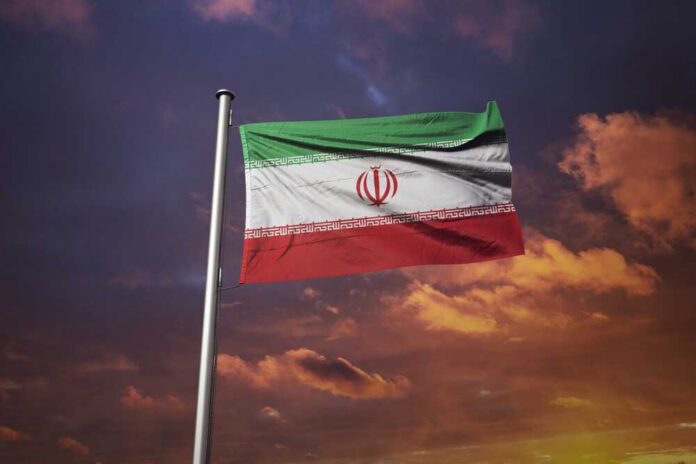
Iran “trifled” with the United States, President Trump says—and the ceasefire still holds, raising the stakes for what happens next in the Strait of Hormuz.
Quick Take
- President Trump says the U.S.-Iran ceasefire remains in place despite fresh provocations he described as Iran “trifling” with America.
- The truce traces back to the 2025 “Twelve-Day War,” after U.S. strikes and Iran’s missile attack on Al Udeid Air Base in Qatar.
- The Strait of Hormuz remains the pressure point, with global oil flows and U.S. economic stability tied to keeping it open.
- Conflicting messaging persists: Trump describes an enforceable ceasefire, while Iranian officials have signaled there was no formal agreement.
Trump’s message: truce stays, enforcement stays
President Donald Trump said the ceasefire with Iran remains in effect even after conduct he described as Iran “trifling with” the United States. The statement fits a second-term pattern: Trump pairs blunt deterrent language with a public insistence that Washington prefers an enforced pause over a wider war. The administration’s posture is that the truce is real, conditional, and backed by U.S. capacity to strike again if necessary.
That approach matters politically at home because it tries to balance two competing demands: voters want strength after years of perceived drift abroad, but they also want Washington to stop writing blank checks in blood and treasure. Trump’s framing signals “peace through strength,” while still keeping escalation authority close to the White House—an executive-driven strategy that frustrates opponents who argue Congress should exert more control.
How the ceasefire began—and why it remains disputed
The current ceasefire stems from June 2025, when Trump announced an Israel-Iran ceasefire after Iran fired missiles at the Al Udeid U.S. base in Qatar. Reporting and compiled timelines describe the truce taking hold the next morning, even amid early violations. In public, Israel’s leadership portrayed the outcome as a major victory and emphasized preventing Iran from reconstituting its capabilities. Iran, however, has signaled it would stop if Israel stops, while disputing the idea of a formal agreement.
This disagreement is not academic. When one side treats a ceasefire as a signed contract and the other treats it as a contingent pause, “violations” become harder to define and easier to spin. That creates room for miscalculation, especially when both sides use public statements as signaling tools. The available reporting also does not quantify the alleged provocations behind the “trifling” remark, leaving outsiders unable to independently judge their severity.
Hormuz is the real battleground—oil, inflation, and leverage
The Strait of Hormuz remains the strategic choke point that turns regional clashes into kitchen-table economics. Roughly one-fifth of global oil flows through Hormuz, so even partial disruptions can spike prices. Trump has treated Hormuz access as leverage, including issuing dramatic public deadlines tied to a deal and suggesting the U.S. could escalate if Iran jeopardizes shipping. From a conservative perspective, preventing an oil shock is directly connected to inflation control, household budgets, and avoiding another round of policy-driven price pain.
For Americans already skeptical of globalism, Hormuz also illustrates an uncomfortable reality: U.S. families can pay more at the pump because hostile regimes target distant sea lanes. That tension fuels calls for energy independence and a harder line on adversaries—but it also exposes how vulnerable the country remains to foreign chokepoints. The ceasefire’s value, then, is not just fewer missiles; it is fewer opportunities for Iran to turn oil markets into political weapons.
What we know—and what remains unverified
Several key facts are clear from the available research: the ceasefire dates to the June 2025 Twelve-Day War; mediators such as Qatar played a role; and Trump has repeatedly claimed the truce remains intact while warning he can resume strikes. Other claims are less settled. A reported figure of eight U.S. fatalities has circulated via official messaging referenced in the research, but independent confirmation is not included in the provided sources. Likewise, “minor violations” are described but not enumerated.
This mix of certainty and ambiguity is exactly why the episode resonates with voters across the spectrum who believe the federal government too often communicates in narratives rather than transparent, verifiable facts. Conservatives may welcome a tougher stance on Iran, but they also have reason to demand clearer benchmarks: What specifically counts as a ceasefire breach? Who verifies it? And what is the end state—deterrence, regime behavior change, or an open-ended pressure campaign that risks dragging the U.S. back into conflict?
Sources:
Politico (April 7, 2026) — Donald Trump, Iran war, and the ceasefire